
India–UAE Partnership at a Turning Point: Energy Security, Digital Power and the Architecture of a Future-Ready Alliance

S Ahmad
India–UAE strategic partnership is anchored in political trust, economic cooperation, and people-to-people connections. Prime Minister Narendra Modi’s visit to the UAE on 15 May 2026 further strengthens cooperation across energy security, defence, maritime infrastructure, artificial intelligence, supercomputing, investment, and skill development. The growing convergence between the two countries across strategic, technological, and economic sectors reflects a shared commitment towards long-term growth, regional stability, innovation, and future-ready development.
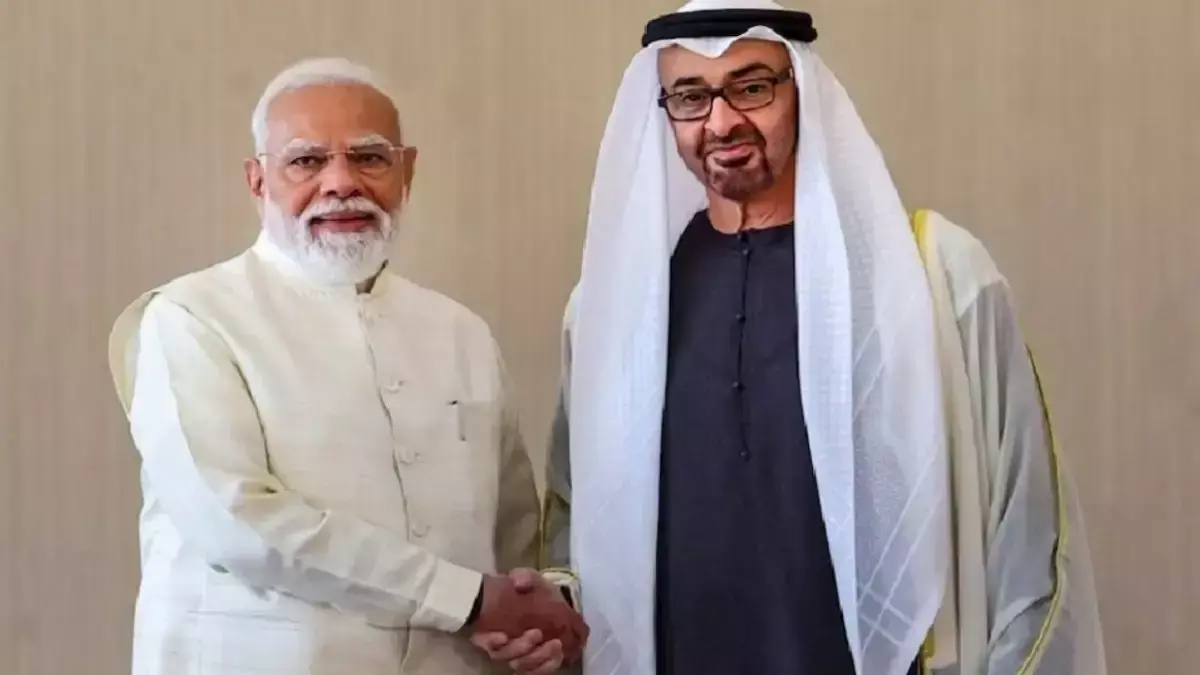
The visit of Indian Prime Minister Narendra Modi to the United Arab Emirates on 15 May 2026 marks more than another diplomatic engagement between two friendly nations. It reflects the steady maturation of one of Asia’s most strategically significant bilateral relationships—one that is increasingly shaping the contours of energy security, digital transformation, maritime connectivity, and geopolitical alignment across the broader Indo-Pacific and West Asian regions.
Under the leadership of Prime Minister Modi and UAE President Sheikh Mohamed bin Zayed Al Nahyan, the India–UAE partnership has evolved from a historically trade-driven engagement into a multi-dimensional strategic framework. Today, it is no longer defined merely by the exchange of goods, migrant labour flows, or remittance corridors. Instead, it has become a forward-looking alliance anchored in technology, infrastructure, defence cooperation, sovereign investment flows, and shared aspirations for regional stability.
The 2026 visit, therefore, should be understood not as an isolated diplomatic moment but as part of a broader trajectory: the systematic deepening of trust and interdependence between two economies that increasingly see each other as indispensable partners in an uncertain global order.
From Ancient Trade Routes to Strategic Convergence
The India–UAE relationship predates modern diplomacy by centuries. Long before the establishment of formal state systems, traders from the western coast of India sailed across the Arabian Sea carrying spices, textiles, pearls, dates, and dried fish. These exchanges created not just economic linkages but cultural familiarity that persists to this day in language, cuisine, and diaspora networks.
Formal diplomatic relations established in 1972 laid the institutional foundation for cooperation. However, the relationship remained largely transactional for decades, shaped by oil imports, remittances, and labour mobility.
The transformation began in earnest in the past decade, particularly after 2014, when Prime Minister Modi assumed office and initiated a new phase of proactive engagement with West Asia. His landmark 2015 visit to the UAE broke a 34-year gap in Indian prime ministerial visits, signalling a shift in India’s foreign policy priorities. Since then, high-level exchanges have become frequent and structured, with repeated visits by both leaderships reinforcing political trust.
What has changed fundamentally is not just frequency of engagement, but the quality of cooperation. India and the UAE now interact as strategic partners rather than merely economic counterparts.
A Trade and Investment Corridor of Global Significance
One of the most striking features of the modern India–UAE relationship is the scale and velocity of economic integration. Bilateral merchandise trade crossed the historic milestone of US$101.25 billion in FY 2025–26, making the UAE one of India’s largest trading partners globally. Both sides have now set an ambitious target of US$200 billion in trade by 2032.
But beyond headline figures lies a deeper transformation: the structure of trade itself. Energy remains central, but it is increasingly complemented by high-value sectors such as electronics, engineering goods, financial services, and digital trade.
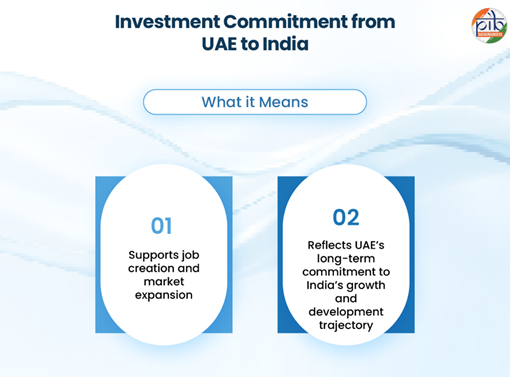
Investment flows further underscore this evolving relationship. The UAE has emerged as the seventh-largest foreign investor in India, with cumulative foreign direct investment reaching US$25.19 billion between 2000 and 2025. These investments are not confined to a single sector; they span real estate, infrastructure, renewable energy, logistics, and private equity.
Equally significant is the growing presence of UAE sovereign wealth funds in India’s infrastructure and development ecosystem. These long-term capital pools are reshaping India’s urban expansion, logistics networks, and clean energy transition.
A particularly important innovation has been the Local Currency Settlement (LCS) mechanism between the two countries, allowing trade and remittances to be settled in Indian rupees and Emirati dirhams. This reduces dependence on the US dollar, lowers transaction costs, and signals a broader shift towards financial sovereignty in bilateral trade architecture.
Energy Security: The Core Strategic Pillar
If trade is the backbone of the relationship, energy remains its heartbeat.
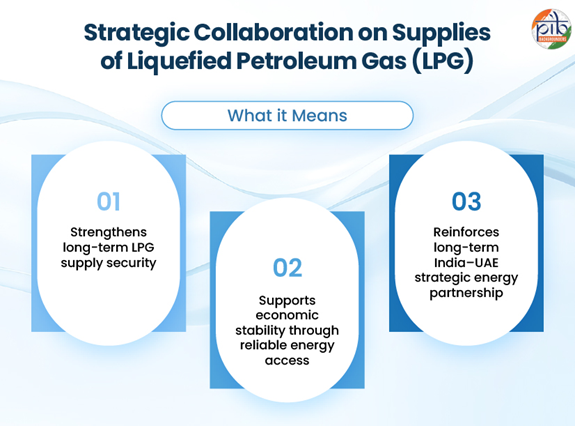
The UAE is today one of India’s most critical energy partners. In FY 2024–25, it ranked as the fourth-largest source of crude oil, the third-largest source of liquefied natural gas (LNG), and the largest supplier of liquefied petroleum gas (LPG) to India. It is also the second-largest export destination for India’s refined petroleum products.
This energy interdependence has evolved into a strategic energy partnership rather than a buyer-seller relationship.
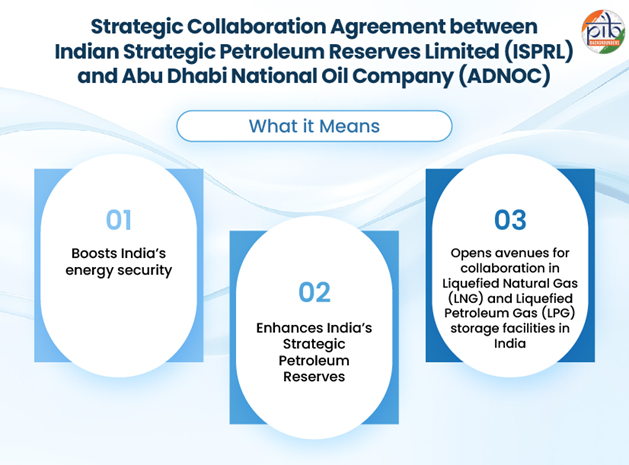
During the 2026 visit, one of the most consequential developments was the MoU between Indian Strategic Petroleum Reserves Limited and Abu Dhabi National Oil Company. The agreement strengthens India’s strategic petroleum reserves system and enhances resilience against global supply disruptions.
In an era marked by geopolitical volatility, supply chain fragmentation, and energy price shocks, this collaboration is not merely technical—it is strategic insurance. It allows India to diversify storage, improve emergency preparedness, and deepen integration with global energy markets.
Similarly, the agreement between Indian Oil Corporation Limited and ADNOC on LPG supply ensures long-term stability of household and industrial energy access in India. It reinforces the UAE’s position as a trusted and predictable energy partner at a time when global hydrocarbon markets are becoming increasingly uncertain.
What emerges from these agreements is a shift from transactional energy imports to structured energy security architecture.
Defence Cooperation: A Quiet but Steady Expansion

While energy and trade dominate headlines, defence cooperation between India and the UAE has steadily deepened beneath the surface.
Institutional mechanisms such as the Joint Defence Cooperation Committee (JDCC) and regular Service Staff Talks between Army, Navy, and Air Force counterparts have created a stable platform for dialogue. The framework agreement signed in June 2003 laid the foundation, but recent years have seen a noticeable acceleration in cooperation.
The 2026 Framework for Strategic Defence Partnership marks a significant evolution. It opens pathways for joint development, industrial collaboration, and technology sharing in defence manufacturing.
This is particularly important in a global environment where defence supply chains are being reconfigured and countries are seeking diversified sources of advanced military technology.
For India, it supports the broader vision of defence indigenisation and self-reliance. For the UAE, it offers access to India’s growing defence industrial base and technological ecosystem.
Maritime Infrastructure and the Blue Economy
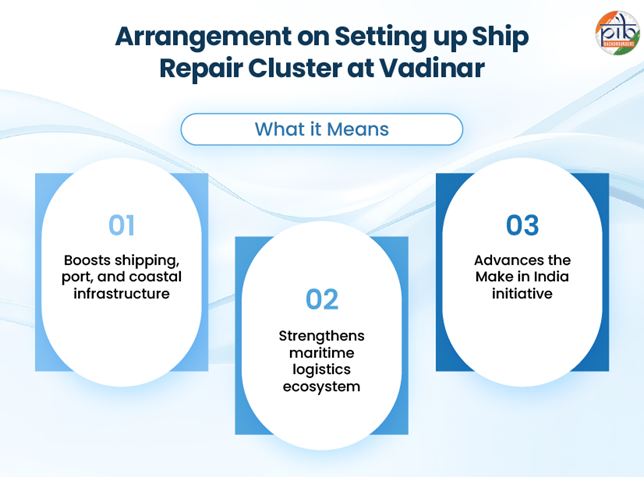
Another critical dimension of the 2026 visit was maritime cooperation. The MoU between Cochin Shipyard Limited and Drydocks World to establish a ship repair cluster at Vadinar, Gujarat, reflects a shared ambition to transform the western coastline of India into a global maritime hub.
This initiative is not simply about infrastructure. It is about positioning India within global shipping and logistics networks. Ship repair clusters reduce dependency on foreign ports, improve turnaround times, and strengthen coastal economic ecosystems.
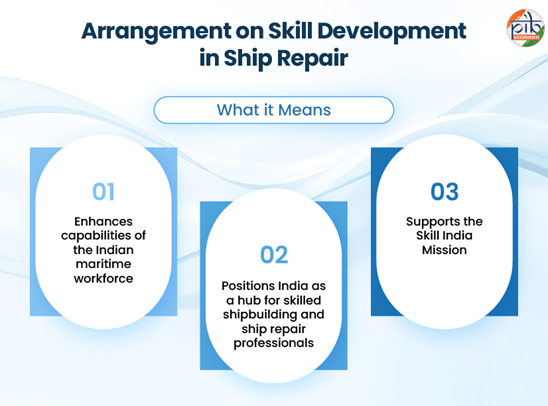
In parallel, the skill development agreement involving Cochin Shipyard, Drydocks World, and maritime training institutions highlights a critical but often overlooked aspect of economic development: human capital.
By investing in training and upskilling, the partnership ensures that infrastructure development is matched by workforce readiness. This aligns with India’s broader Skill India Mission and enhances employability in high-value maritime industries.
Together, these initiatives signal the emergence of a “blue economy corridor” linking Indian and Emirati maritime ecosystems.
Technology and Artificial Intelligence: A New Strategic Frontier
Perhaps the most forward-looking outcome of the 2026 visit is cooperation in high-performance computing and artificial intelligence.
The agreement for an 8 exaflop supercomputing cluster between Centre for Development of Advanced Computing and G42 represents a major leap in digital infrastructure collaboration.
This is not merely a technological upgrade. It is a strategic capability-building exercise. Supercomputing infrastructure is foundational for advanced AI research, climate modelling, cybersecurity systems, and scientific innovation.
For India, this aligns with its national AI mission and broader ambition to become a global digital powerhouse. For the UAE, it strengthens its position as a regional leader in artificial intelligence and next-generation computing.

In a world increasingly defined by data, algorithms, and computational power, this partnership places both countries within the emerging architecture of digital sovereignty.
Beyond sector-specific agreements, the broader investment commitments announced during the visit reinforce a strong sense of mutual economic confidence.
UAE investments into India continue to expand across infrastructure, banking, renewable energy, and logistics. These flows are not short-term capital movements; they represent long-term strategic positioning in one of the world’s fastest-growing large economies.
At a time when global capital markets are volatile and protectionist tendencies are rising in several regions, the India–UAE investment corridor stands out for its stability and predictability.
No analysis of the India–UAE relationship is complete without acknowledging the role of the Indian diaspora.
Millions of Indians living and working in the UAE form the backbone of key sectors such as construction, healthcare, retail, aviation, and services. Their contributions are not only economic but also social, helping bridge cultural understanding between the two nations.
Remittances sent back to India remain a critical component of foreign exchange stability and household incomes in many regions. More importantly, the diaspora functions as a living bridge between two societies, reinforcing trust and familiarity.
What makes the India–UAE relationship distinctive is not just the breadth of cooperation, but the convergence of strategic interests.
Both countries are navigating a rapidly changing global environment marked by energy transitions, technological disruption, supply chain realignment, and geopolitical uncertainty. In this context, their partnership offers a model of pragmatic cooperation grounded in mutual benefit rather than ideological alignment.
The 2026 visit reinforces this trajectory. It consolidates existing pillars—energy, trade, and diaspora ties—while expanding into emerging domains such as artificial intelligence, maritime logistics, defence industrial cooperation, and sovereign investment frameworks.
The India–UAE partnership has entered a new phase—one defined not by incremental cooperation but by structural integration across critical sectors of the global economy.
What was once a relationship anchored primarily in oil trade and migration has evolved into a multi-dimensional strategic partnership spanning energy security, digital infrastructure, defence cooperation, and capital flows.
As the world moves towards a more fragmented and uncertain geopolitical landscape, such partnerships will become increasingly valuable. They offer stability in trade, resilience in energy systems, and collaboration in emerging technologies.
The 2026 visit by Prime Minister Narendra Modi to the UAE thus represents more than diplomacy. It represents the deliberate construction of a future-ready alliance—one that is likely to shape not just bilateral relations, but also broader regional and global economic architecture in the years to come.
Comments are closed.