

Malik Mushtaq
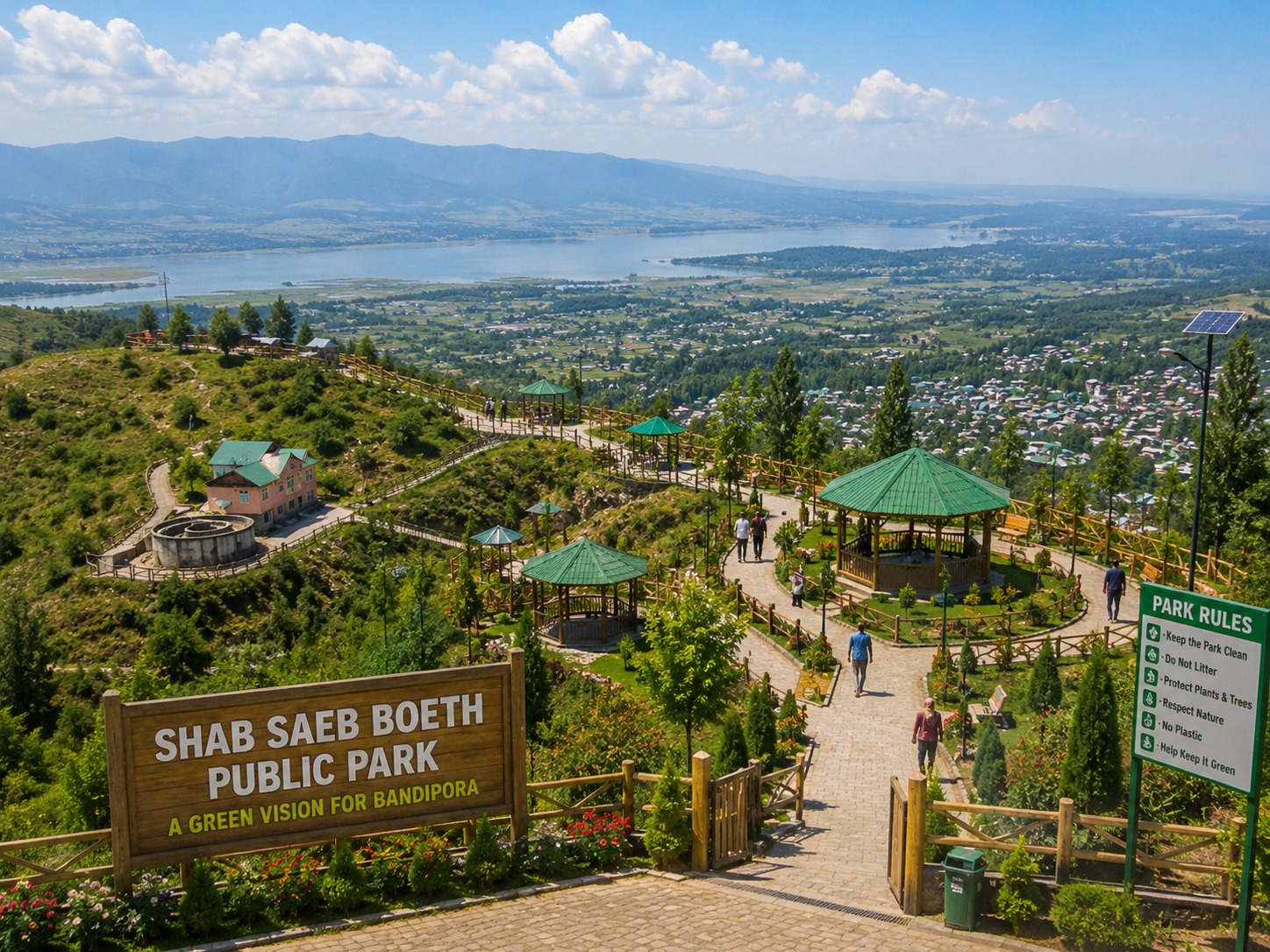
“Standing at the top, the sight of Wular Lake stretching across the horizon is nothing short of magical. During sunrise and sunset, the changing colors of the sky reflecting on the waters create a scene that words can hardly capture.”
Bandipora, often called the gateway to the majestic Wular Lake, is blessed with immense natural beauty, yet much of its potential remains untapped. Among its hidden treasures lies Shab Saebun Boeth (hill), a place that offers one of the most breathtaking panoramic views of the region.
From its heights, one can witness the shimmering expanse of Wular Lake, the lush plains, and the scattered settlements that together narrate the story of this serene district. It is high time that this natural gift is developed thoughtfully into a public park, not only to preserve its beauty but also to harness its economic, environmental, and social potential.
The idea of establishing a public park on Shab Saebun Boeth is not merely about beautification—it is about vision, sustainability, and progress. A well-planned park at this peak can become a landmark destination, attracting visitors from within the district, across Jammu & Kashmir, and even from other parts of the country and abroad. In an era where eco-tourism is gaining popularity, Bandipora has the opportunity to position itself as a must-visit destination, and this project could be a cornerstone of that transformation.
One of the most compelling aspects of Shab Saebun Boeth is the mesmerizing view it offers. Standing at the top, the sight of Wular Lake stretching across the horizon is nothing short of magical. During sunrise and sunset, the changing colors of the sky reflecting on the waters create a scene that words can hardly capture. Developing viewing decks, seating areas, and safe pathways would allow visitors to fully immerse themselves in this natural spectacle. Such infrastructure would not only enhance the visitor experience but also ensure safety and accessibility for people of all ages.
Equally important is the potential for plantation and greenery. The slopes and surroundings of the peak can be transformed into a lush green landscape through systematic plantation drives. Native trees and plants should be prioritized to maintain ecological balance and ensure sustainability. This initiative would contribute to environmental conservation, improve air quality, and create a refreshing escape from the hustle and bustle of daily life. Moreover, involving local communities, schools, and volunteers in plantation activities can foster a sense of ownership and responsibility towards nature.
The development of a public park at Shab Saebun Boeth can also play a significant role in boosting the local economy of Bandipora. Tourism is a powerful engine for economic growth, and even small-scale initiatives can create ripple effects across various sectors. Increased footfall would generate opportunities for local vendors, artisans, transport operators, and small businesses. From tea stalls and handicraft shops to guided tours and homestays, the benefits would reach many households. This is particularly important for a district like Bandipora, where employment opportunities are limited and youth often struggle to find sustainable livelihoods.
Furthermore, the park can be designed in a way that highlights the cultural heritage of the region. Spaces for local art, traditional music performances, and cultural festivals can be incorporated into the plan. This would not only entertain visitors but also preserve and promote the rich traditions of Bandipora. Tourists today seek authentic experiences, and integrating culture with nature can make Shab Saeb Boeth a unique destination.
Another critical issue that this project can address is the problem of encroachments. Like many scenic areas, Shab Saebun Boeth may be vulnerable to unplanned and illegal encroachments that degrade the environment and limit public access. Declaring the area as a protected public park would help regulate land use and prevent unauthorized activities. Clear boundaries, proper monitoring, and community involvement can ensure that the area remains preserved for future generations.
Accessibility and infrastructure are key factors that will determine the success of this initiative. Roads leading to the peak need to be improved and maintained to facilitate easy access. Parking areas, restrooms, and basic amenities must be provided to ensure a comfortable experience for visitors. At the same time, care must be taken to avoid overdevelopment that could harm the natural ecosystem. The focus should remain on eco-friendly and sustainable practices, such as the use of solar lighting, waste management systems, and minimal construction.
Safety is another important aspect that cannot be overlooked. Proper fencing, signage, and security measures should be in place to protect visitors and maintain order. Trained personnel can be deployed to assist tourists and ensure that the rules and regulations are followed. Emergency services and first-aid facilities should also be available to handle any unforeseen situations.
The role of government and local authorities is crucial in turning this vision into reality. A comprehensive development plan must be prepared, taking into account environmental impact assessments, community needs, and long-term sustainability. Collaboration with experts in tourism, ecology, and urban planning can help design a park that meets high standards while preserving the natural charm of the area. Public-private partnerships can also be explored to mobilize resources and ensure efficient execution.
Community participation is equally important. The people of Bandipora should be actively involved in the planning and development process. Their insights, suggestions, and support can make a significant difference in the success of the project. Awareness campaigns can be conducted to educate the public about the benefits of the park and the importance of preserving it. When the community feels a sense of ownership, they are more likely to protect and maintain the area.
Education and awareness can be integrated into the park’s design as well. Informational boards about the history, geography, and ecology of the region can be installed to educate visitors. Schools can organize educational trips to the park, allowing students to learn about nature and conservation in an interactive way. Such initiatives can inspire the younger generation to appreciate and protect their environment.
“The development of a public park on Shab Saebun Boeth is a visionary idea that holds immense potential for Bandipora. It is an opportunity to transform a natural asset into a source of pride, prosperity, and environmental sustainability.”
Comments are closed.