

Aiyan Gulzar Paul
“While development offers practical advantages to make life better, culture offers a feeling of home and history. As these two work hand-in-hand, it is possible to create a society that is both modern and traditional.”
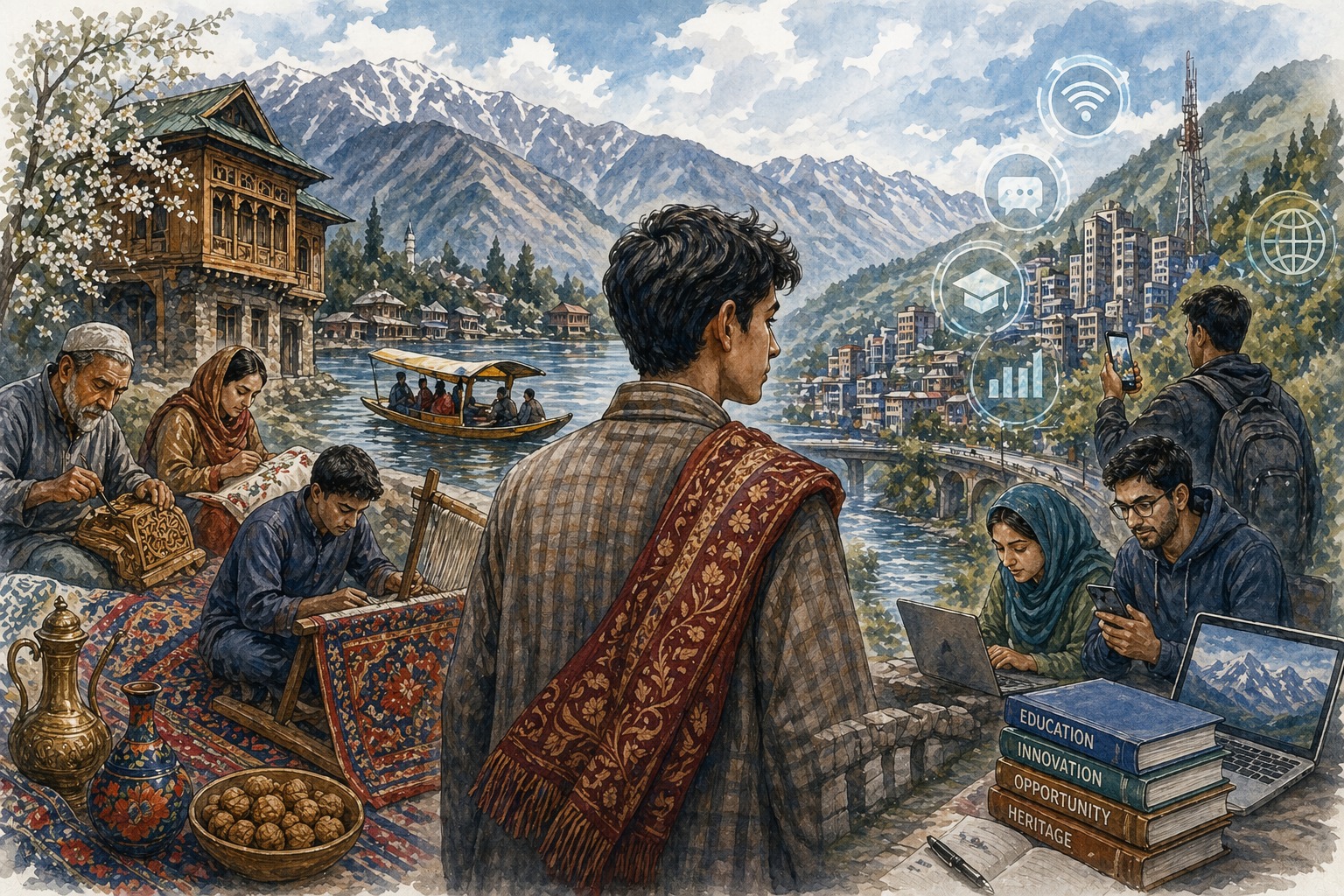
The question of identity in Kashmir has always been closely linked to culture, traditions, and way of life. However, in recent years, there has been a significant change in many aspects of life in Kashmir due to modernization. This change can be seen in communication styles, work habits, and overall approaches to life. There has been a debate on whether or not modernization is affecting identity in Kashmir. To some people, modernization means opportunities for growth. Modernization can mean better education, better infrastructure, and greater access to information. However, there are some drawbacks to consider as well. One of the most visible changes in society can be seen in the lives of young people. With the availability of smartphones and social media, there has been a significant increase in outside influences. Young people in Kashmir are now more connected than ever before. They are now aware of global trends and are adopting new styles of living. This can be seen as a positive change for young people in Kashmir. However, there is a change in priorities as well. There is now less attention given to traditional activities such as art forms, language, and traditions.
The role of language is very significant in building identity, and in Kashmir, this is evolving with subtle changes. The Kashmiri language has traditionally been an instrument for carrying cultural, historical, and social identity. However, with more importance now being given to English and other widely spoken languages for educational and employment purposes, its usage is dwindling in some spaces. While acquiring global languages can open doors to more opportunities, it is imperative to preserve local languages for cultural reasons.
The cultural landscape, including celebrations, crafts, and cuisine, is an essential component of the Kashmiri identity. The handicrafts, such as pashmina work, carpet-making, and woodwork, reflect the skill and artistry of the people. Modernization has provided both challenges and opportunities for these crafts. On one side, machine-made products and evolving consumer behaviours can influence handicraft markets. On the other side, digital technologies and increased connectivity can help artisans reach larger markets. Thus, modernization can create an opportunity for these crafts to grow, providing an interface for economic development and cultural identity.
Urbanization is another aspect of the conversation. As cities grow and improve, so does the way people live. Housing styles, families, and jobs can have a significant impact on the way people interact with one another. In an urban setting, the world moves at a faster pace, and the way people interact with one another can actually lose some of its meaning in the years to come. Yet, it is in the way we develop these spaces that will help people maintain a sense of community.
One of the biggest influences in the Kashmir Valley has been education. Education has risen as one of the biggest influencers in the Kashmir Valley. As access to education increases, so does access to schools, colleges, and digital media. This has helped young people in the valley look towards different careers. As access to education increases, so does the confidence and ambition of the youth. Education has also helped in keeping a sense of identity in the valley. As education includes different aspects of history, literature, and culture, it has helped young people maintain a sense of identity in the years to come.
The role of governance and development policies has been important in shaping the course of change. Developments related to infrastructure, connectivity, tourism, and entrepreneurship have introduced new opportunities to the region. Developments related to infrastructure, connectivity, and services have improved access and connectivity. These developments have made it easier for people to get involved in economic activities and have improved their standards of living. At the same time, the importance of culture and development is becoming an important issue. Developments related to local industries and culture have ensured that development is not compromised. Tourism is an important example where modernization and culture have been important. Tourism has been an important activity in Kashmir due to the region’s cultural and geographical features. Developments related to infrastructure and connectivity have ensured renewed growth in tourism. This is an important activity where employment and local businesses are generated. At the same time, it is an important activity where culture is promoted to the world. Tourism is an important activity where the benefits of modernization are passed to the local population while culture is preserved.
Another aspect of the debate is the dynamic nature of the aspirations of the people. Modernization can bring about changes in the aspirations of the people. The youth can be drawn towards modern occupations such as information technology, business, and industries. Though these aspirations can be seen as positive changes in the society, they can also contribute to the outflow of the youth from their traditional occupations. The key is not to be resistant to the changes that modernization brings about; instead, it is about providing opportunities where the traditional occupations can go hand in hand with modern occupations.
The debate about the identity of the people is not about the choice between the two; it is about building a future where both can coexist. The identity of the people in the valley of Kashmir is dynamic; it has undergone changes over the centuries. It has adapted itself to the changes around it while retaining its core values. Modernization is one such change in the history of the valley. The way forward is about embracing the change with confidence while retaining the traditional values that give the valley its unique identity.
As it continues to progress, it is all about balance. While development offers practical advantages to make life better, culture offers a feeling of home and history. As these two-work hand-in-hand, it is possible to create a society that is both modern and traditional. The history of Kashmir is yet to be told, and it is up to its people to write it. By embracing both progress and heritage, it is possible to create a future for itself based on its rich history and its needs today.
Comments are closed.