
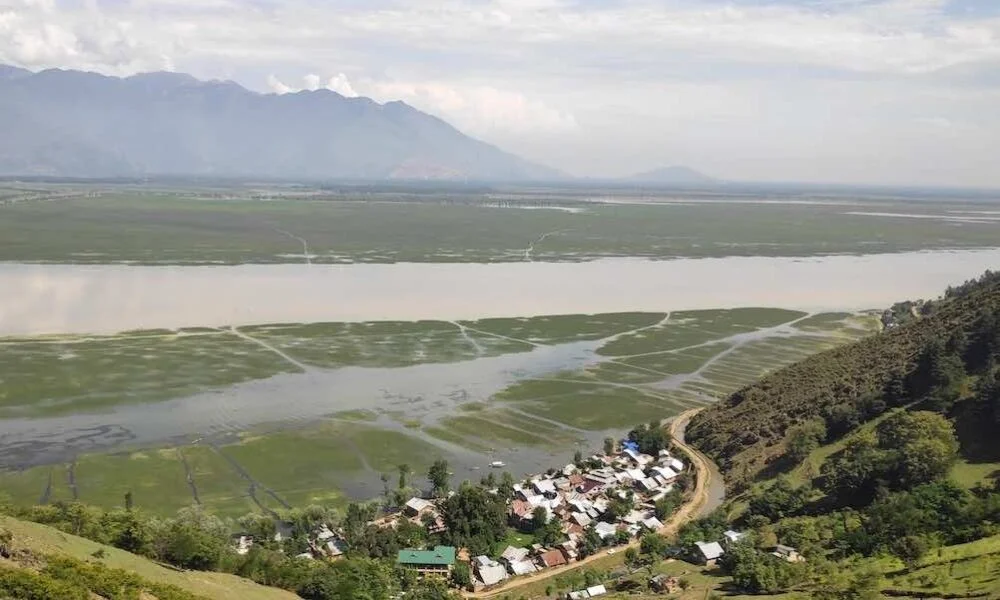

A. R. Matahanji
“The streams of our valley are not drains; they are the living veins of the earth. When plastic clogs them, it is not just water that stops flowing — it is breath itself. Every bottle and bag we throw away returns as a flood, a poisoned field, or a dying lake.”
The water system of the valley is a complex web of ancient canals and natural streams, designed over centuries to distribute the mountain runoff to the thirsty paddy fields. To me, these were the veins of the earth, carrying the lifeblood of the region. But as I and a small group of volunteers from the Mohalla Initiative began to map the local flow, we found the veins were clogged with a synthetic cholesterol.
We started at the head of the main canal, where the water was diverted from a larger river. Here, the flow was strong, but even at the source, the plastic was present. It floated on the surface like a colourful, toxic scum. As the canal moved through the various Mohallas, the density of the waste increased.
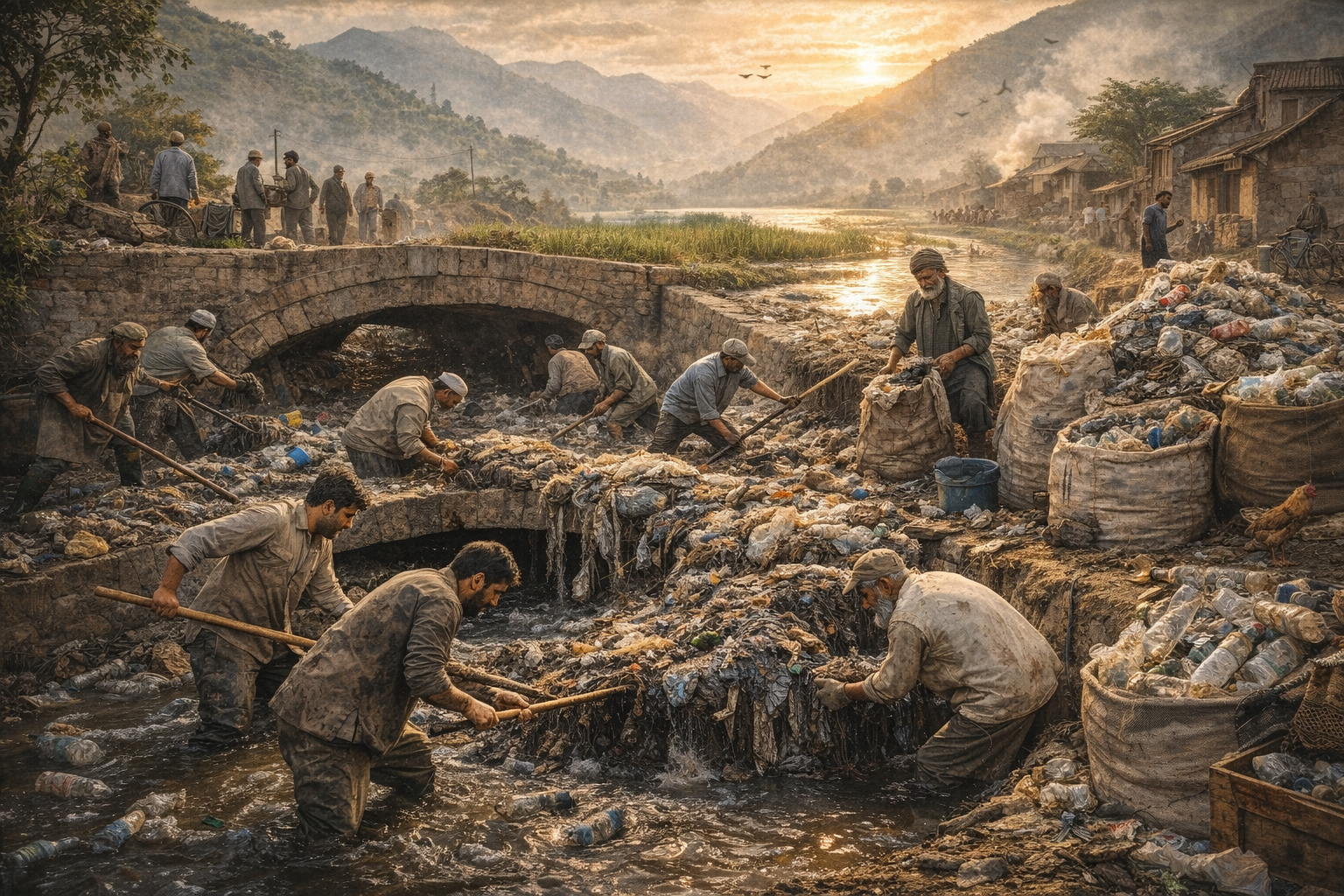
“Every bridge is a trap” Gul Kak said, pointing to a low-slung stone arch. The volunteers waded into the water, armed with long poles and rakes. We began to pull the debris from the underside of the bridge. It was a gruelling, disgusting task. We found layers of plastic that had been compacted by the pressure of the water into a solid mass. There were bags, bottles, old clothes, and the heavy, sodden diapers that I had come to loathe.
As we cleared the blockage, the water behind it surged forward, dark and foul-smelling. It was a release of pent-up filth that had been stewing in the stagnant heat.
I watched as the liberated trash headed downstream, towards the next village, and eventually, towards the Wular lake.
“We are just moving it from one place to another” one of the volunteers complained, wiping sweat and grime from his forehead. “No” I said, pointing to the bank where we had piled the extracted waste. “We are taking it out of the system. We will dry this, sort it, and use what we can for the Eco-bricks. The rest we will dispose of properly. Every piece we pull out is one less piece for the lake.”
We spent the entire day working our way down the canal. We found that the worst areas were near the informal dumping sites that had grown up along the banks. People found it easy to toss their household bags into the water, thinking the current would take their problems away. The ‘away’ was always someone else’s backyard, and eventually, the common heritage of the lake.
In one particularly narrow stretch of the stream, we found a complete blockage. The plastic had formed a dam so effective that the water was overflowing the banks, flooding a nearby field of young rice. The farmer was standing by the edge, looking in despair at his drowned crop.
Comments are closed.