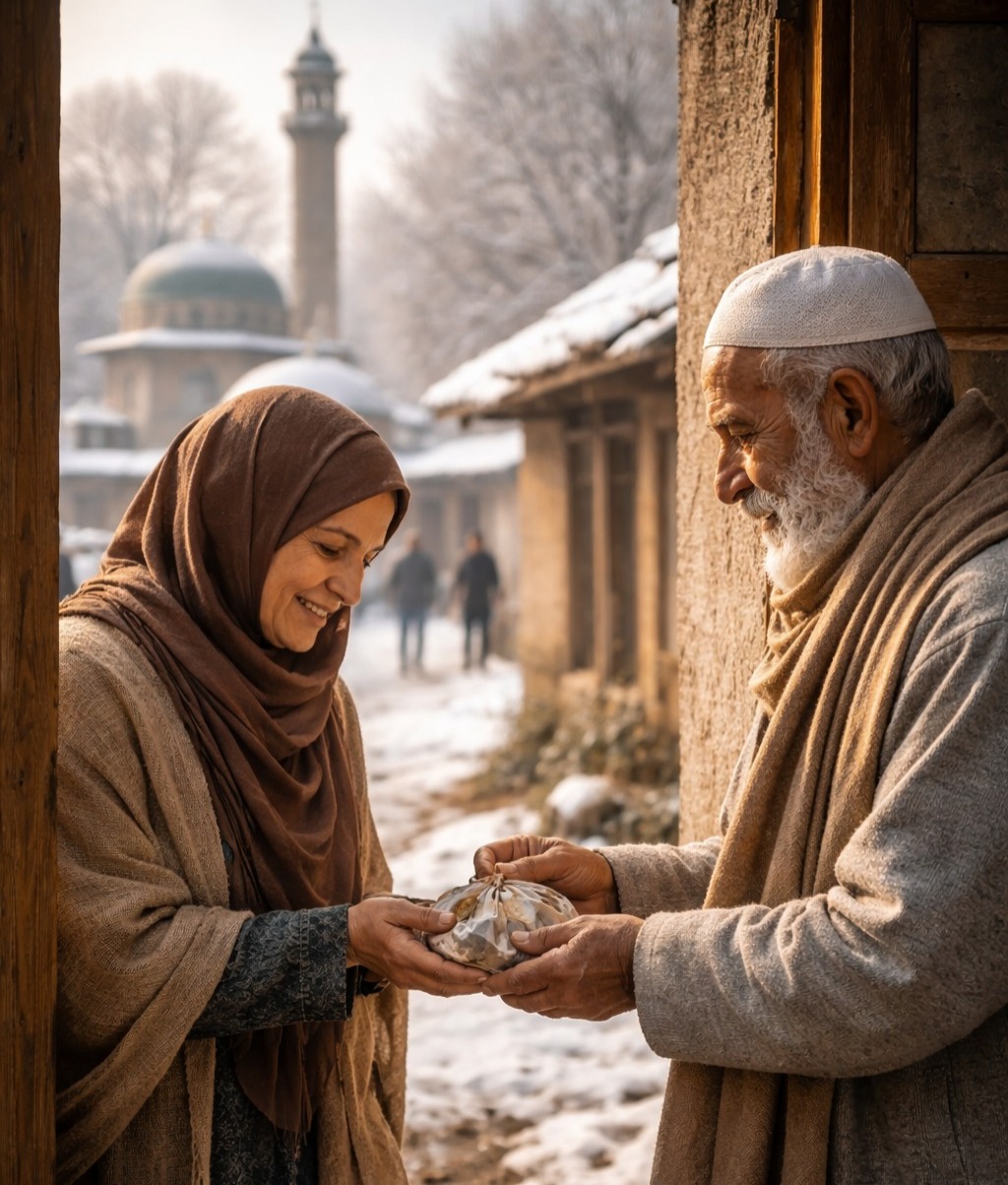
Zakat: Islam’s Blueprint for Economic Justice

Malik Mushtaq

“In Islam, wealth is not absolute ownership but a trust from Allah. Within it lies a known right of the poor, making Zakat an obligation of justice rather than an act of generosity.”

In a world scarred by widening economic inequality, social unrest, and rising materialism, Islam offers a timeless and balanced remedy through the institution of Zakat. As the third pillar of Islam, Zakat is not merely an act of charity; it is a divine command, a moral obligation, and a structured socio-economic system designed to uphold justice, compassion, and equilibrium within society. It represents a profound fusion of spirituality and mathematics—where devotion meets discipline and faith translates into fairness.

While Muslims often emphasize prayer, fasting, and pilgrimage, the transformative power of Zakat in shaping communities demands renewed reflection, particularly in an era when structured welfare systems are essential for dignity and survival.

Zakat occupies a central place in the Holy Quran, frequently mentioned alongside Salah (prayer), underscoring that worship in Islam is incomplete without social responsibility. In Surah Al-Baqarah (2:110), believers are commanded to establish prayer and give Zakat, with the assurance that whatever good they send forth will be found with Allah. Similarly, Surah At-Tawbah (9:103) describes charity as a means of purification and growth. The repeated pairing of prayer and Zakat throughout the Quran highlights a profound truth: faith is inseparable from social justice.

The structural significance of Zakat is further affirmed in the famous Hadith narrated by Umar ibn al-Khattab and recorded in Sahih al-Bukhari and Sahih Muslim. The Prophet Muhammad ﷺ declared that Islam is built upon five pillars: the testimony of faith, prayer, Zakat, fasting in Ramadan, and pilgrimage to Makkah. By placing Zakat among these pillars, Islam establishes it not as optional generosity but as an essential foundation of the faith itself.

The word “Zakat” literally means purification and growth. Through giving, a believer purifies the heart from greed and cleanses wealth from moral impurity. Islam teaches that wealth is not absolute ownership but a trust (Amanah) from Allah, and within it lies a known right for the poor. Surah Al-Ma’arij (70:24–25) makes this explicit by affirming that in the wealth of the righteous is a designated share for the beggar and the deprived. In this framework, charity is not a favor bestowed by the rich; it is justice owed to the vulnerable.

One of the most remarkable aspects of Zakat is its precise mathematical framework. The standard rate of 2.5 percent—one-fortieth—applies to savings and business assets that reach the Nisab threshold and remain in possession for one lunar year. This measured approach ensures balance: it neither burdens the wealthy excessively nor neglects the needs of the poor. Nisab itself is defined by the value of 87.48 grams of gold or 612.36 grams of silver, creating an objective and equitable benchmark for responsibility. Scholars of Islamic jurisprudence have developed detailed rulings to ensure clarity and fairness in its calculation across changing economic contexts.

The Quran further outlines eight categories of recipients in Surah At-Tawbah (9:60), including the poor, the needy, administrators of Zakat, those burdened by debt, stranded travelers, and others deserving of assistance. This clear categorization reveals the systematic and institutional character of Islamic welfare, demonstrating that Zakat is not random benevolence but a structured social policy.

History bears testimony to its transformative potential. During the caliphate of Abu Bakr, when certain tribes refused to pay Zakat after the Prophet’s passing, he firmly declared that prayer and Zakat could not be separated. His stance underscored that Zakat was integral not only to personal piety but also to governance and communal stability. Later, under Umar ibn Abd al-Aziz, it is reported that the Zakat system was administered so effectively that officials struggled to find eligible recipients—an enduring illustration of its economic power when implemented with sincerity and justice.

In the modern world, where poverty, unemployment, displacement, and debt crises continue to afflict millions, Zakat stands as a divinely mandated welfare system introduced fourteen centuries ago. Properly organized institutions can channel Zakat funds into education for underprivileged children, healthcare support, interest-free microfinance, and economic empowerment for widows, orphans, and small entrepreneurs. Transparent governance and digital systems can enhance both accountability and reach, ensuring that the spirit of Zakat is preserved in contemporary settings.

Beyond economics lies what may be called spiritual mathematics. In Surah Al-Baqarah (2:261), Allah compares those who spend in His way to a seed that grows seven ears, each bearing one hundred grains—a multiplication of seven hundred times. What appears as subtraction becomes divine multiplication. As recorded in Sahih Muslim, the Prophet ﷺ assured that charity does not decrease wealth. This principle reflects a deeper truth: material reduction can yield spiritual expansion and divine blessing.

Zakat also nurtures social harmony by reducing resentment between classes and strengthening communal solidarity. The Prophet ﷺ warned that faith is incomplete if one’s neighbor goes hungry while one’s own stomach is filled. Such teachings remind believers that spirituality cannot be detached from social conscience.

In the age of technology, Zakat calculation has become more accessible through digital tools and online platforms. Yet modernization must remain anchored in sound jurisprudence, ensuring that Zakat is transferred into the ownership of eligible recipients in accordance with Islamic law. Contemporary scholars continue to interpret classical principles in light of evolving financial systems, guiding Muslims on business assets, investments, and emerging economic realities.

In societies grappling with unemployment and inequality, structured Zakat systems can sponsor higher education, provide vocational training, establish community clinics, and empower artisans and small traders. When conscientiously implemented, Zakat has the potential not only to alleviate poverty but to restore dignity and opportunity.

Zakat is far more than a yearly calculation of 2.5 percent; it is a moral revolution rooted in justice and compassion. It unites worship with welfare and devotion with discipline, proving that Islam extends beyond ritual prayer into markets, homes, and institutions.

As we confront modern economic challenges, rediscovering the true spirit of Zakat is both a spiritual duty and a social necessity. By fulfilling this pillar with sincerity, transparency, and collective responsibility, we can transform wealth into a means of purification, growth, and communal upliftment.

May Allah grant us the wisdom to honor this divine system in its fullest spirit and enable our wealth to become a source of justice, compassion, and eternal success. Ameen.

Comments are closed.