
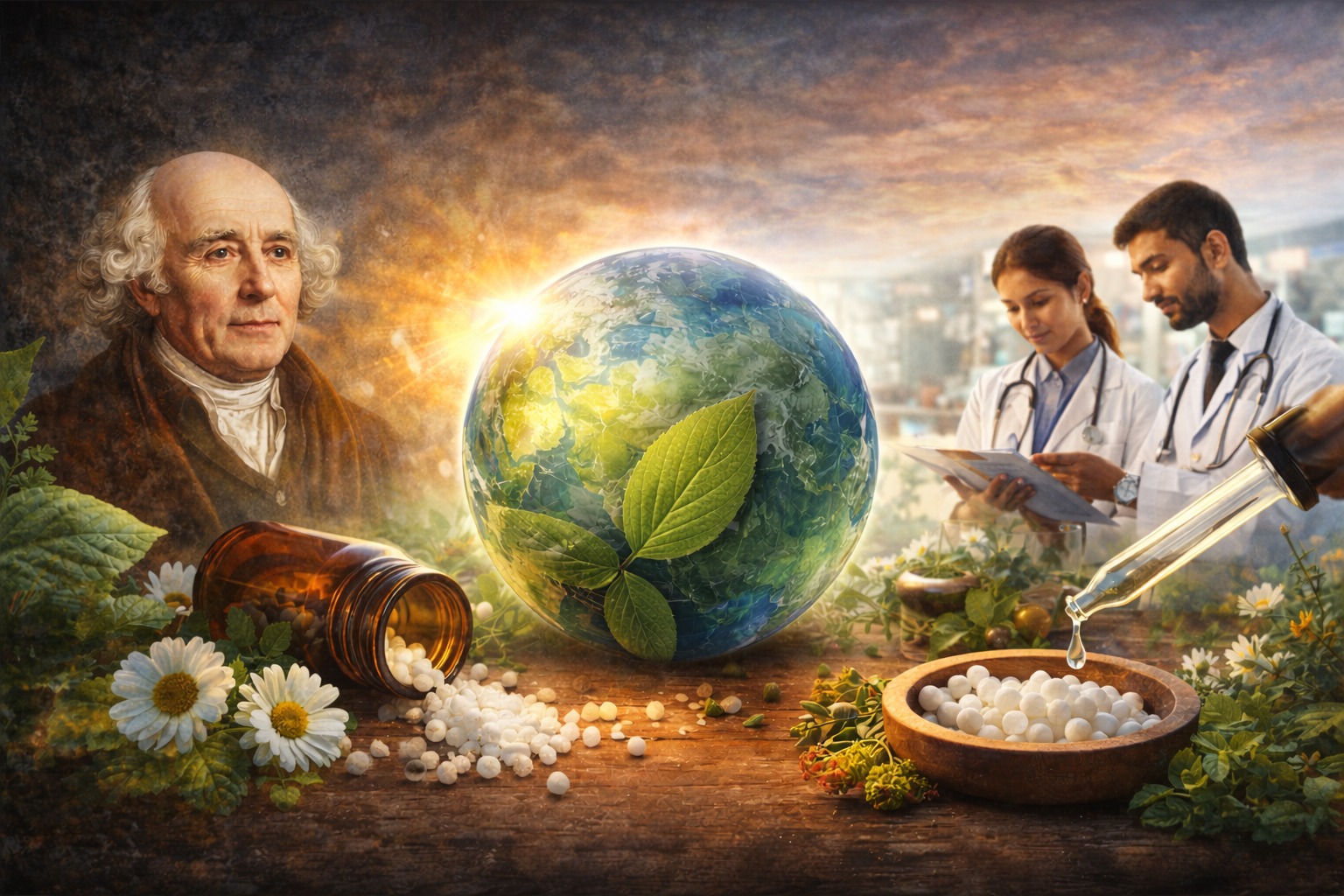
World Homoeopathy Day 2026: Reimagining Holistic Healthcare in a Changing World

S Ahmad


Samuel Hahnemann (1755-1843) was a German physician, who founded homoeopathy in the late 18th century. His seminal work, Organon of Medicine, continues to guide Homoeopathy practice worldwide, and his birth anniversary on April 10 is observed as World Homoeopathy Day.

Each year on April 10, India joins the global community in observing World Homoeopathy Day, commemorating the birth anniversary of Dr. Samuel Hahnemann, the German physician who founded homoeopathy in the late eighteenth century. In 2026, the occasion carries the theme “Homoeopathy for Sustainable Health,” a phrase that resonates deeply in a world grappling with rising healthcare costs, chronic disease burdens, antimicrobial resistance, and widening gaps in access to care. Far from being a ceremonial observance, World Homoeopathy Day has evolved into a moment of reflection on how traditional systems of medicine can respond to contemporary public health demands.

Samuel Hahnemann (1755–1843), author of the seminal work Organon of Medicine, laid the intellectual foundation of homoeopathy in 1796. Dissatisfied with the harsh and often harmful medical practices of his era, he proposed a radically different therapeutic philosophy. The principle of “similia similibus curentur” — “like cures like” — suggested that substances capable of producing symptoms in a healthy individual could, when administered in carefully prepared forms, treat similar symptoms in a sick person. Complementing this was the “law of minimum dose,” which emphasised highly diluted remedies designed to stimulate the body’s self-healing response while minimising adverse effects.

The term homoeopathy itself is derived from the Greek words homois (similar) and pathos (suffering), encapsulating a system that treats disease through symptom similarity rather than direct antagonism. Remedies are prepared from natural sources — plants, minerals, and certain animal substances — through serial dilution and succussion. They are administered in various forms, including globules, tablets, and liquid tinctures. Perhaps most distinctive is homoeopathy’s individualised approach: the patient’s physical, emotional, and mental state are considered in totality, rather than isolating a diagnosis from the broader human context.

While homoeopathy originated in Europe, it found remarkably fertile ground in India. Introduced in the early nineteenth century, it gradually embedded itself within the country’s pluralistic medical culture. Around 1810, the German physician John Martin Honigberger, a disciple of Hahnemann, began practising in India. His widely noted treatment of Maharaja Ranjit Singh in 1839 significantly enhanced the system’s credibility. Over time, Indian practitioners such as Rajendra Lal Dutta in Bengal and Dr. Mahendra Lal Sircar further advanced its acceptance among both intellectuals and the general population.

By 1847, one of the earliest homoeopathic hospitals had been established in Tanjore, in present-day Tamil Nadu. Dispensaries followed in cities such as Calcutta, Banaras, and Allahabad, creating a growing network of services accessible to diverse communities. Unlike many imported systems that remained confined to elite enclaves, homoeopathy permeated both urban and rural settings. It appealed not only for its philosophical alignment with India’s holistic traditions, but also for its affordability and gentler therapeutic profile.

Post-independence India institutionalised this legacy. In 1973, the Government of India established the Central Council of Homoeopathy to regulate education and professional standards. Five years later, in 1978, the Central Council for Research in Homoeopathy (CCRH) was formed to advance systematic scientific inquiry. These initiatives signalled a decisive shift from informal practice to structured governance, laying the groundwork for standardisation, academic expansion, and research-based validation.

Today, India hosts one of the largest homoeopathic workforces in the world. With approximately 3.45 lakh registered practitioners, over 8,500 dispensaries, 277 educational institutions, and 34 research centres, homoeopathy is deeply embedded within the country’s healthcare infrastructure. This scale is not merely symbolic; it reflects sustained public trust and policy support.

A pivotal development occurred in 2014 with the establishment of the Ministry of AYUSH, which brought Ayurveda, Yoga, Unani, Siddha, and Homoeopathy under a unified administrative framework. This move elevated homoeopathy from the margins of alternative practice to a formal component of national health policy. Structured interventions in research, drug standardisation, international cooperation, and service integration followed. The transformation from tradition-bound therapy to policy-supported system has been gradual but unmistakable.

The regulatory landscape was further strengthened with the enactment of the National Commission for Homoeopathy Act, 2020, which came into effect in July 2021. This legislation replaced the earlier regulatory council with the National Commission for Homoeopathy (NCH), tasked with overseeing education standards, maintaining the national register of practitioners, enforcing professional ethics, and assessing healthcare needs. By streamlining governance and introducing modern regulatory mechanisms, the NCH has contributed to improved accountability and quality assurance across institutions.

Parallel to regulation, scientific research has gained increasing prominence. The Central Council for Research in Homoeopathy, headquartered in New Delhi, coordinates clinical trials, drug standardisation studies, documentation, and interdisciplinary collaborations through a network of 33 institutes and units across the country. Its mandate includes drug proving, validation, and the publication of research findings, alongside grant-in-aid support for external projects.

Public health initiatives have also emerged as a significant focus. Programmes such as Homoeopathy for Healthy Child, integration with the National Programme for Prevention and Control of Cancer, Diabetes, Cardiovascular Diseases and Stroke (NPCDCS), the Swasthya Rakhshan programme, and national campaigns for mother and child care illustrate how homoeopathy is being positioned within preventive and promotive healthcare frameworks.

The Pharmacopoeia Commission for Indian Medicine & Homoeopathy (PCIM&H), operating under the Ministry of AYUSH, plays a crucial role in ensuring drug quality and safety. Originally established in 2010 as the Pharmacopoeia Commission for Indian Medicine, its mandate was expanded in 2014 to include homoeopathy. It now develops pharmacopoeias and formularies while serving as the central drug testing and appellate laboratory. In a sector where questions of standardisation and consistency have historically posed challenges, such institutional mechanisms are indispensable.

Government schemes further reinforce this architecture. The National AYUSH Mission integrates homoeopathy services into public health facilities, including Primary Health Centres and Community Health Centres, while extending financial assistance for infrastructure and institutional development. The AYURSWASTHYA initiative promotes advanced research and clinical excellence, establishing centres of excellence and supporting capacity-building efforts. AYURGYAN focuses on professional development, encouraging continuing education, technological integration, and dissemination of research outcomes among practitioners.

The Extra Mural Research (EMR) scheme offers financial support for clinical and public health research aligned with national priorities, fostering a culture of evidence generation. Meanwhile, the Ayush Oushadhi Gunvatta evam Uttpadan Samvardhan Yojana (AOGUSY) seeks to enhance manufacturing standards, regulatory compliance, and quality control of AYUSH medicines, including homoeopathic products. By supporting infrastructure upgrades, WHO-GMP compliance, and laboratory modernisation, it aims to ensure that therapeutic claims rest on reliable pharmaceutical foundations.

Behind every homoeopathic remedy lies a vast botanical and mineral resource base. India’s Medicinal Plants initiatives, supported by the National Medicinal Plants Board, work toward the sustainable cultivation and conservation of over 7,000 species used in traditional systems. Ensuring authenticity and quality of raw materials is not only a scientific necessity but also an economic opportunity for farmers and rural communities.

Equally important is public awareness. Information, Education, and Communication (IEC) campaigns disseminate research findings, organise seminars, and promote preventive health practices. International cooperation initiatives expand academic exchanges and scholarships, strengthening India’s global presence in homoeopathy.

World Homoeopathy Day 2026 reflects this confluence of tradition and transformation. The National Commission for Homoeopathy has encouraged state councils, institutions, and practitioners to organise nationwide observances. Academic seminars, clinical discussions, essay competitions, poster-making events, and short video campaigns are designed to stimulate intellectual engagement and public participation. Free health camps and awareness drives aim to highlight homoeopathy’s role in preventive care and holistic well-being.

The theme “Homoeopathy for Sustainable Health” underscores an urgent global imperative. Sustainability in healthcare encompasses affordability, accessibility, minimal side effects, and long-term preventive impact. Chronic non-communicable diseases, mental health challenges, and lifestyle disorders increasingly demand integrative strategies rather than single-modality interventions. Homoeopathy, with its emphasis on individualisation and constitutional treatment, positions itself as a complementary approach within broader healthcare ecosystems.

Epidemic preparedness represents another dimension of engagement. The CCRH has implemented homoeopathic interventions during outbreaks of Japanese Encephalitis, chikungunya, dengue, and, more recently, COVID-19. In Uttar Pradesh, the distribution of Belladonna 200 across affected villages was reported to contribute to preventive efforts against Acute Encephalitis Syndrome. In Kerala, the use of Bryonia alba during chikungunya outbreaks was associated with reductions in symptom severity and recovery times. During the COVID-19 pandemic, Arsenicum album 30C was distributed as a prophylactic measure in several regions under the guidance of the Ministry of AYUSH.

Internationally, collaborative efforts such as dengue management initiatives in Cuba have drawn attention to homoeopathy’s potential complementary role. While debates regarding methodology and evidence continue within the global scientific community, these initiatives reflect a willingness to explore integrative responses during public health crises.

Critics of homoeopathy often question its mechanisms of action and the plausibility of ultra-high dilutions. Such scrutiny, while sometimes contentious, has also catalysed stronger research frameworks. Increasing emphasis on data-driven outcomes, peer-reviewed publication, and interdisciplinary collaboration indicates a sector aware of the need for robust validation. The growth of research centres and regulatory oversight suggests that homoeopathy in India is neither static nor insulated from scientific discourse.

At the same time, public demand remains a powerful driver. Millions of Indians seek homoeopathic treatment for chronic ailments, allergic conditions, dermatological disorders, and paediatric concerns. For many, the appeal lies in its holistic orientation and perceived safety profile. In resource-constrained settings, affordability further enhances accessibility.

The challenge moving forward is not merely expansion but integration. A sustainable healthcare future requires dialogue between systems rather than competition among them. Evidence-based practice, transparent communication, and patient-centred care must guide this integration. Homoeopathy’s future credibility will depend on continued investment in research, rigorous training, and regulatory vigilance.

World Homoeopathy Day 2026 thus becomes more than an anniversary; it is a policy statement. It affirms that traditional knowledge systems can evolve through institutional reform and scientific engagement. It acknowledges that healthcare sustainability demands pluralism and innovation. And it reminds us that healing, at its core, is both science and art — grounded in evidence yet attentive to individual human experience.

As India advances toward universal health coverage and global health leadership, homoeopathy occupies a distinctive niche. Rooted in centuries-old principles yet supported by contemporary governance structures, it exemplifies how tradition can adapt without losing identity. Whether addressing chronic disease burdens, participating in epidemic response, or contributing to preventive health initiatives, homoeopathy’s journey in India reflects resilience and reinvention.

In a rapidly changing world, the question is not whether healthcare systems should evolve, but how. Homoeopathy’s trajectory — from Hahnemann’s experimental insights to nationwide observances and institutional frameworks — illustrates one pathway: preserve core philosophy, embrace scientific accountability, and align with public health priorities. If sustainability is the watchword of our time, then systems that combine accessibility, preventive focus, and regulatory strength deserve thoughtful engagement.

On April 10, as practitioners, students, policymakers, and patients mark World Homoeopathy Day, the celebration carries a deeper message. It signals that holistic healthcare, when anchored in research and supported by policy, can contribute meaningfully to national and global well-being. Tradition, when thoughtfully transformed, becomes not a relic of the past but a resource for the future.

The article is based on the inputs and background information provided by the Press Information Bureau (PIB) Author is Writer, Policy Commentator. He can be mailed at kcprmijk@gmail.com

Comments are closed.