

S Ahmad
In the story of India’s economic growth, one persistent contradiction has remained difficult to ignore: while women form nearly half of the country’s population, their presence in formal markets has been disproportionately low. This gap is not merely statistical—it reflects deeper structural inequalities that have historically restricted women’s access to capital, networks, and markets. For decades, policies have attempted to address this imbalance through welfare schemes and targeted subsidies. Yet, true economic empowerment requires something more fundamental: access to opportunity on equal terms.
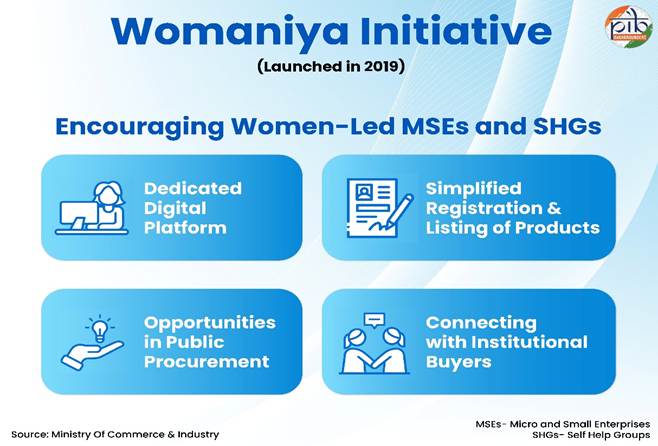
It is in this context that the Womaniya initiative, anchored within the Government e-Marketplace (GeM), must be understood. More than a procurement policy, Womaniya represents a structural shift in how the Indian state is attempting to integrate women into the formal economy—not as beneficiaries of support, but as participants in production, trade, and enterprise.
At its heart lies a simple but powerful idea: access to markets can transform lives. Public procurement in India constitutes one of the largest organized markets, with government departments, ministries, and public sector undertakings collectively purchasing goods and services worth thousands of crores annually. Historically, this space has been dominated by established firms with the resources and networks to navigate complex procurement systems. For small, women-led enterprises, entry into this ecosystem has often been nearly impossible.
The digitisation of procurement through GeM marked an important turning point. By creating a paperless, transparent, and standardized platform, GeM reduced many of the inefficiencies and opacity that had long characterized government purchasing. However, digitisation alone does not automatically translate into inclusion. Structural inequalities tend to reproduce themselves even within digital systems. Recognizing this, Womaniya was introduced as a targeted intervention—designed not just to open the door, but to ensure that women entrepreneurs are able to walk through it.
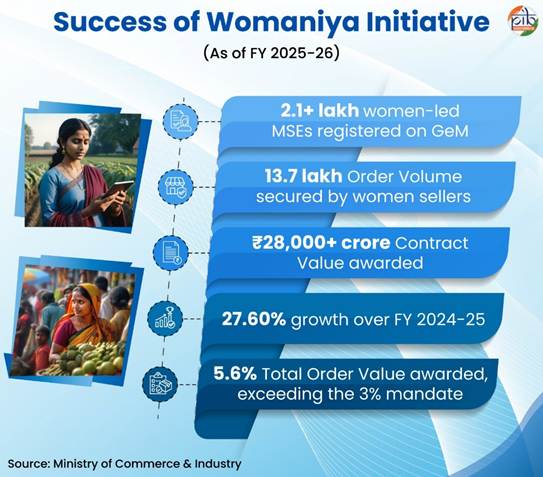
The results, even at this stage, are significant. With over two lakh women-led micro and small enterprises registered and procurement worth approximately ₹28,000 crore routed through them, Womaniya has already moved beyond the realm of policy intent into measurable impact. The fact that procurement from women-led enterprises has exceeded mandated targets indicates a deeper truth: when barriers are removed, participation is not a challenge—opportunity is.
Yet, the true significance of Womaniya lies not in numbers alone, but in the shift it represents in economic thinking. For too long, women’s economic participation has been framed as a social issue—something to be addressed through welfare, skill development, or microfinance. While these interventions are important, they often stop short of integrating women into mainstream economic systems. Womaniya challenges this approach by positioning women as producers and suppliers within a formal, large-scale market. It reframes empowerment as economic agency.
This shift has far-reaching implications. When women gain direct access to buyers—especially institutional buyers like the government—they gain not just income, but bargaining power. The elimination of intermediaries ensures that a larger share of value accrues to the producer. For many women entrepreneurs, particularly those operating through Self-Help Groups (SHGs), this can mean the difference between subsistence and sustainability.
The role of SHGs in this transformation cannot be overstated. Over the past two decades, SHGs have emerged as one of India’s most successful grassroots development models, bringing together millions of women into networks of savings, credit, and enterprise. However, while SHGs have been effective in mobilizing women and fostering financial inclusion, their integration into larger markets has remained limited. Womaniya bridges this gap by connecting these grassroots enterprises to formal procurement systems, thereby enabling scale.
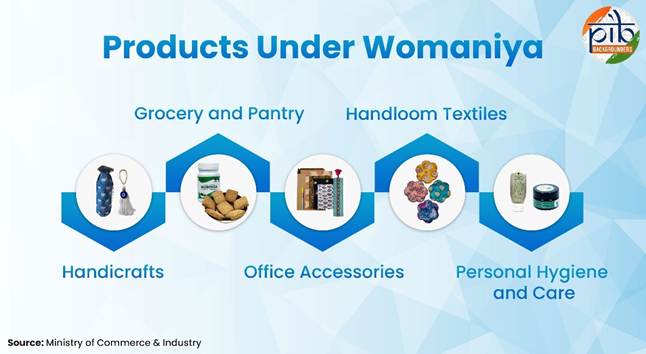
Equally noteworthy is the initiative’s emphasis on sectors where women already possess traditional strengths—handicrafts, handloom, coir, and home-based products. This is a critical design choice. Rather than forcing women into unfamiliar sectors, Womaniya builds upon existing skills and knowledge systems. In doing so, it not only enhances economic participation but also preserves cultural heritage. Traditional crafts, often undervalued in modern markets, find new life when linked to structured demand.
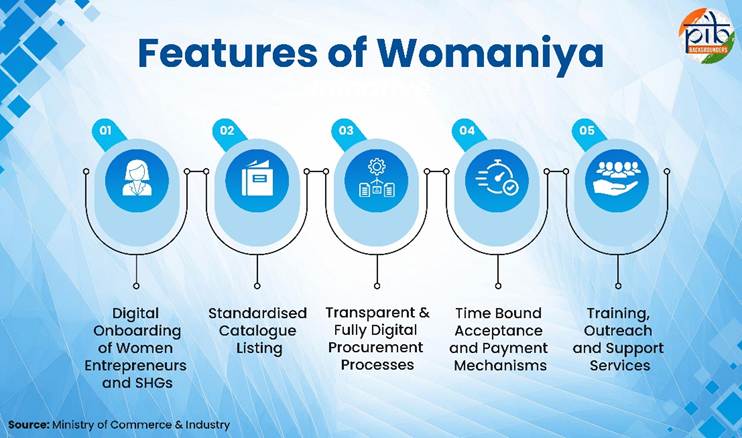
However, the transformation that Womaniya promises is not without its challenges. One of the most significant barriers remains digital literacy. While platforms like GeM are designed to be user-friendly, they still require a basic level of technological familiarity. For many women in rural and semi-urban areas, this can be a significant hurdle. Without targeted training and capacity-building efforts, there is a risk that the benefits of the initiative may remain unevenly distributed.
Awareness is another critical issue. A large number of potential beneficiaries simply do not know that such opportunities exist. Information asymmetry continues to be a major barrier in India’s development landscape. Bridging this gap will require sustained outreach efforts, involving not just government agencies but also local institutions, civil society organizations, and community networks.
Then there are questions of quality and scalability. Participation in formal procurement markets requires adherence to certain standards—consistency in product quality, timely delivery, and reliable supply chains. For small enterprises operating with limited resources, meeting these standards can be challenging. Addressing this will require a supportive ecosystem that includes training, infrastructure, and access to credit.
Logistics, too, present a significant challenge. While digital platforms can connect buyers and sellers, the physical movement of goods remains a critical link in the chain. Inadequate transport infrastructure, high shipping costs, and fragmented supply chains can undermine the advantages of digital access. Strengthening these logistical networks will be essential for ensuring that market access translates into real economic gains.
Beyond these operational challenges lies a broader question about the nature of inclusion itself. While Womaniya opens doors within public procurement, a truly inclusive economy must extend similar opportunities across private markets as well. The long-term success of such initiatives will depend on their ability to integrate women entrepreneurs into the wider commercial ecosystem, including e-commerce platforms and global value chains.
The policy architecture surrounding Womaniya, particularly its integration with initiatives like SWAYATT, reflects an understanding of these complexities. By focusing on startups, women, youth, and marginalized communities, SWAYATT seeks to create a more diverse and inclusive supplier base. This integrated approach is crucial, as inclusion cannot be achieved through isolated interventions—it requires a systemic shift.
Looking ahead, the future of Womaniya will depend on how effectively it can evolve from access to empowerment, and from participation to leadership. This will require a multi-pronged strategy: expanding training programmes, enhancing digital literacy, strengthening institutional partnerships, and building robust support systems at the grassroots level. It will also require a cultural shift—one that recognizes and values women’s contributions not just within households, but within the economy at large.
In many ways, Womaniya represents a microcosm of India’s broader development journey. It reflects the transition from a welfare-oriented approach to a more empowerment-driven model of governance. It acknowledges that economic growth, to be meaningful, must be inclusive. And it demonstrates that inclusion is not merely a moral imperative—it is an economic necessity.
As India moves toward its vision of becoming a developed nation by 2047, the importance of such initiatives cannot be overstated. An economy that excludes half its population cannot achieve its full potential. Conversely, an economy that harnesses the capabilities of all its citizens can unlock unprecedented growth.
The promise of Womaniya, therefore, lies not just in what it has achieved, but in what it represents—a reimagining of markets, a redistribution of opportunity, and a step toward a more equitable economic order. The challenge now is to sustain this momentum, deepen its impact, and ensure that the pathways it has opened remain accessible to all who seek to walk them.
Because in the end, the true measure of progress is not how fast an economy grows, but how widely its benefits are shared.

Comments are closed.