

Mahpara Saleem
“When power remains confined to the aged, decision-making risks becoming detached from the lived realities of the present generation.”
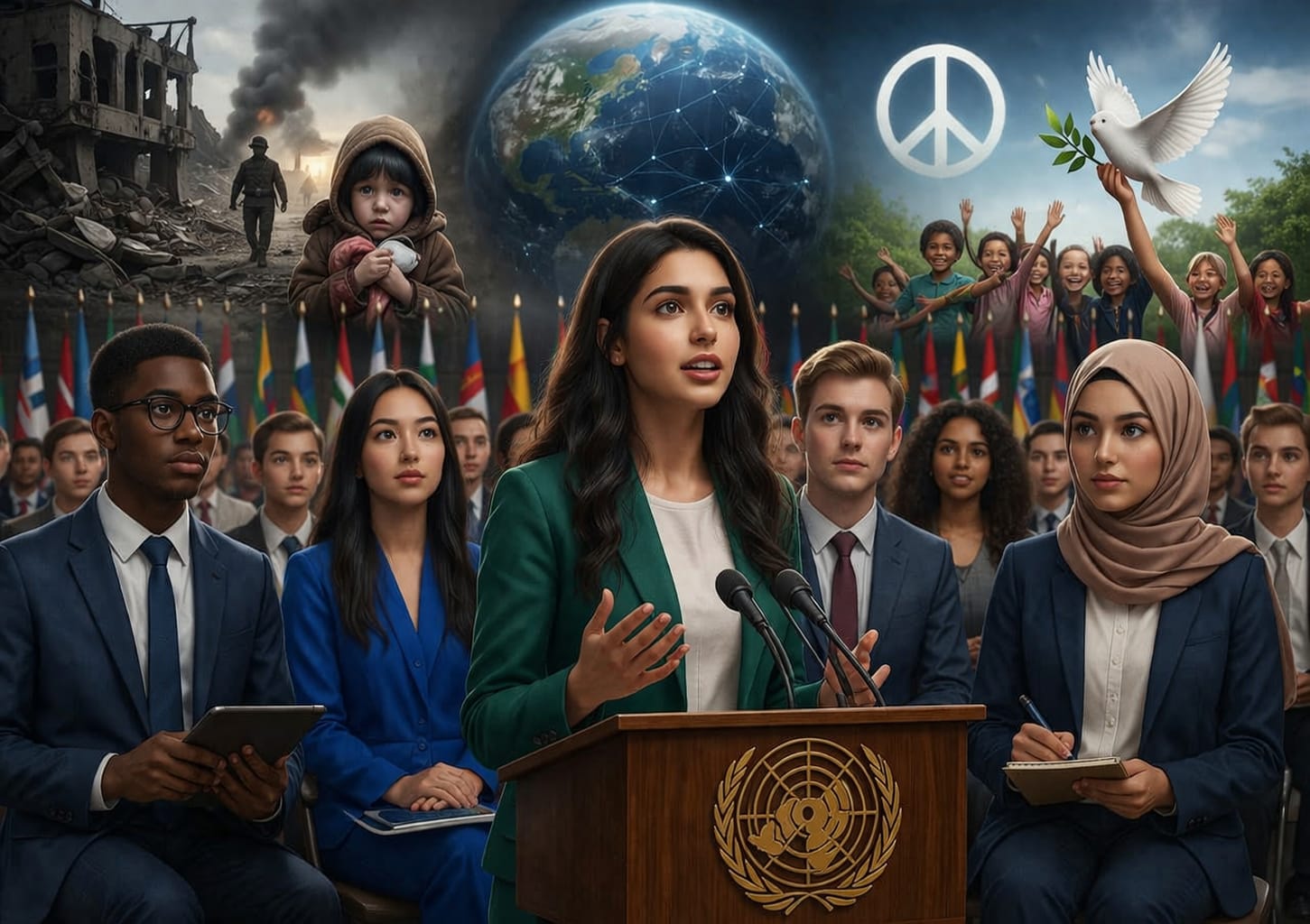
If gerontocracy continues to dominate the global political landscape, the cycle of war, suppression, and prolonged human suffering risks becoming a recurring pattern rather than an exception. When power remains concentrated in the hands of those far removed from the lived realities of the present generation, decision-making can become detached, rigid, and at times, dangerously outdated. This raises a pressing and deeply relevant question: can younger leaders offer a better path forward?
Youth, often underestimated, carries a form of insight that cannot be acquired through age alone , the immediacy of lived experience. Young people do not study unemployment as a distant economic indicator; they confront it as a daily uncertainty, either personally or through the struggles of their peers. They do not approach mental health as a theoretical framework but as a lived crisis that defines the emotional climate of their generation. Economic instability, social pressure, and the longing for peace are not abstract policy concerns for them; they are intimate, urgent, and deeply felt realities.
More importantly, the defining strength of young leadership lies in its capacity for empathy. Having grown up in an age of constant connectivity, young individuals are witnesses to global suffering in real time. War is no longer a distant headline; it is a visual and emotional experience that unfolds on their screens and resonates within their communities. This proximity to pain fosters not indifference, but sensitivity a heightened awareness of the human cost behind political decisions.
نوجوانوں کو پیروں کا استاد کر
کیا خبر ان کو کیا کیا ہے پوشیدہ راز
Unlike traditional power structures often shaped by dominance and control, younger leaders are more inclined toward dialogue, collaboration, and problem-solving. Their instinct is not to assert authority through force, but to build understanding through connection. They question long-standing systems not out of rebellion alone, but a desire to reform what no longer serves humanity.
However, the argument is not that youth alone is sufficient for good governance, nor that experience holds no value. Rather, it is the imbalance the overwhelming dominance of aged leadership without adequate representation of younger voices that creates stagnation. A system that integrates the wisdom of experience with the urgency and empathy of youth is far more likely to produce decisions that are both thoughtful and humane.
The future cannot be shaped by those who will not live to see it unfold. To break the cycle of conflict and suffering, the world must begin to trust its younger generations ,not as passive inheritors of power, but as active architects of a more just, peaceful, and compassionate global order.
Jawanu Ko Soz-e-Jiger Baksh Dei
Mera Ishq, Meri Nazr Baksh Dei

Comments are closed.