
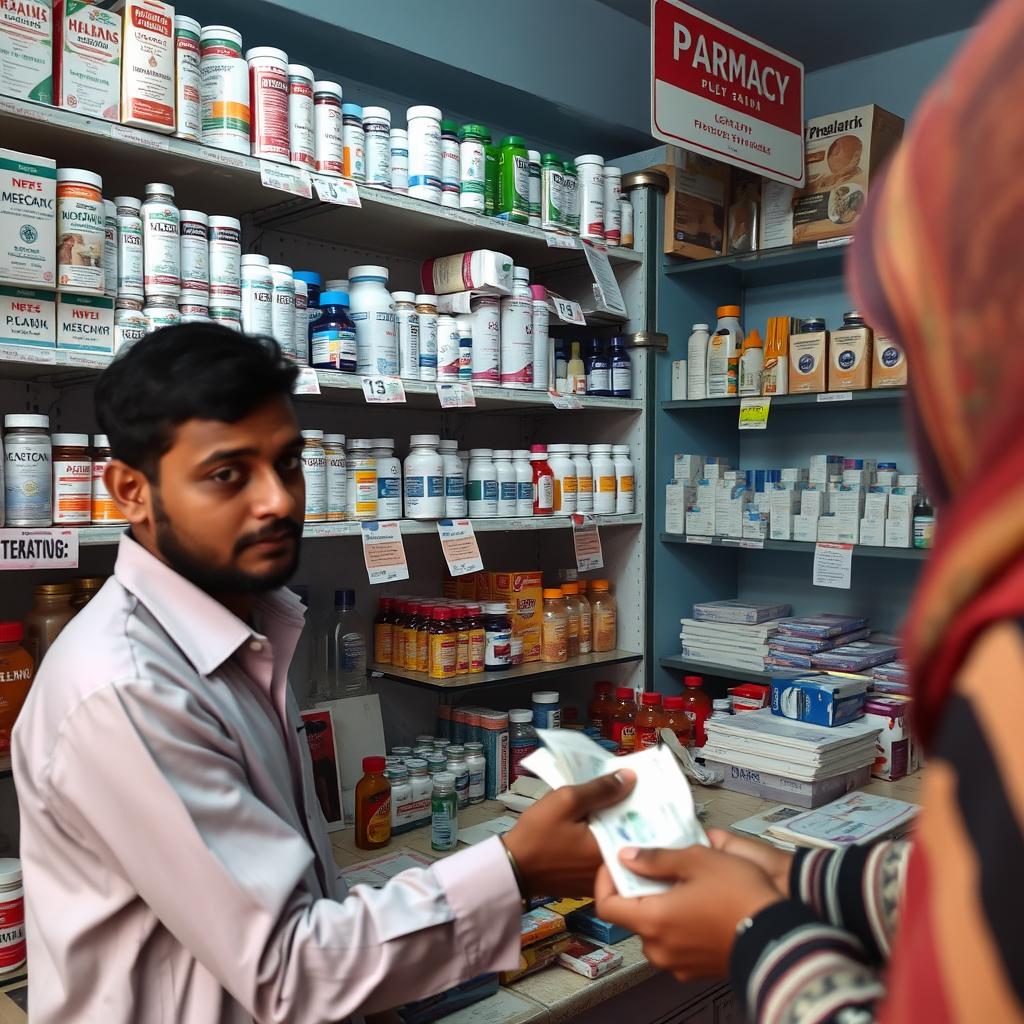

In our most vulnerable moments, we turn to two things: faith and medicine. After God, it is a pill, a syrup, or a surgical procedure that becomes our hope for healing. We trust the medical industry with our lives, often at a great financial cost. But lately, this trust is being tested by a bitter pill of disparity and inexplicable pricing that is hard for a common person to swallow.
For years, I have noticed a curious pattern. Whenever I travel to Srinagar, I make it a point to buy medicines. The reason is simple. On every branded medicine, whether antibiotics or other essential drugs, I receive a discount of 20 to 30 percent at certain shops. This is not a hidden privilege. It is a standard practice at many chemist shops there and in other districts as well.
In my own district Bandipore, however, the same medicines are sold at the maximum retail price ( MRP), without a single rupee off. This difference leaves me puzzled. Why should the place where you live decide how much you pay for essential healthcare?
This issue, which once seemed like a minor inconvenience, turned into a harsh reality for me recently. My sister met with an accident, and I was asked to arrange surgical and post-surgical items. The bill was staggering. Upon asking a friend connected to the medicine industry, I was directed to another chemist.
“Why should the place where you live decide how much you pay for essential healthcare? Medicines are not luxuries—they are a lifeline. Yet, in Bandipore, ordinary families pay full price while the same drugs elsewhere come with discounts. Is geography the new determinant of survival?
To my utter disbelief, the rates for the exact same items were less than half. The difference was over 100% ! One moment I was being charged an exorbitant price, and the next, a simple reference revealed the massive margin being taken from ordinary, desperate customers.
It felt like a cruel lottery where the patient always loses.This forced me to ask some difficult questions. Why cannot discounts and rates be uniform everywhere? The cost of producing a medicine does not change with geography. Why, then, do discounts vary from place to place and item to item? And most importantly, why cannot our chemists show compassion to the poor and the destitute at least ? Families often sell property, sacrifice savings, or borrow money to afford medicines. Do they not deserve a little mercy?
This pain is not mine alone. It is shared silently in countless homes. Chronic illnesses such as diabetes, hypertension, bone disorders, and heart disease are now permanent companions for millions of families. Medicines are no longer a temporary relief but a permanent necessity. For the daily wage earner, labour, the elderly dependent on pensions, or families already drowning in debt, the full MRP of a month’s supply of pills is a terrifying figure. It often forces them to choose between health and hunger.
The business of medicine is not like any other trade. It is built on trust and compassion. When a person walks into a pharmacy, they are often anxious, in pain, and financially strained. Charging them the highest possible amount of essential drugs feels like exploiting their suffering.
I do not believe all chemists are profiteers. Many are kind and considerate. But the system itself appears broken. There must be a fairer mechanism. The drug and food control authorities should take serious note of this disparity and enforce regulations that protect the common masses. Chemists’ associations too could agree on a standard and reasonable discount policy across regions. Customers should also be made aware that they have the right to ask for a better rate. Transparency and fairness are possible if there is collective will.
This is a humanitarian appeal to those engaged in this noble business. You are not just shopkeepers. You are essential partners in our healthcare system. You see our pain more closely than most. We plead with you to look beyond profit margins and recognise the human stories behind every prescription.
A small discount is not a mere financial adjustment. For many struggling families, it is a gesture of empathy that they will never forget. Let the healing power of medicine not be poisoned by unfair pricing. After God, we place our trust in the medical profession and the medicine industry. It is time to honour that trust with fairness.
The writer hails from Bandipore and can be reached at maliknazir.a@gmail.com. The picture used with the write up is AI-Generated
Quote1
“Why should the place where you live decide how much you pay for essential healthcare? Medicines are not luxuries—they are a lifeline. Yet, in Bandipore, ordinary families pay full price while the same drugs elsewhere come with discounts. Is geography the new determinant of survival?”
Quote 2
“When patients walk into a pharmacy, they do not just carry prescriptions—they carry fear, pain, and financial strain. Every pill, syrup, or injection represents hope. Exploiting that vulnerability is not just unfair; it is inhuman. Compassion must precede profit.”

Comments are closed.