

Malik Nazir
In Kashmir, the heart of every celebration is the Wazwan, the grand feast that turns a marriage gathering into a lasting memory. The long wait for guests only heightens the shared excitement as everyone anticipates the special delicacies. Yet amid the cheerful crowd at a recent wedding in a nearby village, I witnessed an unusual moment that left me thoughtful.
A well-dressed guest from the city suddenly drew my attention when he anxiously asked in Kashmiri, “khaber neche kheovaa kenh?” meaning “Has the girl eaten anything?” Seeing his age, I assumed he was concerned about a grandchild who might have missed her meal. But to my astonishment, the “girl” he referred to was not his daughter or grandchild but his pet cat.
The manner in which he fussed over the animal, enquiring repeatedly about her wellbeing, and later taking her into his lap to soothe her tantrums, was something entirely new for a rural observer like me. When I curiously asked him about the pet, he proudly declared that keeping a cat is a sunnat, an Islamic practice. I was unsure about the religious authenticity of his claim, so I chose not to argue.
Ironically, moments later, when the call for prayer echoed from the nearby masjid, the same man who had just invoked a religious justification for keeping a cat ignored the obligatory prayer, even as others rose to offer Salah and later enjoy the feast together.
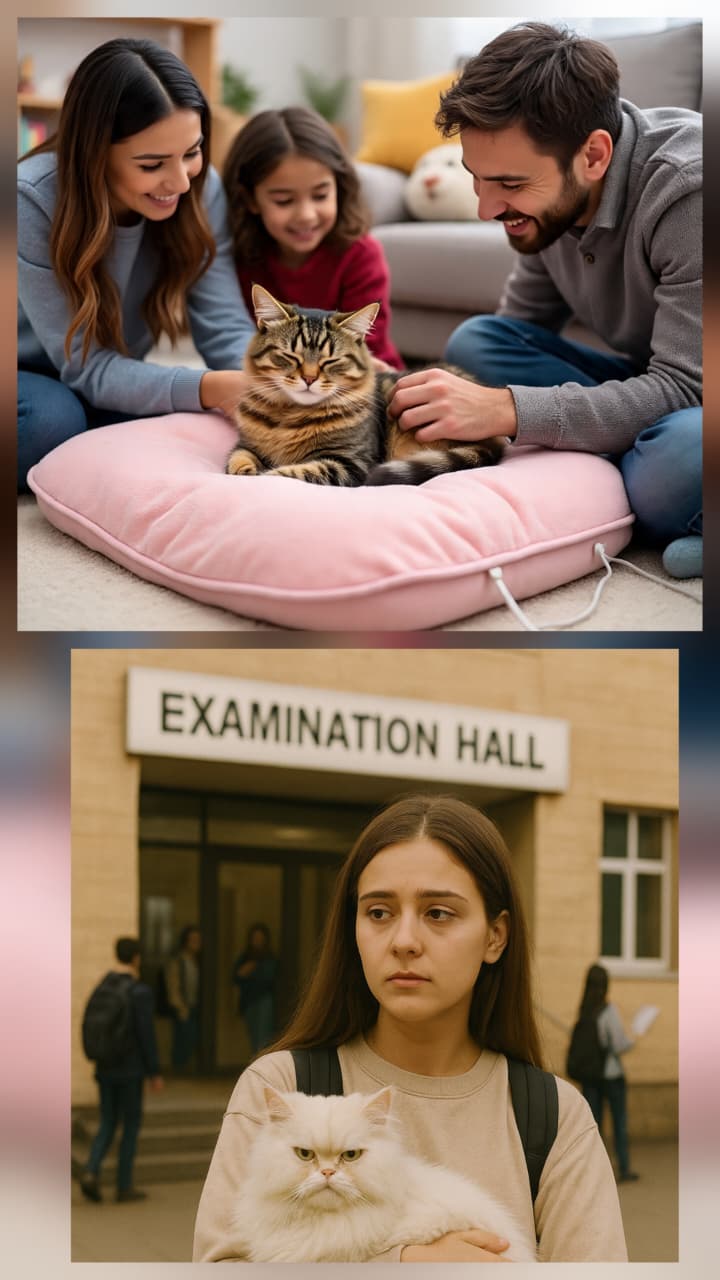
Initially, I dismissed the incident as a one-off sight. But soon, similar scenes became frequent. A week later, I saw a teenage girl carrying a white pet cat through the market, proudly flaunting it. And just recently, I witnessed something even more startling: a Class 12th girl carrying her pet cat like a fashion accessory all the way to the examination centre and handing it over to someone moments before entering the hall. The extent of this attachment and obsession has clearly reached new heights.
This shift is even more evident in the expectations of children today. A parent shared that earlier, children would ask for simple gifts or a small treat after passing their examinations. Now, many demand a pet cat of a “good breed” as a reward. This change in mindset is not only surprising but alarming. What were once meaningful achievements celebrated with modest joys are now becoming opportunities to fuel an expensive social trend.
But what truly forced me to reflect more deeply happened just a few days ago. I visited a relative who had been unwell. While sitting with the family, my eyes fell upon their pet cat resting comfortably on an electric blanket—an image that struck me hard. In our society, countless poor households struggle to afford even a basic blanket for the harsh winter, yet here was an animal enjoying luxuries denied to many humans. The family, delighted by the cat’s presence, seemed proud of the indulgence. That moment made me question where our priorities as a society are heading.
As I looked deeper into this emerging trend, I discovered that maintaining such pets is no small expense. Monthly costs range from Rs 6000 to Rs 10000,excluding vaccinations and veterinary consultations, which themselves run into thousands. For many families, this amount equals their entire monthly household budget. Earlier, pets such as cows or horses contributed to the household economy; they were assets. Today’s pet culture, however, drains financial resources with little or no return except a fleeting sense of modernity or status.
Where have we reached as a society? When an elderly man can justify such indulgence with questionable arguments, how do we blame the younger generation for following the same path? Doctors have already warned that cats can cause certain infections, but there is another infection spreading silently, the infection of imitation, extravagance, and misplaced priorities.
There is nothing wrong with showing compassion toward animals—kindness is always admirable. But when affection turns into extravagance, and when pets become status symbols,it is time for serious reflection. Our society, especially the younger generation, must rethink this rising trend.
We should direct our time, resources, and energy toward meaningful and productive pursuits rather than fleeting fashions that add little real value. A balanced approach, guided by wisdom and responsibility, is urgently needed. Only then can we protect our social bonds, set clear priorities, and ensure that our children grow up with sound judgement instead of being driven by impulse.
The writer teaches at NM Boys Higher Secondary School, Bandipora, and can be reached at maliknazir.a@gmail.com.

Comments are closed.