

S. Ahmad
Over the last decade, India has entered a transformative phase in its defence preparedness. This shift did not happen overnight. It is the result of long-pending reforms, rapid technological adoption, and a renewed national resolve to strengthen the country’s security architecture. The most striking outcome of these changes is the significant rise in India’s defence exports, which have grown almost 20-fold, increasing from ₹4,682 crore in 2014–15 to an impressive ₹21,083 crore in 2023–24. For a country that once depended overwhelmingly on imports, this rise signals a deeper shift — India is moving from being a defence consumer to a defence producer.
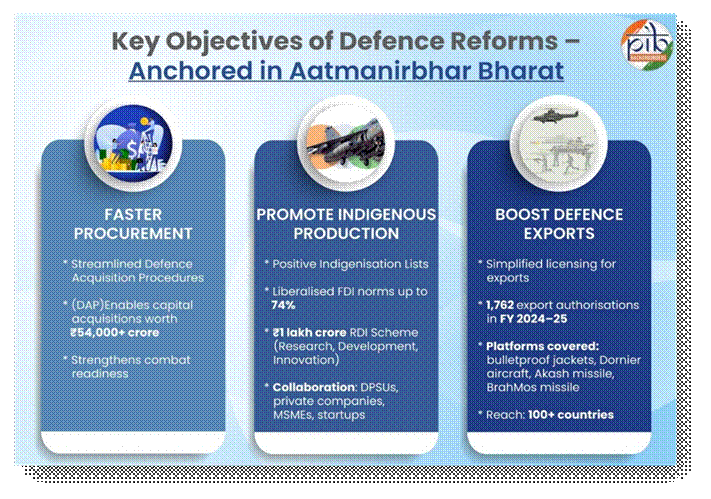
This remarkable transition is driven by a broad set of reforms introduced by the Government of India under the Atmanirbhar Bharat initiative. In simple words, Atmanirbharta means self-reliance — creating, designing, and manufacturing critical security systems within India. For decades, the armed forces had to rely on foreign suppliers for everything from basic rifles to fighter aircraft, leading to delays, higher costs, and vulnerability during crises. The new push for defence self-reliance aims to reverse this dependency.
Several factors explain why Atmanirbharta has become essential for national security. India faces a complex and evolving security environment, with challenges emerging simultaneously across land borders, maritime domains, and the cyber space. China’s rapid military expansion, Pakistan’s long-standing hostility, and the shifts in global geopolitics have made reliable access to advanced defence technologies more important than ever. Wars around the world — whether in Gaza, Ukraine, or the South China Sea — have shown that global supply chains can collapse overnight. Nations that depend on foreign weapons often find themselves helpless when crises erupt.
India learned this lesson the hard way. Historically, almost 70–75% of India’s defence equipment came from abroad. Even today, India remains among the world’s largest arms importers, although the share is slowly decreasing. The government has therefore created a long-term strategy to encourage local manufacturing. In 2021, the defence import bill stood at nearly ₹1 lakh crore, but reforms and indigenous development have begun to bring this number down.
One of the biggest structural changes occurred in 2020 with the establishment of the Department of Military Affairs (DMA) under the Chief of Defence Staff (CDS). For the first time, military modernisation, joint training, and procurement were brought under a single administrative umbrella. This created a more unified decision-making structure, reducing delays and allowing faster coordination among the Army, Navy, and Air Force. The DMA is also driving jointness between the services, ensuring that the three forces operate as a single integrated unit during conflict, just like modern militaries worldwide.
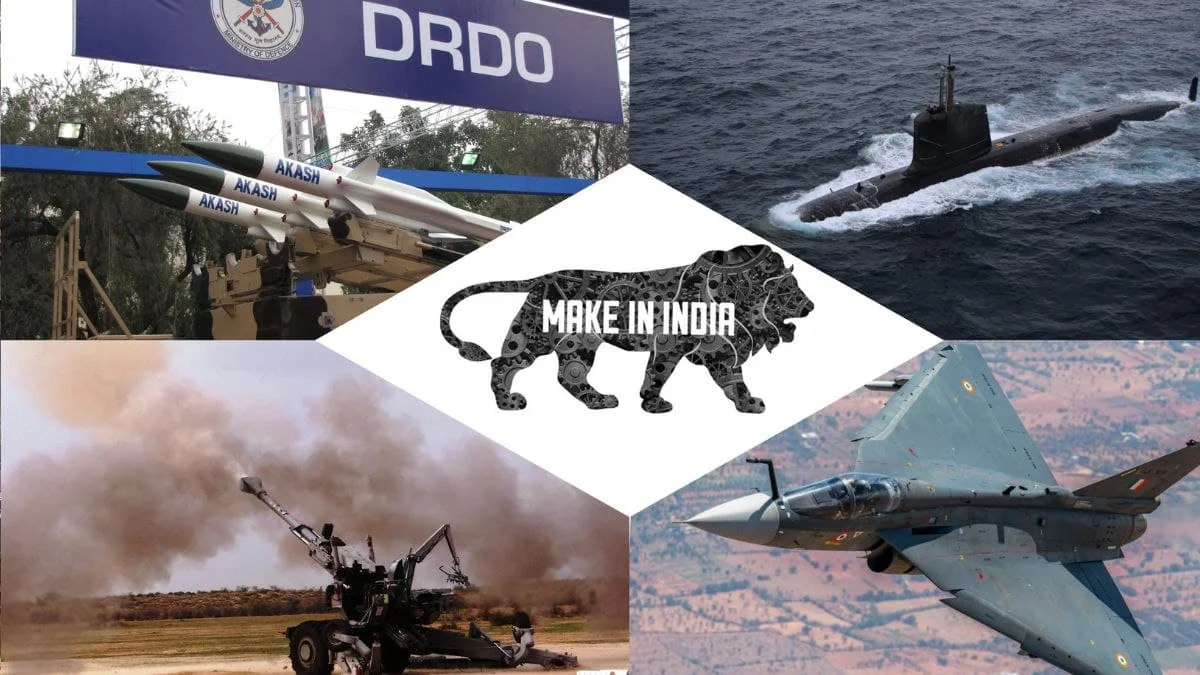
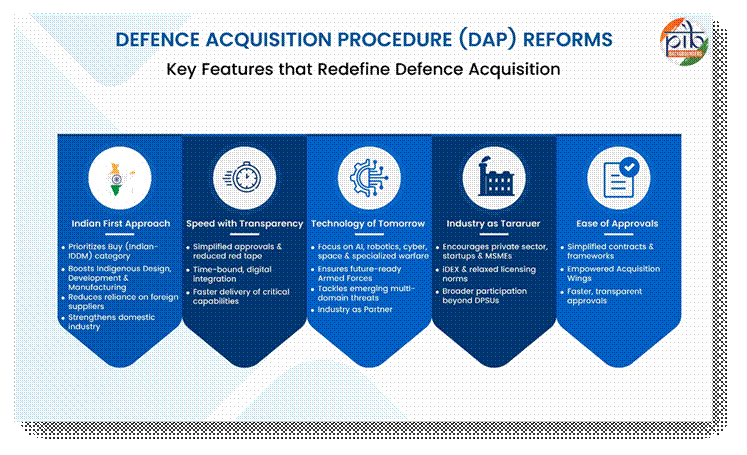
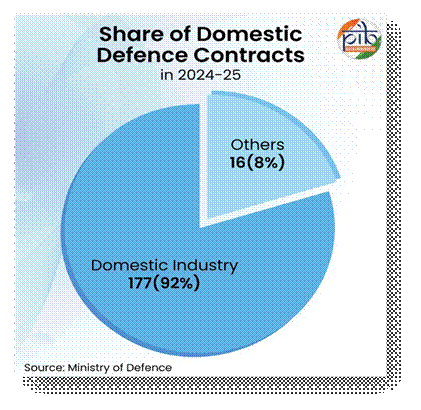
Alongside this reform, the newly strengthened Defence Acquisition Council (DAC) has accelerated and rationalised procurement. Earlier, defence purchases often got stuck for years due to bureaucratic hurdles. Now, the procurement process has become faster and more transparent. The DAC works closely with the three services to prioritise indigenous platforms over foreign ones, wherever feasible. As a result, a larger portion of India’s defence budget is now being spent on “Make in India” products.
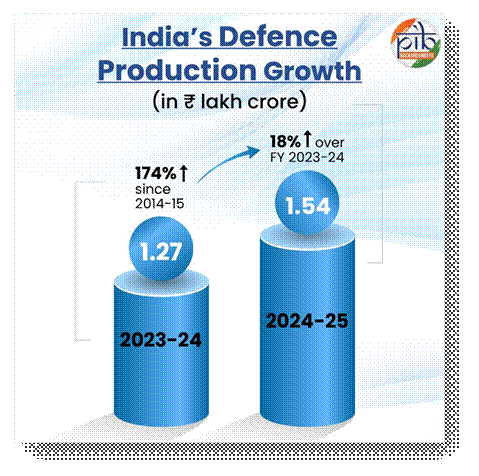
The results are already visible across sectors. The Indian Navy has emerged as the strongest example of indigenous capability. Nearly 70% of its platforms — including destroyers, frigates, offshore patrol vessels, and submarines — are made in India. The commissioning of the country’s first indigenous aircraft carrier, INS Vikrant, stands as a milestone. Designed by the Indian Navy and built by Cochin Shipyard, Vikrant showcases the ability of Indian engineers to deliver highly complex warships that only a few nations in the world can produce.
In the aerospace sector as well, India has made significant progress. Hindustan Aeronautics Limited (HAL) has taken a major leap with the Light Combat Aircraft (LCA) Tejas, now fully inducted into the Indian Air Force with more orders placed. The Tejas Mk-1A variant comes with modern avionics, improved radar, and enhanced combat capabilities. Major export discussions are underway with countries such as Egypt and Argentina, signalling global confidence in Indian platforms. The next-generation Advanced Medium Combat Aircraft (AMCA) is also in development, representing India’s push towards fifth-generation fighter jets.
Space-based defence technologies, too, are advancing rapidly. The Indian Space Research Organisation (ISRO) and the Defence Research and Development Organisation (DRDO) are working jointly to develop satellite surveillance systems, missile tracking radars, and space situational awareness programs. With the global threat landscape shifting towards cyber warfare and artificial intelligence, India is also investing heavily in cyber defence infrastructure.
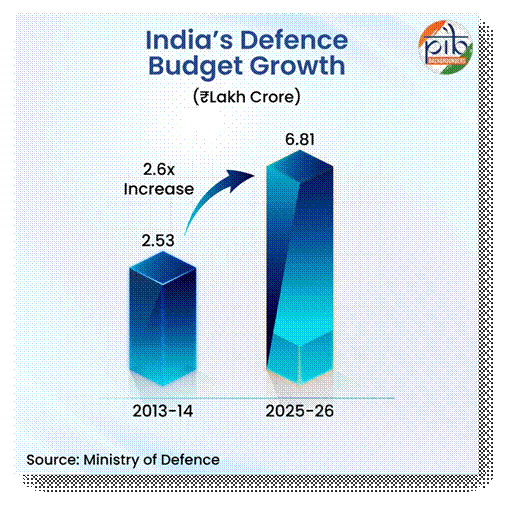
Another major shift has been the integration of the private sector. Earlier, defence manufacturing was mostly restricted to government-owned public sector units (PSUs). Today, more than 350 private companies are part of defence manufacturing, contributing everything from drones to artillery guns. The Dhanush artillery gun, the upgraded Pinaka rocket system, and the indigenous air defence systems are examples of the innovation emerging from the private sector. The Defence Ministry has also created a series of “Positive Indigenisation Lists” — more than 500 items that the armed forces are no longer allowed to import and must source domestically. This has given Indian industry a guaranteed market as well as confidence to invest in research and manufacturing.
India has also made major strides in export potential. From BrahMos missiles to coastal surveillance systems, Indian defence products are now in demand across Southeast Asia, the Middle East, and Africa. The BrahMos missile, co-developed with Russia, is one of the fastest supersonic cruise missiles in the world and has been exported to the Philippines in a deal worth $375 million. Discussions are ongoing with several other countries.
These developments signal that India is no longer a passive buyer but an emerging supplier and strategic partner. Defence exports not only bring revenue but also enhance India’s global influence and diplomatic leverage.
The journey toward self-reliance also has a deep economic dimension. The Indian defence manufacturing sector is projected to reach $25 billion by 2025, with exports targeted at $5 billion. As indigenous content increases, the country saves valuable foreign exchange, creates jobs, and builds domestic expertise. Every aircraft, ship, or weapon system built in India generates thousands of skilled jobs, strengthens startups, and encourages innovation in materials science, electronics, and artificial intelligence.
However, this journey is not without challenges. Complex technology, supply-chain dependencies, and the need for higher R&D investment remain serious concerns. Currently, India spends around 0.7% of GDP on R&D, whereas leading military powers spend more than 2–3%. Increasing funding for research, especially in critical technologies such as semiconductors, artificial intelligence, drones, electronic warfare, and advanced materials, will be crucial. Collaboration between the government, industry, and academia must also deepen to achieve full defence autonomy.
Despite these challenges, the direction is clear. India is moving steadily towards an ecosystem where innovation is encouraged, procurement is streamlined, and the armed forces are empowered. The goal is not merely to reduce imports but to ensure that India has full strategic freedom in times of conflict. No country can afford to depend on others for its safety — and this principle applies even more strongly to a nation with India’s geography, population, and strategic responsibilities.
Atmanirbharta is therefore not just an economic policy; it is a national security imperative. A self-reliant defence ecosystem strengthens India’s sovereignty, builds technological capability, and ensures that the armed forces have timely access to cutting-edge equipment. It reduces strategic vulnerabilities and enhances India’s ability to respond effectively to any threat.
As India continues on this path, the world is taking notice. From being one of the largest importers of defence equipment, India is steadily emerging as a major defence producer with global ambitions. The challenge now is to maintain momentum — to keep innovating, keep investing, and keep strengthening the backbone of national security.
If India succeeds, the next decade will mark not just a shift in defence policy but a transformation in India’s place in the world. A strong, self-reliant India is not only safer but plays a pivotal role in shaping global peace and stability. And that, ultimately, is the true purpose of Atmanirbhar Bharat in defence.
The article is based on the inputs and background information provided by the Press Information Bureau (PIB) Author is Writer, Policy Commentator. He can be mailed at kcprmijk@gmail.com

Comments are closed.