

By S. Ahmad
Every nation that dreams of enduring prosperity ultimately turns to science as its most reliable guide. In India’s case, this conviction has steadily deepened over the last decade, giving rise to one of the world’s largest public celebrations of scientific inquiry: the India International Science Festival (IISF).
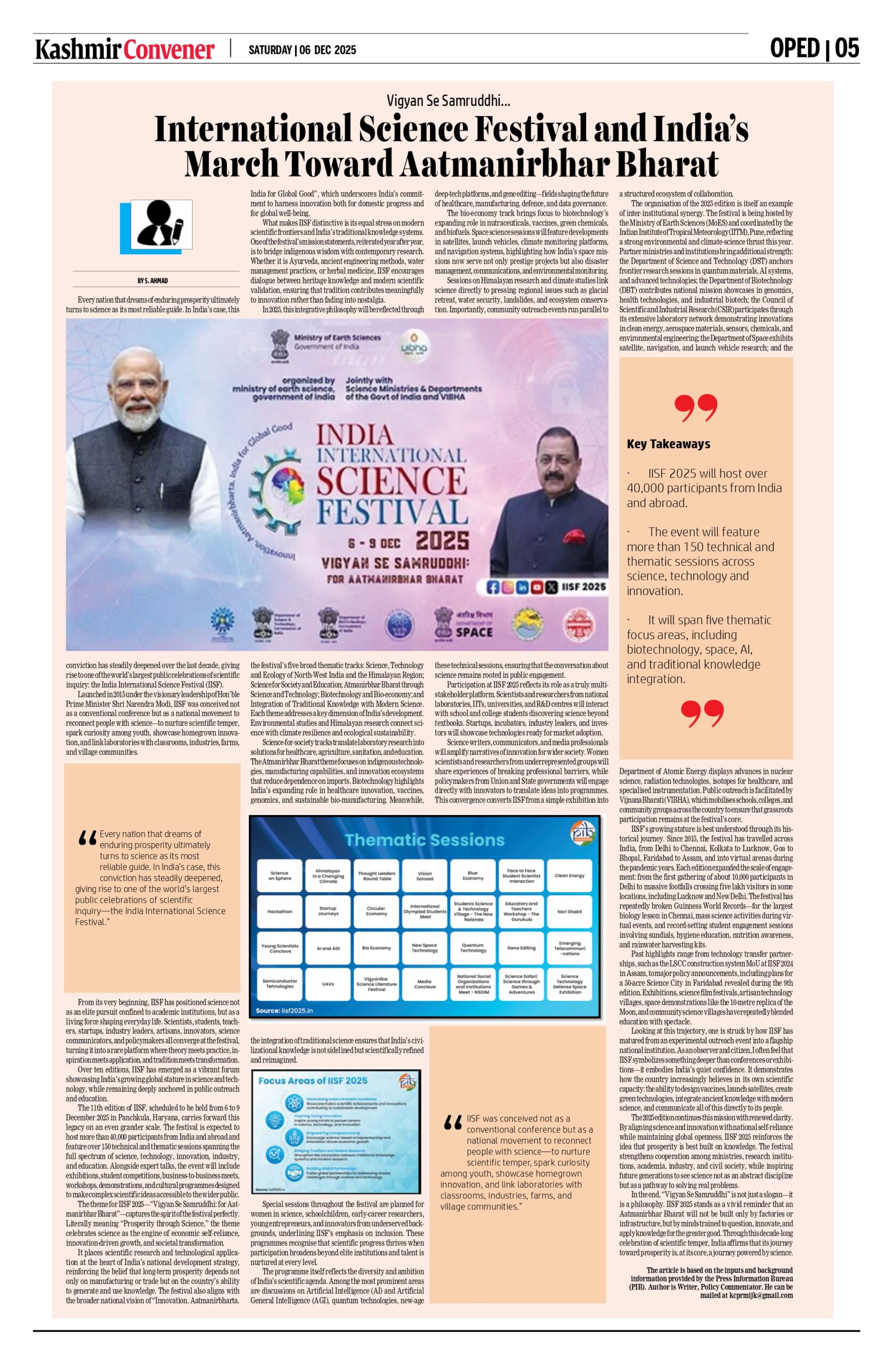
Launched in 2015 under the visionary leadership of Hon’ble Prime Minister Shri Narendra Modi, IISF was conceived not as a conventional conference but as a national movement to reconnect people with science—to nurture scientific temper, spark curiosity among youth, showcase homegrown innovation, and link laboratories with classrooms, industries, farms, and village communities.
From its very beginning, IISF has positioned science not as an elite pursuit confined to academic institutions, but as a living force shaping everyday life. Scientists, students, teachers, startups, industry leaders, artisans, innovators, science communicators, and policymakers all converge at the festival, turning it into a rare platform where theory meets practice, inspiration meets application, and tradition meets transformation.
Over ten editions, IISF has emerged as a vibrant forum showcasing India’s growing global stature in science and technology, while remaining deeply anchored in public outreach and education.
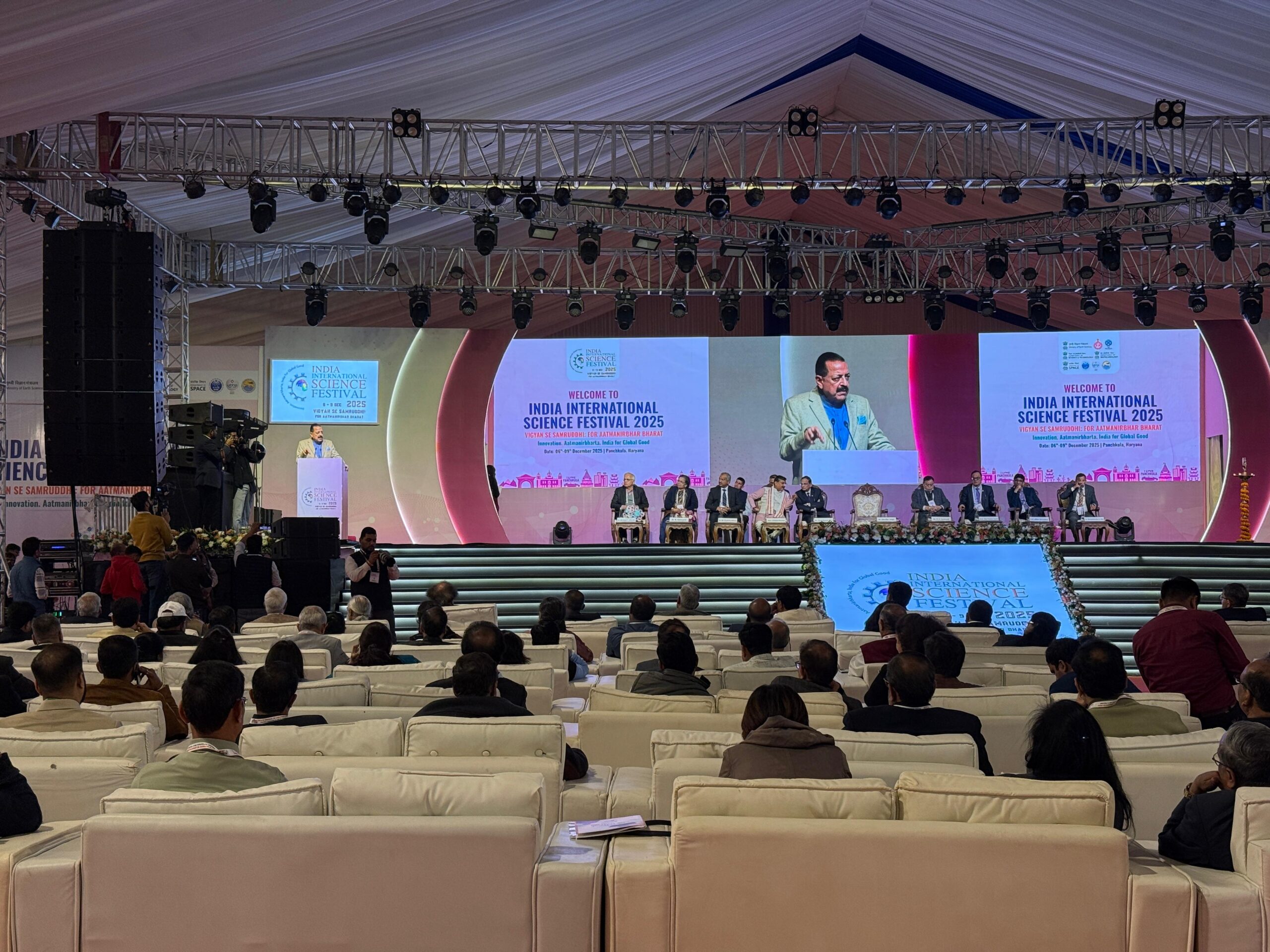
The 11th edition of IISF, scheduled to be held from 6 to 9 December 2025 in Panchkula, Haryana, carries forward this legacy on an even grander scale. The festival is expected to host more than 40,000 participants from India and abroad and feature over 150 technical and thematic sessions spanning the full spectrum of science, technology, innovation, industry, and education. Alongside expert talks, the event will include exhibitions, student competitions, business-to-business meets, workshops, demonstrations, and cultural programmes designed to make complex scientific ideas accessible to the wider public.
The theme for IISF 2025—“Vigyan Se Samruddhi: for Aatmanirbhar Bharat”—captures the spirit of the festival perfectly. Literally meaning “Prosperity through Science,” the theme celebrates science as the engine of economic self-reliance, innovation-driven growth, and societal transformation.
It places scientific research and technological application at the heart of India’s national development strategy, reinforcing the belief that long-term prosperity depends not only on manufacturing or trade but on the country’s ability to generate and use knowledge. The festival also aligns with the broader national vision of “Innovation. Aatmanirbharta. India for Global Good”, which underscores India’s commitment to harness innovation both for domestic progress and for global well-being.
What makes IISF distinctive is its equal stress on modern scientific frontiers and India’s traditional knowledge systems. One of the festival’s mission statements, reiterated year after year, is to bridge indigenous wisdom with contemporary research. Whether it is Ayurveda, ancient engineering methods, water management practices, or herbal medicine, IISF encourages dialogue between heritage knowledge and modern scientific validation, ensuring that tradition contributes meaningfully to innovation rather than fading into nostalgia.
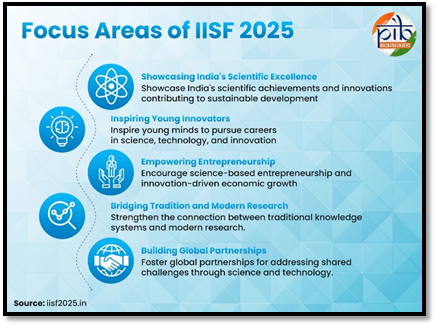
In 2025, this integrative philosophy will be reflected through the festival’s five broad thematic tracks: Science, Technology and Ecology of North-West India and the Himalayan Region; Science for Society and Education; Atmanirbhar Bharat through Science and Technology; Biotechnology and Bio-economy; and Integration of Traditional Knowledge with Modern Science. Each theme addresses a key dimension of India’s development. Environmental studies and Himalayan research connect science with climate resilience and ecological sustainability.
Science-for-society tracks translate laboratory research into solutions for healthcare, agriculture, sanitation, and education. The Atmanirbhar Bharat theme focuses on indigenous technologies, manufacturing capabilities, and innovation ecosystems that reduce dependence on imports. Biotechnology highlights India’s expanding role in healthcare innovation, vaccines, genomics, and sustainable bio-manufacturing. Meanwhile, the integration of traditional science ensures that India’s civilizational knowledge is not sidelined but scientifically refined and reimagined.
Special sessions throughout the festival are planned for women in science, schoolchildren, early-career researchers, young entrepreneurs, and innovators from underserved backgrounds, underlining IISF’s emphasis on inclusion. These programmes recognise that scientific progress thrives when participation broadens beyond elite institutions and talent is nurtured at every level.
The programme itself reflects the diversity and ambition of India’s scientific agenda. Among the most prominent areas are discussions on Artificial Intelligence (AI) and Artificial General Intelligence (AGI), quantum technologies, new-age deep-tech platforms, and gene editing—fields shaping the future of healthcare, manufacturing, defence, and data governance.
The bio-economy track brings focus to biotechnology’s expanding role in nutraceuticals, vaccines, green chemicals, and biofuels. Space science sessions will feature developments in satellites, launch vehicles, climate monitoring platforms, and navigation systems, highlighting how India’s space missions now serve not only prestige projects but also disaster management, communications, and environmental monitoring.
Sessions on Himalayan research and climate studies link science directly to pressing regional issues such as glacial retreat, water security, landslides, and ecosystem conservation. Importantly, community outreach events run parallel to these technical sessions, ensuring that the conversation about science remains rooted in public engagement.
Participation at IISF 2025 reflects its role as a truly multi-stakeholder platform. Scientists and researchers from national laboratories, IITs, universities, and R&D centres will interact with school and college students discovering science beyond textbooks. Startups, incubators, industry leaders, and investors will showcase technologies ready for market adoption.
Science writers, communicators, and media professionals will amplify narratives of innovation for wider society. Women scientists and researchers from underrepresented groups will share experiences of breaking professional barriers, while policymakers from Union and State governments will engage directly with innovators to translate ideas into programmes. This convergence converts IISF from a simple exhibition into a structured ecosystem of collaboration.

The organisation of the 2025 edition is itself an example of inter-institutional synergy. The festival is being hosted by the Ministry of Earth Sciences (MoES) and coordinated by the Indian Institute of Tropical Meteorology (IITM), Pune, reflecting a strong environmental and climate-science thrust this year. Partner ministries and institutions bring additional strength: the Department of Science and Technology (DST) anchors frontier research sessions in quantum materials, AI systems, and advanced technologies; the Department of Biotechnology (DBT) contributes national mission showcases in genomics, health technologies, and industrial biotech; the Council of Scientific and Industrial Research (CSIR) participates through its extensive laboratory network demonstrating innovations in clean energy, aerospace materials, sensors, chemicals, and environmental engineering; the Department of Space exhibits satellite, navigation, and launch vehicle research; and the Department of Atomic Energy displays advances in nuclear science, radiation technologies, isotopes for healthcare, and specialised instrumentation. Public outreach is facilitated by Vijnana Bharati (VIBHA), which mobilises schools, colleges, and community groups across the country to ensure that grassroots participation remains at the festival’s core.
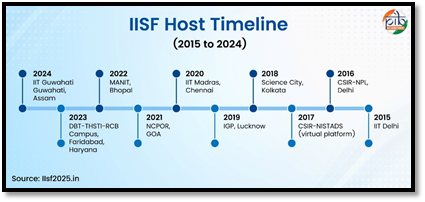
IISF’s growing stature is best understood through its historical journey. Since 2015, the festival has travelled across India, from Delhi to Chennai, Kolkata to Lucknow, Goa to Bhopal, Faridabad to Assam, and into virtual arenas during the pandemic years. Each edition expanded the scale of engagement: from the first gathering of about 10,000 participants in Delhi to massive footfalls crossing five lakh visitors in some locations, including Lucknow and New Delhi. The festival has repeatedly broken Guinness World Records—for the largest biology lesson in Chennai, mass science activities during virtual events, and record-setting student engagement sessions involving sundials, hygiene education, nutrition awareness, and rainwater harvesting kits.

Comments are closed.