

Mohammad Muzaffar Khan
“Islam found a receptive ground in Kashmir because its core ideas resonated with the Valley’s ancient Trika philosophy. Both traditions emphasized divine unity, mysticism, and the pursuit of inner truth, allowing faith to merge naturally with local spiritual thought.”
The story of Islam’s advent in Kashmir is rich and intricate, woven through centuries of trade, spiritual exchanges and the quiet yet profound efforts of countless Muslim missionaries. It is an ancient tale that stretches back long before the formal conversion of King Rinchen Shah in 1320 AD, which is often cited as the beginning of Islam’s establishment in the Valley. Yet, this narrative is far more layered than that single event.
Historians often trace the spread of Islam in Kashmir to the famous conversion of King Rinchen Shah at the hands of Syed Sharaf-ud-Din, also known as Bulbul Shah (RA), a prominent Muslim saint. However, this widely accepted event only represents one chapter in a much older saga. Long before Bulbul Shah’s arrival, Kashmir had been in quiet contact with the Muslim world, with traces of the faith reaching the Valley through various channels.
The early spread of Islam in Kashmir is believed to have been peaceful, driven not by forceful conquest but by the gradual influence of merchants, scholars, and mystics.
The prophet Muhammad (PBUH), in the 7th century, sent letters to various rulers across the world, inviting them to embrace Islam. These letters included correspondences with leaders in regions like Egypt and Abyssinia (modern-day Ethiopia), marking the start of Islam’s reach beyond the Arabian Peninsula.
In the centuries that followed, it is widely believed that Muslim traders, scholars, and missionaries quietly brought Islam to the Valley through their interactions with locals.
This view is supported by M.A. Stein, who noted in his translation of the Rajtarangini that Islam entered Kashmir “not by forcible conquest but by gradual conversion,” prepared by the cultural exchange between Central Asia and the Indian subcontinent.
Islam’s message likely resonated with many Kashmiris due to similarities between Islamic teachings and the local Trika philosophy: an ancient spiritual tradition that emphasized divine unity, mysticism, and the pursuit of inner truth.
Pt. Prem Nath Bazaz, a prominent Kashmiri Pandit historian, highlighted this in his work, asserting that the peaceful spread of Islam in the region was aided by these shared philosophical values.
The legacy of Raja Lalitaditya, who ruled Kashmir in the 8th century, provides further evidence of early Muslim influences in the region. Lalitaditya, known for his expansive military campaigns across Central Asia and beyond, was deeply aware of the rise of Islam during his reign. In fact, he led expeditions into Central Asia, where he interacted with Muslim powers.
During his time, scholars from these regions experts in the sciences and philosophy were invited to Kashmir. Among them was Jenkin, an expert in Chemistry, who contributed to the intellectual richness of the region.
Even more intriguing is the story of Prince Jaisya, the son of Raja Dahir of Sind, who sought refuge in Kashmir after the Muslim conquest of Sind in 712 AD by Muhammad bin Qasim. With him came a Syrian Muslim named Hamim bin Sam, who is believed to have played a crucial role in spreading Islamic teachings in the Valley.
According to some records, Hamim built a mosque at Shah Kalha, a historical site in Kashmir, marking one of the earliest Muslim settlements in the region.
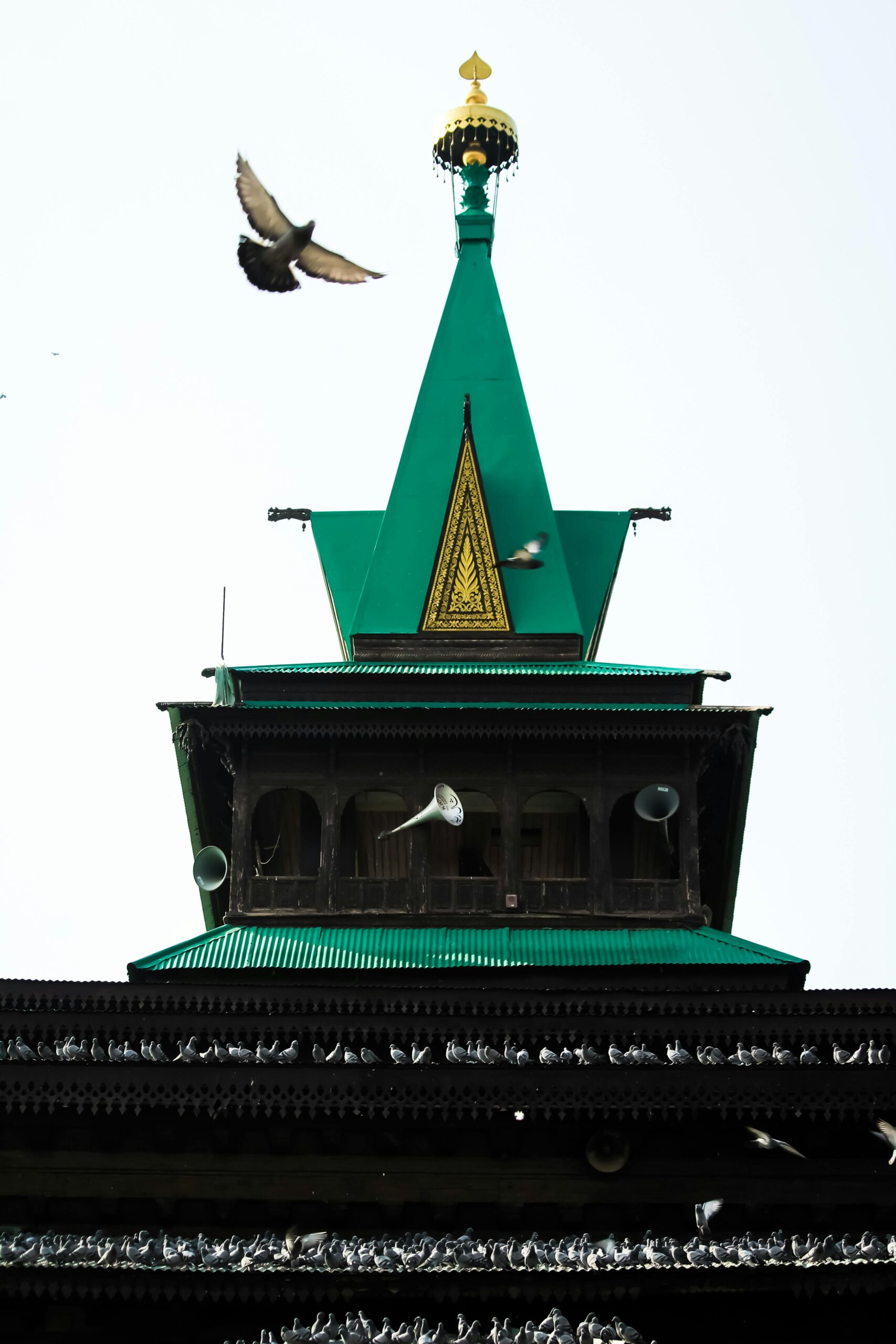
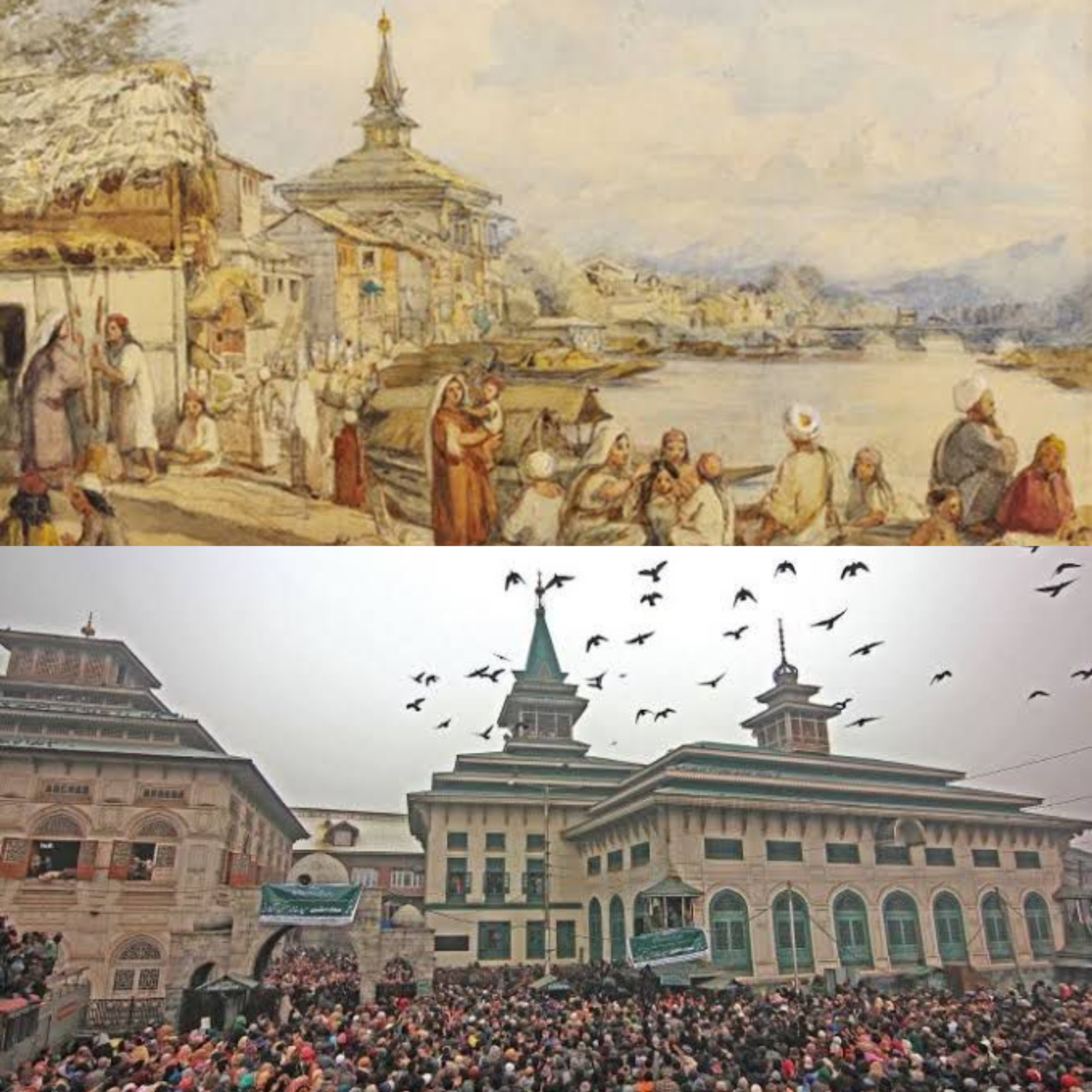
The most profound transformation came with the arrival of Hazrat Mir Syed Ali Hamadani (RA) known as Shah-e-Hamadan. His visit to Kashmir in the 14th century was pivotal in the mass conversion of Kashmiris to Islam.
He introduced Kubrawi Sufi mysticism to the Valley, laying the foundation for the Rishian Order, a Sufi tradition that blended Islamic teachings with local Kashmiri mysticism. The Rishian tradition became the spiritual heart of Islam in Kashmir, where practitioners embraced asceticism and devotion, often living simple, frugal lives focused on serving humanity.
Shah-e-Hamadan’s influence was so deep that he is regarded as one of the founders of Islam in Kashmir, alongside figures like Bulbul Shah and Sheikh Noor-ud-Din Noorani (Sheikh-ul-Alam) (RA), who is also known as Nund Rishi.
Sheikh Noor-ud-Din, in particular, stands out for his profound spiritual poetry, which became a bridge between Islam and the region’s ancient religious practices. He preached peace, unity, and the importance of inner purity, and his teachings continue to inspire Kashmiris to this day.
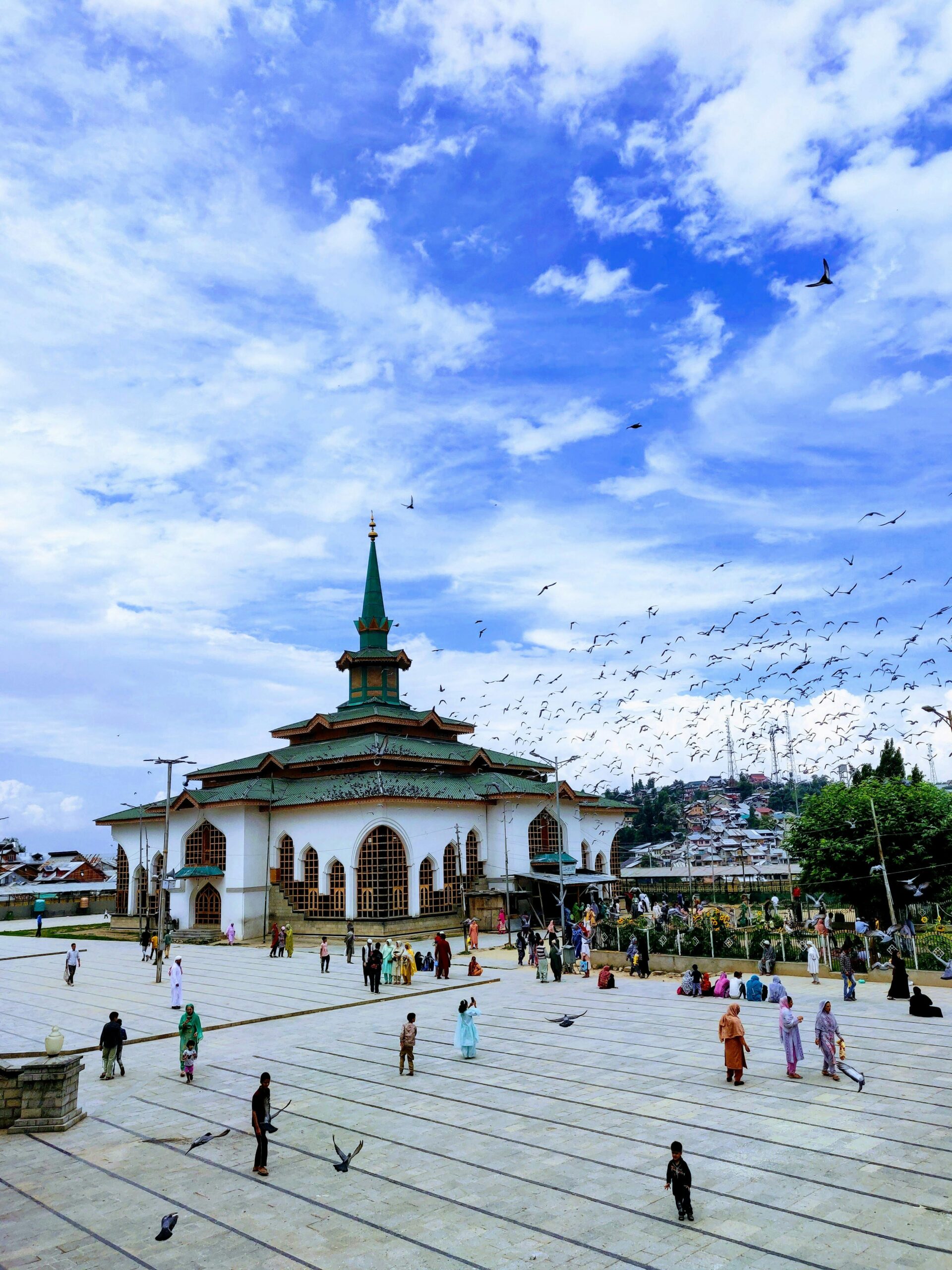
One of the lesser-known facets of Kashmir’s religious history is its connection to Jewish and Christian communities. Alberuni, the 11th-century scholar and historian, noted that Kashmir had long been a place of refuge for Jews fleeing persecution, particularly during the early Islamic conquests.
The Jews in Kashmir, who had settled in the region long before the arrival of Islam, likely played a role in transmitting both Arabic and local languages, helping to facilitate the spread of Islamic knowledge.
There is also mention of Christian missionaries and scholars who had arrived in Kashmir in earlier centuries, particularly during the Buddhist era when Nestorian Christians from the Byzantine Empire had started establishing contacts in the region.
The cross-cultural exchanges between these communities, alongside the Islamic missionary efforts, helped form the religious and cultural landscape of medieval Kashmir. The conversion of King Rinchen Shah in the 14th century remains one of the most iconic moments in the region’s Islamic history.
According to the historical accounts, Rinchen’s acceptance of Islam under the guidance of Bulbul Shah marked the official adoption of the faith by the Kashmiri rulers. This was, however, not the first instance of Muslim influences on the royal court.

Before this, Islamic practices had already made their way into the Valley through the efforts of local missionaries, traders, and scholars. Alberuni’s records from the 11th century describe Kashmir as a place that had already developed strong intellectual links with the wider Islamic world. This, coupled with the region’s openness to religious diversity, paved the way for the eventual adoption of Islam by the ruling elite.
The arrival of Islam in Kashmir was not a violent clash of civilizations but rather a gradual, peaceful transformation shaped by trade, intellectual exchange, and the efforts of Muslim saints and mystics. The influence of these early missionaries left an indelible mark on the region’s culture, philosophy, and spirituality.
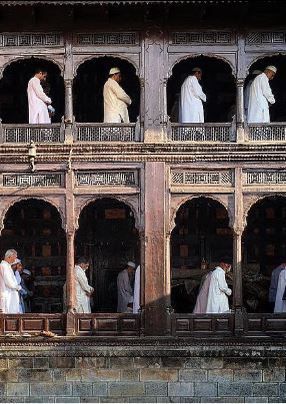
Today, Islamic heritage in Kashmir is celebrated not only through its architectural wonders such as the mosques and shrines scattered across the Valley but also in its vibrant Sufi traditions and mystical poetry.
Figures like Sheikh Noor-ud-Din Noorani, Shah-e-Hamadan, and Sheikh-ul-Alam continue to inspire Kashmiris across generations, blending Islamic spirituality with the region’s unique cultural identity.
The story of Islam’s journey through Kashmir is one of peaceful propagation, intellectual dialogue, and a deep commitment to spiritual growth. It’s a story of how faith and culture can interweave in beautiful, transformative ways, leaving behind a legacy that transcends time.
Author Mohmad Muzaffar Khan is a Srinagar based scholar and media professional with a postgraduate degree in Mass Communication and Journalism. With seven years of experience as an active political writer, he has developed a strong reputation for analytical depth, clarity of thought, and a nuanced understanding of socio-political issues. He can be mailed at Muzaffar.khn2010@gmail.com

Comments are closed.