

By Firdous Ahmad Najar
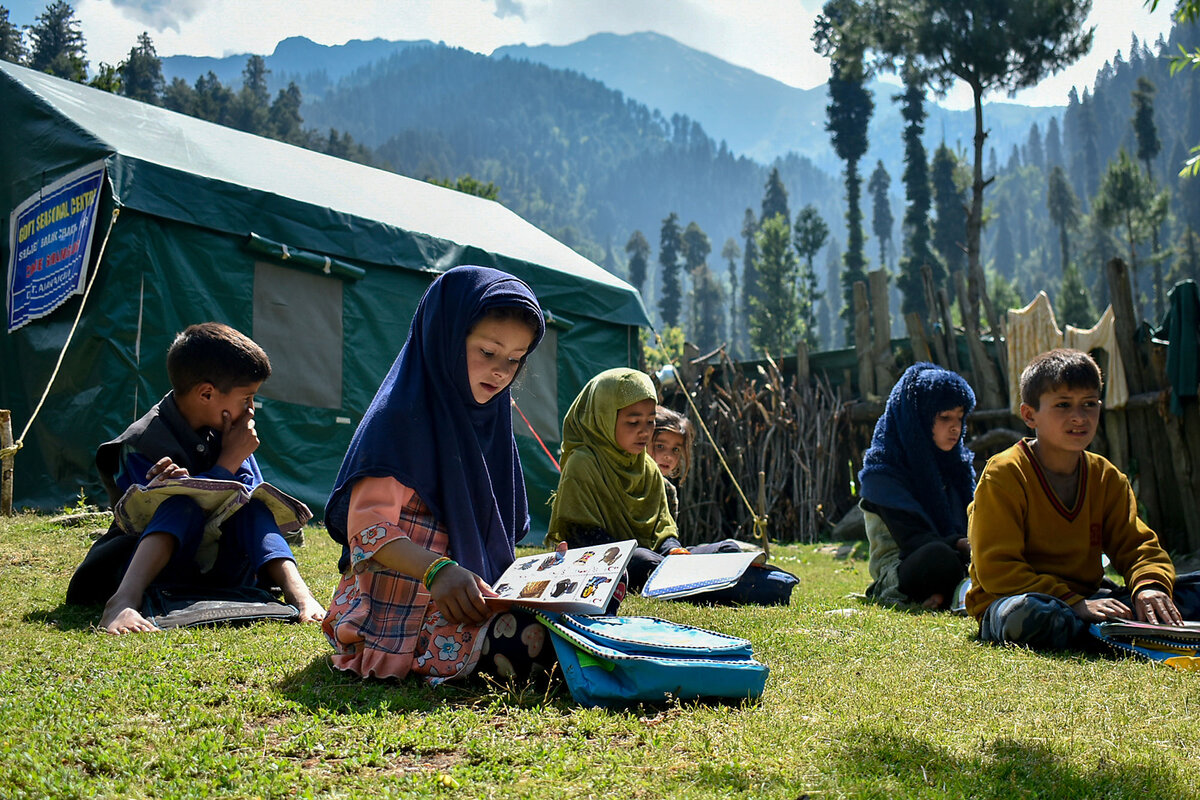
The recent decision of the Government of the Union Territory of Jammu and Kashmir to formulate a comprehensive transfer policy for Rehbar-e-Taleem (ReT) teachers is a timely, progressive, and long-overdue administrative measure. The ReT scheme, initiated in the early 2000, was introduced during a period of uncertainty in the region with the primary objective of opening schools that had remained locked and establishing educational facilities in school-less habitations.
It was evident even then That the GLT cadre has to travel long distances amid militancy-hit situations, making it difficult to serve consistently in far-flung areas, and therefore the scheme effectively filled this crucial gap. The ReT cadre served the purpose remarkably well, enabling thousands of children—previously deprived of their fundamental right to elementary education—to finally receive schooling at their doorstep. Because of this scheme, the literacy rate touched new heights as these teachers went door to door to enroll children who had remained outside the school system.
However, the area-specific and school-specific nature of their service, which was initially an advantage, has now begun to prove detrimental to the education sector. With teachers confined to the same locations for decades, stagnation has taken root, affecting professional motivation and limiting the distribution of experience across the system. This step toward a transfer policy therefore acknowledges that dynamism, mobility, and periodic change are essential for maintaining quality in any public service.
For nearly two decades, many ReT teachers have remained posted at the exact locations where they were first appointed; some for 15, 20, or even 25 years. This is in sharp contrast to their counterparts in the general line cadre, who routinely receive transfers every two to three years. These regular rotations not only broaden their professional exposure but also enhance their experience and adaptability.
Unfortunately, ReT teachers have been denied the same opportunity. This prolonged stagnation has created evident imbalances in the system, making a fair and transparent transfer policy not only desirable but absolutely necessary.
The ReT scheme was originally introduced to address acute teacher shortages in remote and difficult areas. While the scheme served its purpose at the time, the absence of a standardized transfer framework resulted in unintended consequences. Teachers, regardless of changing demographic needs or personal circumstances, became permanently anchored to their initial postings. A functional education system, however, depends on mobility: both for equitable distribution of staff and for the professional development of educators.
If general line teachers within the same education system are deemed fit for periodic transfers in the interest of efficiency and better service delivery, it becomes logically and ethically unjustifiable to deny similar mobility rights to the ReT cadre. Many ReT teachers have worked in challenging terrains with limited infrastructure, and the lack of rotational relief has not only affected their morale but has also contributed to uneven staffing patterns across the Union Territory.
The rationale for transfers extends far beyond administrative fairness; it goes to the heart of educational quality and student welfare. The Government of Jammu and Kashmir must recognize that any transfer policy should ultimately benefit students rather than teachers alone. When there is no transfer mechanism, it is the schools and, most importantly, the students who suffer the most. A teacher who remains overstayed at one place for too long gradually loses enthusiasm, freshness, and dynamism in their work. As a result, students may not receive education in its best possible form, and the overall academic environment becomes stagnant. The purpose of schooling is defeated when children are deprived of new teaching approaches, renewed energy, and diverse experiences that mobile teachers bring with them.
Keeping a teacher in the same remote school for decades may offer short-term stability, but it deprives that school of the opportunity to benefit from other teachers who may be more innovative, dedicated, and skillful. It can also prove detrimental to other schools, especially those in urban or semi-urban area, if the overstayed teacher happens to be among the most effective educators who could have significantly improved learning outcomes elsewhere. Transfers ensure a rational and balanced flow of innovation, experience, and dedication across institutions. Fresh postings bring fresh perspectives, introduce new teaching methodologies, prevent professional burnout, and encourage a healthy exchange of ideas. For teachers, the possibility of moving closer to family support or areas with better facilities boosts morale, which ultimately reflects in their classroom performance.
Moreover, keeping ReT teachers confined to one location for years has, in some cases, led to a loss of professional respect within the community. As a result, the community often becomes unresponsive to the teacher’s calls and requests related to the children’s academic performance.
In some areas, these teachers develop strong social ties with influential community members, making it difficult for anyone to question their work or hold them accountable for progress in the school. Mobility does not allow such situations to develop, because when a teacher rotates from one posting to another, this kind of monopoly and undue influence simply does not take root.
Formulating a transfer policy is therefore the most crucial first step. Past informal arrangements lacked transparency and often gave rise to complaints of favoritism. A formal, clearly defined policy reflects the administration’s commitment to fairness and meritocracy. Such a policy must outline clear eligibility criteria, including minimum service requirements, guidelines for medical or compassionate grounds, and special provisions for women and teachers with disabilities. A points-based system that prioritizes hardship postings, length of service, and administrative need can help ensure fairness and minimize discretion.
One of the biggest challenges for the committee drafting the policy will be striking a balance between the genuine demands of understaffed schools with a high student roll and overstaffed schools with a low roll, as well as between the needs of remote-area schools and those in urban centres.
If many teachers are moved out of remote locations at once without adequate replacements, the teacher-shortage problem will simply shift rather than be resolved. Therefore, the transfer mechanism must be closely aligned with the rationalisation of human resources, including the provision for mandatory service periods in remote areas for all teachers.
Another essential component is a strong grievance-redressal system. Given the sensitive history of ReT services; marked by uncertainty before regularization, an empathetic yet principled approach is necessary. Many ReT teachers have served under difficult circumstances with immense dedication. Recognizing their contributions by extending mobility rights is not just an administrative reform but also a gesture of dignity and respect.
In conclusion, the Jammu and Kashmir administration’s decision to constitute a committee for drafting a transfer policy for ReT teachers is a highly welcome and forward-looking step. It acknowledges that stagnation hampers growth, both for individuals and institutions, and that mobility is fundamental to a vibrant and effective education system. By ensuring clarity, fairness, and transparency in transfers, the government can reinvigorate the ReT cadre, safeguard student interests, improve teacher morale, balance staff distribution across schools, and ultimately strengthen the educational framework across the region. This long-awaited step marks a shift from stagnation to progress—a shift that is essential for the future of education in Jammu and Kashmir.
The writer is resident of Arin Bandipora, can be reached at njfirdous090@gmail.com

Comments are closed.