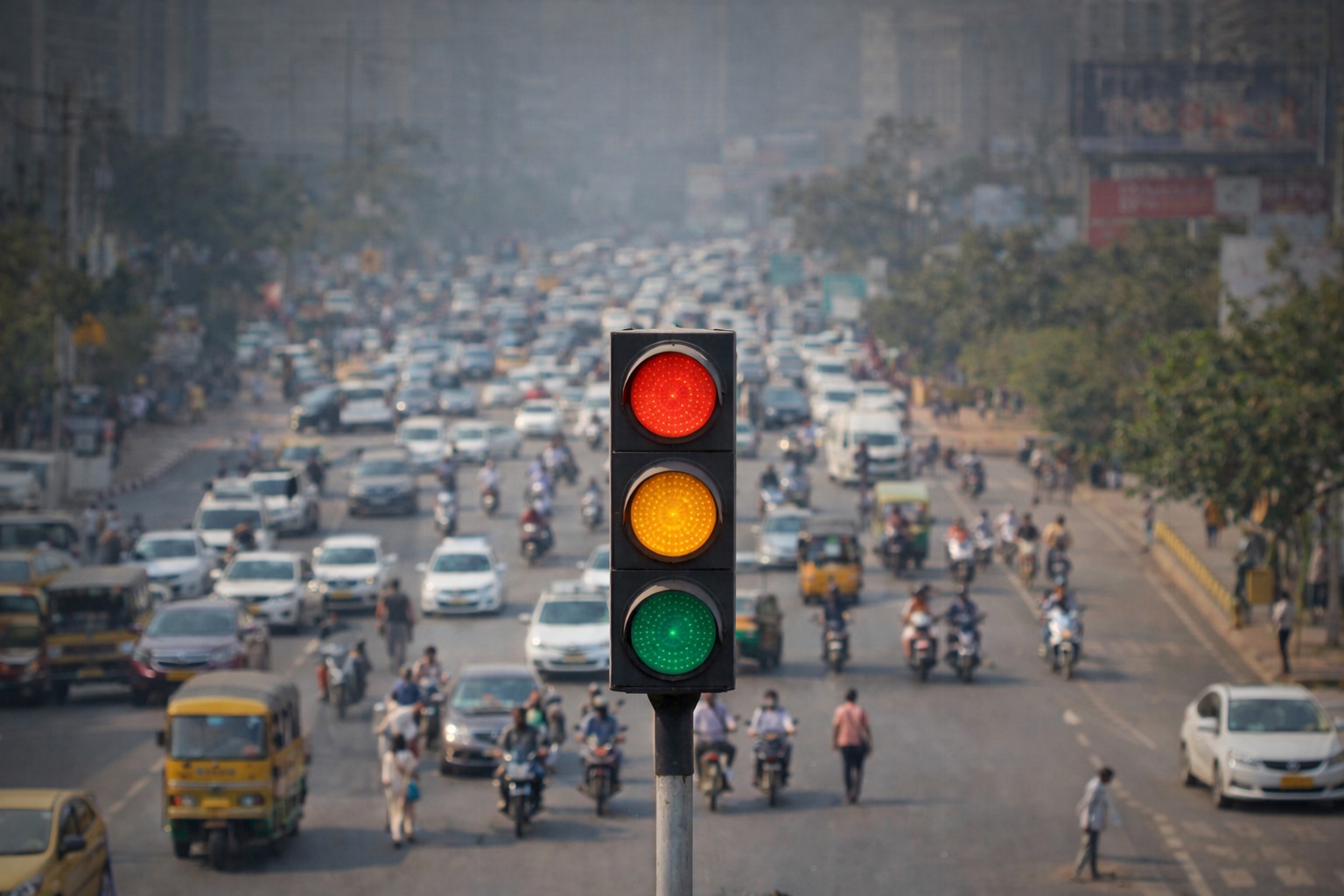
The Need for Traffic Civic Sense in India

Tahir Majeed

“Traffic signals are silent guardians of public safety. The red, yellow and green lights represent discipline, patience and mutual respect in a society constantly on the move.”

The responsibility for safer roads does not rest solely with authorities or traffic police. It lies with every citizen who holds a steering wheel, rides a motorcycle, drives a bus, or walks across a street. Each individual decision contributes to the overall safety of the road.

Traffic civic sense is one of the most important elements of a responsible and progressive society. It reflects how individuals behave on the roads and how much they respect the safety and rights of others who share the same public space. In a country like India, where millions of vehicles and pedestrians use the roads every day, civic sense becomes even more crucial. It is not only about following traffic rules but also about showing patience, discipline, and consideration for fellow citizens. When people drive responsibly, stop at signals, allow pedestrians to cross, and avoid unnecessary honking, they contribute to a safer and more respectful road environment. Unfortunately, the lack of traffic civic sense is still a common issue in many parts of India, leading to congestion, confusion, and sometimes tragic accidents.

Traffic moves like the bloodstream of a nation. Every morning in India, millions of people step out of their homes and join this flow,students rushing to school, workers heading to offices, vendors pushing carts, buses filled with passengers, and families traveling together. At every intersection, traffic signals quietly guide this movement. The red, yellow, and green lights are simple, almost ordinary, yet they carry the responsibility of protecting countless lives. However, in many parts of India, these signals are often ignored, misunderstood, or treated casually. This lack of awareness and civic sense has slowly become one of the most painful realities of our roads. Traffic signals are not merely machines standing at crossroads; they are silent guardians of public safety. The red light asks us to pause for a moment, the yellow warns us to prepare, and the green allows us to move forward. These colours represent discipline, patience, and respect for others who share the road with us. Unfortunately, impatience frequently overpowers responsibility. At busy intersections, it is common to see vehicles creeping forward even before the signal turns green. Motorcyclists squeeze through narrow spaces, cars honk relentlessly, and sometimes drivers speed past a red light without considering the consequences.

Behind every such moment of carelessness lies a potential tragedy. India witnesses thousands of road accidents every year, many of which occur because traffic rules are ignored. A driver who jumps a red light might save a few seconds, but those seconds can cost someone else a lifetime. Families lose loved ones, children lose parents, and parents lose their children. The emotional pain of these losses cannot be measured in statistics or reports. It echoes in homes, hospitals, and courtrooms long after the accident has occurred.

The issue is not only about law enforcement but also about civic sense. Civic sense is the understanding that we are part of a community and that our actions affect others. When a person obeys a traffic signal even when no police officer is watching, that person demonstrates civic responsibility. It shows respect for fellow citizens who trust the same system to keep them safe. In many developed countries, people follow traffic signals almost instinctively. They stop at red lights even if the road appears empty. Pedestrians wait patiently for the crossing signal. Drivers slow down near intersections without being reminded. The reason is not fear of fines alone but a deep-rooted culture of discipline and responsibility. India, with its vibrant and energetic population, has the potential to develop the same culture if awareness becomes a priority.

One of the major challenges in India is the overwhelming rush of daily life. People often feel that they are always in a hurry. The pressure to reach workplaces on time, the long distances between homes and offices, and the heavy congestion on roads create frustration among drivers. In this environment, traffic signals sometimes appear like obstacles rather than safety measures. But if we pause for a moment and reflect, we realize that these signals are designed to organize the chaos of busy roads. Without them, intersections would become dangerous and unpredictable. Another important aspect of traffic signal awareness is respect for pedestrians. In India, pedestrians often face great difficulty while crossing roads. Many drivers fail to slow down or stop even when pedestrians have the right of way. The red light at a signal is not only meant for vehicles but also provides a safe opportunity for people on foot to cross the road. When drivers ignore signals, they endanger not just other vehicles but also elderly citizens, school children, and individuals with disabilities who rely on these moments for safe passage.

Education plays a crucial role in building awareness. Children who learn traffic rules at a young age carry those habits into adulthood. Schools can encourage students to understand the meaning of traffic signals and the importance of road safety. When a child reminds a parent to stop at a red light, it becomes a powerful example of how awareness can influence behavior. Over time, these small reminders can help create a culture where obeying traffic rules becomes a natural part of everyday life.

Media and community campaigns also have a strong role to play. Public service messages, advertisements, and social initiatives can remind people about the importance of traffic discipline. Real stories of accident victims and survivors often touch people’s hearts more deeply than statistics. When individuals hear about a life lost because someone ignored a traffic signal, they begin to understand the real human cost of negligence. Technology has also started contributing to better enforcement. In many cities, automated cameras record vehicles that violate traffic signals and generate fines. While these measures help maintain order, true change cannot come from penalties alone. Real change happens when people choose to follow rules because they value human life and respect the rights of others on the road. Civic sense is often revealed in small actions. Stopping at a red light without honking impatiently, allowing pedestrians to cross, waiting calmly for the green signal—these simple behaviours show that we care about the well-being of others. They demonstrate maturity as citizens and strengthen the collective discipline of society.

India is a country known for its compassion and strong family values. People look after neighbours, help strangers in times of need, and come together during festivals and hardships. This same spirit of care must extend to our behaviour on the roads. Every driver should remember that the unknown person in the next vehicle or crossing the road is someone’s father, mother, sibling, or child. Traffic signals, in their quiet presence, remind us to slow down and think beyond ourselves. A few seconds of patience can protect a lifetime of memories for someone else. By respecting these signals, we are not merely following a rule; we are honouring the value of human life.

The responsibility for safer roads does not rest solely with authorities or traffic police. It lies with every citizen who holds a steering wheel, rides a motorcycle, drives a bus, or walks across a street. Each individual decision contributes to the overall safety of the road.If every person in India begins to treat traffic signals with seriousness and respect, our roads can become safer, calmer, and more humane. Civic sense is not taught only in classrooms; it grows through awareness, empathy, and daily practice. In the end, the red, yellow, and green lights at intersections carry a simple yet powerful message. They remind us that progress does not always mean moving faster. Sometimes progress means stopping for a moment, waiting patiently, and allowing others to move safely forward.

The author is a concerned citizen with a deep interest in social issues and public safety, the author writes to encourage people to develop discipline, empathy, and respect for others in everyday life. He can be reached on lawtahirmajeed@gmail.com

Comments are closed.