

Muzafar Ahmad Lone
“We worry about what the world thinks of us online, but the deeper and more unsettling question is this: what will our children think of themselves when they inherit the digital society we have built for them?”
We scroll, and we sigh. We click, and we cringe. Our screens, once windows to the world, sometimes feel like corridors lined with shouting clowns, hollow spectacles, and a grinding noise that passes for culture. We lament the state of our digital society—the “filthy, bad comedy,” the nonsensical content—and we fear the reflection it casts. We ask, “What will the world think of us?” But the more urgent, more profound question is this: What will our children think of themselves?
The global identity forged on social media is not a costume we can take off. It is the new town square, the permanent record, the first impression for a generation. When we allow it to be dominated by the lazy, the crude, and the meaningless, we are not just being seen as “jokers.” We are constructing a chaotic, cynical playground for the minds we are meant to nurture. We are handing them a broken compass for their social and moral navigation.
The solution is not in louder lament, but in quiet, deliberate creation. The algorithm is a mirror; it reflects what we engage with, what we produce, what we amplify. If we want our children to see a good digital society, we must be the architects who lay its first, strong bricks.
This is the call to practice Digital Citizenship not as a rulebook, but as a sacred craft.
First, we must curate with conscience. Every follow, every like, every share is a vote. Unfollow the noise. Seek out and elevate the creators who educate, who inspire genuine laughter, who showcase beauty, skill, and thoughtful dialogue—the digital gardeners, scientists, poets, and teachers. Fill your feed, and thus your child’s line of sight, with content that dignifies the human experience.
Second, we must create with purpose. Move beyond passive consumption. Are you sharing yet another recycled joke, or are you sharing a story of local kindness? Are you adding to the clutter, or are you posting a photo that captures a moment of quiet wonder? Our own digital footprints must be ones we would be proud for our children to walk beside. Let your comments be thoughtful, your disagreements respectful, your celebrations genuine. Model the discourse you wish for them.
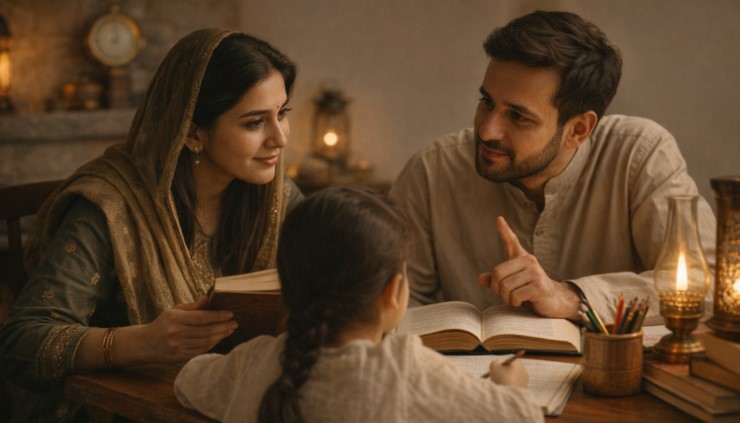
Third, we must engage as mentors, not just monitors. Sit with them. Scroll together. Ask, “What does this make you think? How does this make you feel?” When you encounter the “filthy” or the “nonsense,” use it as a teachable moment—not with a lecture, but with a question: “What value does this have? What is missing here?” Guide them to develop their own internal filter, stronger than any parental control.
This is about more than just protecting their innocence; it is about arming them with discernment. It is about building a digital world where they learn to connect, not just to collect followers; to understand, not just to react; to contribute constructively, not just to consume passively.
Let us build a digital hometown worthy of them. A place where curiosity is rewarded, where creativity is celebrated without cruelty, where our global identity is not that of jokers, but of thoughtful, vibrant, and dignified citizens. The blueprint is in our hands. The first post, the first comment, the first shared moment of real substance—it starts with us.
The feed of the future is waiting to be written. Let us write it well.

Comments are closed.