
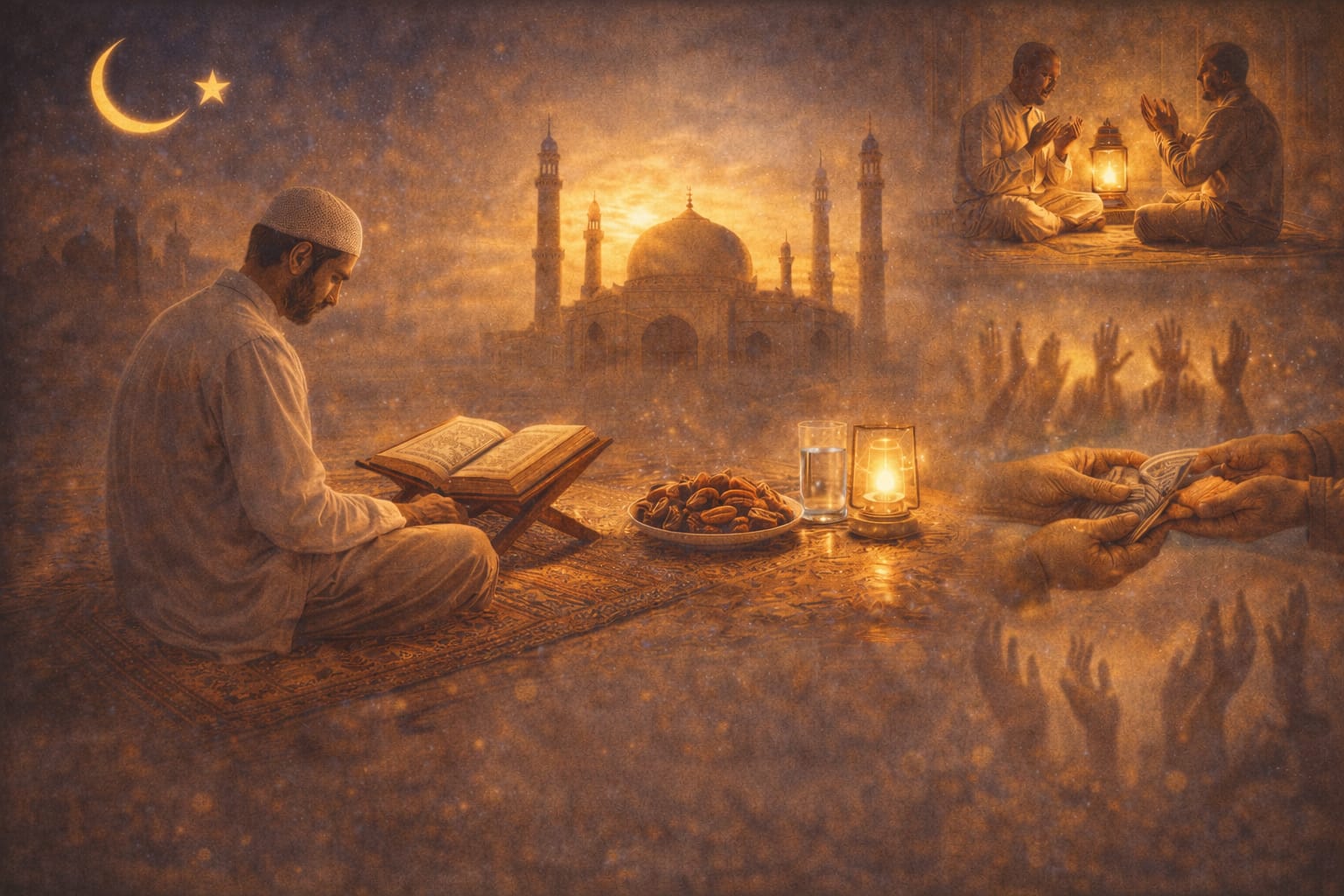
The Beginning of Mah-e-Ramadhan. The Sacred Month of Worship and Forgiveness
As Ramadhan begins, may every heart find peace. May every prayer find acceptance. May every soul find forgiveness.

Mohammad Muslim
“Fasting is not about hunger alone. It is about discipline, empathy, and obedience — a reminder that true strength lies in controlling one’s desires, not fulfilling them.”
With the sighting of the crescent moon, the hearts of people around the world overflow with gratitude and hope. Mahe Ramadhan starts. A month that changes routines, cleans intentions, and strengthens faith. For Muslims, it is not merely a change in the calendar. It is a change in life itself. Ramadhan is the ninth month of the Islamic calendar. It has a special significance as the Holy Quran was revealed in this month to Prophet Muhammad, peace be upon him. Allah says in the Quran that Ramadhan is the month in which the Quran was revealed as guidance to mankind. This alone makes it a holy month. It brings the believers directly in contact with the words of Allah.
Since the very first dawn of Ramadhan, Muslims start fasting. They do not eat, drink, or have any kind of sexual activity from dawn till sunset. This act of fasting is known as sawm. It is the fifth pillar of Islam. All healthy Muslim adults are required to perform this act. Fasting is not just about starving and staying thirsty. It is about discipline. It is about control. It is about obedience. When a Muslim fasts, they control their body and soul simultaneously. Starvation makes them remember the poor. Staying thirsty makes them remember people who work hard every day just to get their basic needs met. This makes them empathetic. This makes them less arrogant. This makes them more grateful. In a world where everything is about indulgence and comfort, Ramadhan teaches them to control their desires.
The beginning of Ramadhan also symbolizes the beginning of Taraweeh prayers. After the Isha prayer, the mosques are packed with devotees standing side by side. The Quran is read in extended verses. In most places, the entire Quran is read during these night prayers. The environment is peaceful. The hearts are softened. The feelings of being closer to Allah are amplified. Forgiveness is one of the most significant features of Ramadhan. The Prophet Muhammad, peace be upon him, said that “whoever fasts Ramadhan out of faith and with the hope of reward from Allah, all his past sins will be forgiven.” This is a source of hope. A person may feel weighed down by the errors of the past, but Ramadhan provides an opportunity for forgiveness.
The initial ten days of Ramadhan are referred to as the days of mercy. The second ten days are the days of forgiveness. The final ten days are for seeking protection from Hellfire. This pattern teaches believers to take one step at a time. First, they ask for Allah’s mercy. Later, they ask for forgiveness. Finally, they ask for salvation. It is a process of spiritual purification. Giving charity also increases during Ramadhan. Muslims are encouraged to give Zakat, which is a fixed share of their wealth. They give it to the poor. Many people also give additional charity, which is called Sadaqah. During this month, feeding a fasting person is extremely rewarding. People arrange iftar parties. Neighbors distribute food. The spirit of generosity is reflected in homes and on the roads.
Ramadhan also holds the strongest night of the year, Laylat al Qadr, the Night of Power. It takes place in the last ten nights of Ramadhan. The Quran regards it as better than a thousand months. The act of worshiping on this night holds a tremendous reward. Most Muslims spend these nights praying, reading, and reflecting. They unplug from the world and connect with their Lord completely.
The coming of Ramadhan alters the daily routine. Muslims rise early for Suhoor, the pre-dawn meal. They assemble in the early morning hours in a quiet manner. There is tranquility in the air. At sunset, they break their fast with dates and water, as the Prophet used to do. The Azan for Maghrib prayer brings a sense of relief and gratitude. These communal experiences bring the family closer together. Ramadhan is also a month of personal accountability. Fasting is rendered invalid not only by eating and drinking but also by lying, backbiting, and committing immorality. The Prophet said that if a person fails to abandon false talk and bad deeds, Allah does not need their fasting. This indicates that the actual goal of fasting is to attain righteousness.
In most places around the world, the start of Ramadhan is a cause for celebration. Markets are decorated. Mosques are lit up. Children feel thrilled. In places such as Kashmir, where religion is a strong part of the social fabric, Ramadhan has its own special emotional flavor. The call of the Azaan at dawn and dusk has a different ring. The nights are longer and more serene. The whole community is in sync with the prayer cycle.
However, Ramadhan cannot and should not be restricted to mere rituals. It is a training phase. It readies the faithful to take the lessons of Ramadhan, such as patience, honesty, and humility, into the coming year. The true test of Ramadhan is what happens after it is over. Does a person continue to pray regularly? Do they watch their tongue? Do they continue to be generous? These are the questions that determine the success of Ramadhan The start of Mahe Ramadhan brings to the mind of every Muslim that life is only for a temporary period and accountability is an absolute fact. It also brings to their minds that the mercy of Allah is vast and always available.
In a world where people are consumed by stress, competition, and materialism, Ramadhan brings clarity. It is a reminder that the only way to achieve peace is to submit to Allah. It is a reminder that the only way to be strong is to be in control of oneself. It is a reminder that success is not just about how much money or power one has but also about how righteous one is.
As the crescent moon emerges and the first day of fasting begins, Muslims around the world make dua. They pray for acceptance. They pray for forgiveness. They pray for guidance. Ramadhan is a personal experience for every Muslim. It is a month to come back to. It is a month to fix. It is a month to move forward. The start of Mahe Ramadhan is more than just a mark on the calendar. It is a chance. A chance to reboot the heart. A chance to wash the soul. A chance to seek the pleasure of Allah.
If this blessed month is accepted with genuine intentions, it has the power to transform a life. It can bring people closer. It can mend broken hearts. It can help in creating a better community. Most importantly, it serves as a reminder of the purpose of humanity, which is to worship the Creator.

Comments are closed.