
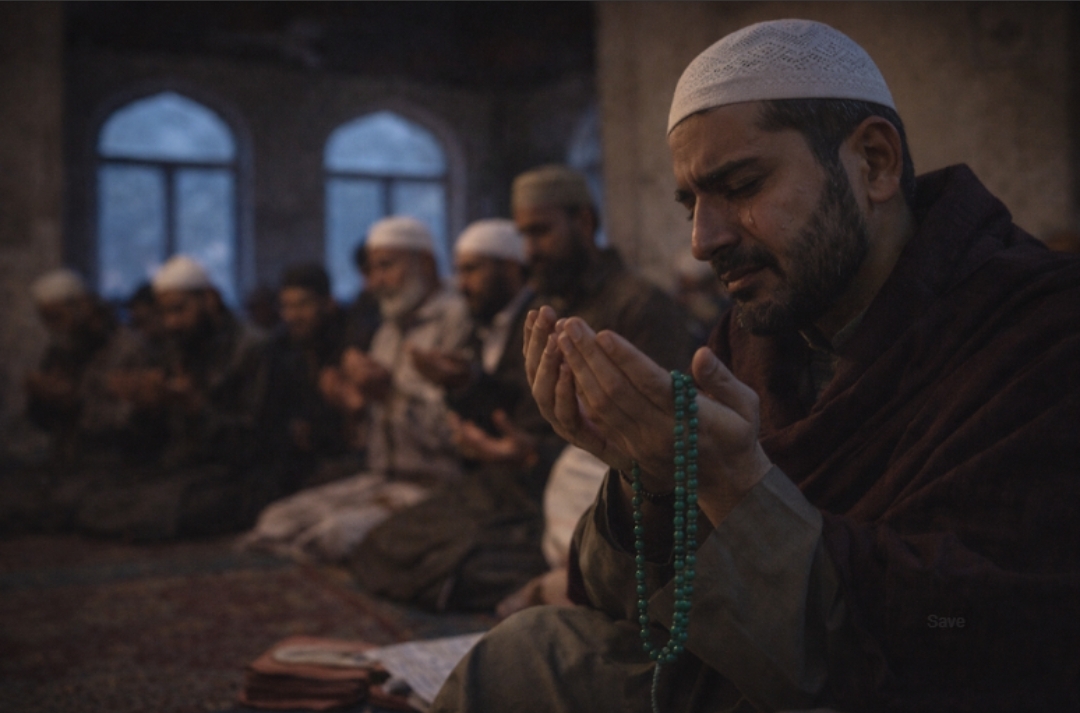
Tears, Tasbeeh, and Tranquility at Dawn
Each 'Fajr' utterance feels like a balm for a restless heart!!

Majid Marouphay
“Dawn is not merely the break of a new day; it is a sacred pause where faith speaks in whispers and the soul quietly finds its direction.”
Dawn is not merely the break of a new day, it is a sacred pause where faith speaks in whispers and the soul finds its direction. In those quiet moments before sunrise, when the world is still wrapped in silence, every step towards prayer becomes an act of gratitude and remembrance. What unfolds in those early hours is not just a routine of worship, but a deeply personal journey of faith, reflection, and connection with Allah, with the departed, and with one’s own heart.
In the early hours of dawn, before the world awakens, the call of the Mu’azzin rises gently from the local mosque: “As-Salatu Khairum Minan-Naum” – (prayer is better than sleep). The words pierce through the silence and stir the soul. Sleep loosens its grip, and the heart responds even before the body does.
I rise from bed, cleanse myself, and perform ablution. Outside, darkness still blankets the lanes, yet a quiet life is already stirring. As I walk towards the mosque, a few devoted namazis (worshipers) arrived before me. Inside, the air is filled with soft whispers of remembrance: Subhanallah wa bihamdihi, Subhanalahil Azeem, Astaghfirullah wa atubu ilayh – a profound spiritual practice, a remembrance of Allah, and a request for Divine refuge and blessings for the day ahead. Each utterance feels like a balm for a restless heart. I noticed many unfamiliar yet serene faces, along with a few familiar ones. It soon became clear that they were volunteers of the Tableeghi Jamaat who had arrived to fulfill their religious obligation. Among them were elderly men with white beards and youthful faces alike, all carrying simple bedding and essential belongings, prepared to stay within the mosque.
After the supplication of Dua-e-Subuh, we stand shoulder to shoulder for the Fajr prayer. The Imam recites long verses in both Farz rakahs, and listening to the holy words in that serene hour brings an indescribable peace. It feels as if time pauses, allowing the soul to breathe. When the prayer concludes, hands are raised collectively towards Allah – seeking peace, safety, forgiveness, and mercy for ourselves and elevation for the departed souls. The moment is heavy with humility and hope.
Some worshippers quietly leave, while a few of us – mostly elderly – remain behind to recite Awrad i Fatihiya – revered collection of prayers and litanies(wazaif) in Islam. The core of the Aurad-e-Fatihiya is an emphatic declaration of Allah’s oneness, majesty, and power, often repeating the phrase, the unity of God (Tawhid), divine attributes, repentance, and gratitude. emphasizing the importance of dhikr (remembrance of God), seeking forgiveness (Istighfar), and expressing gratitude (Shukr) for His innumerable bounties. The remembrance of Allah, the chanting of His beautiful ninety-nine names, and the recitation of Durood-o-Salaam upon our beloved Prophet ﷺ fills the heart with profound contentment. Being among such devoted believers at Fajr time is a blessing one feels deeply but struggles to put into words.
After the end of Aurad-e-Fatiha, one of Tableeghi Jamaat group gently stood up and humbly requested the worshippers to remain seated for a while to reflect and discuss matters of faith, belief, and our religious obligations as Muslims. Nearly a hundred people formed a circle, and the Ameer (head) of the Jamaat began his sermon. He recited verses from the Holy Quran, quoted Hadith, and shared the blessed sayings of the Prophet ﷺ. With deep conviction, he spoke about Allah’s commands to mankind, reminding us that human beings are the finest of His creations, entrusted with responsibility on earth.
He reflected on how materialism and moral corruption have distanced us from the right path, and how our own misdeeds and ethical failures are at the root of the unrest, suffering, and lack of peace in the world today. He urged us to turn back to Allah, to seek His forgiveness, warning that continued deviation would only lead to greater misery. Yet his message was filled with hope. Allah, he reminded us, is Most Merciful and Ever-Forgiving to those who sincerely repent and reform. The sermon concluded with a collective prayer for forgiveness and guidance. Tears flowed freely. The mosque echoed with silent sobs, heartfelt supplications, and a shared longing for better days and inner peace. It was a deeply moving congregation of the faithful.
Afterwards, the members of the Tableeghi Jamaat warmly invited me to join them for breakfast, an invitation I gladly accepted. Their simplicity, humility, and compassion were striking. They shared their time and resources with such sincerity, expecting nothing in return, but reformation . They were to stay in the mosque for three days.
As I left, my mind lingered on their devotion. Some among them, whom I personally knew, belonged to affluent and well-off families. Yet they had willingly left behind comfort and convenience during these freezing winter nights for a higher cause – for faith, for reform, for the peace and betterment of society. It was a quiet yet powerful reminder that true richness lies not in possessions, but in purpose, sacrifice, and service to humanity.
From the mosque, we walk together towards the nearby graveyard where our ancestors rest. We offer a collective Fateh Khwani, standing silently near the graves – a reminder of life’s ultimate truth. Then I walk towards two familiar graves – my mother’s and my father’s. I sit beside them, memories flooding my heart. I recite Surah Yaseen and Surah Fatiha, praying for their forgiveness and for Allah to grant them the highest ranks in Jannat-ul-Firdous. In that quiet moment, grief transforms into gratitude, and longing into prayer.
With a calm heart, I return home. I recite a few pages of the Holy Quran, letting its guidance settle within me. Soon, the house fills with warmth as I share morning tea with my daughters. Faith, family, and remembrance – the day begins not with haste, but with peace.
The author is a teacher and can be reached at khanmarouphay@gmail.com

Comments are closed.