

Dr. Yasir Ali
“Technology was created to serve human intelligence, not to redefine humanity by turning living beings into programmable extensions of machines.”
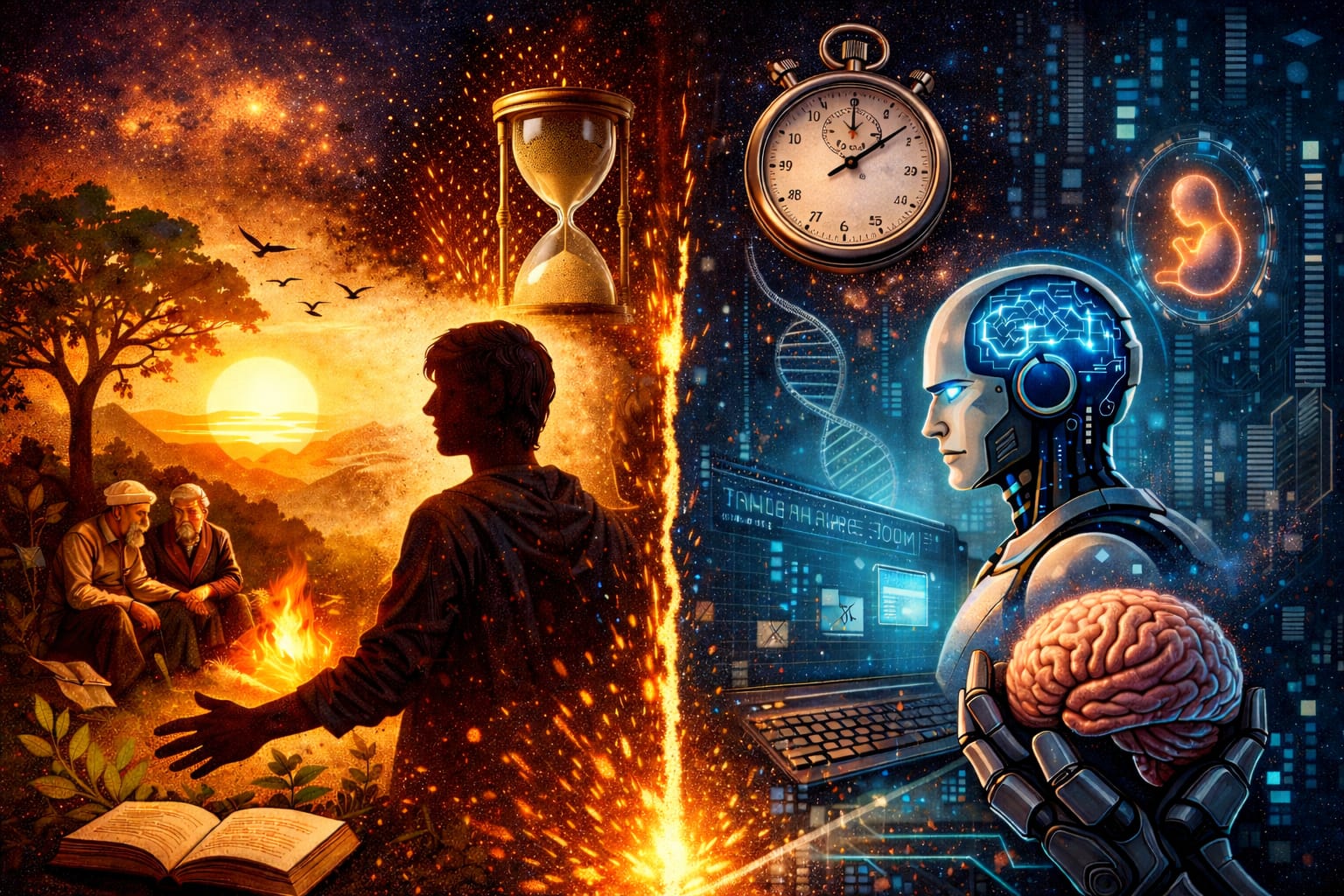
Human civilization today stands at a quiet yet catastrophic crossroads. The danger before us does not arrive with the noise of war or the spectacle of collapse; it advances silently, wrapped in the language of efficiency, innovation, and progress. Our excessive dependence on modern gadgets, automated inventions, and algorithm-driven lifestyles is steadily eroding the very essence of what it means to be human. Technology—once conceived as a servant to human intellect and labor—is now threatening to redefine humanity itself, reducing living beings into efficient, programmable extensions of machines.
There is no denying the transformative power of innovation. Artificial intelligence, automation, and digital technologies have dramatically enhanced productivity, revolutionized medicine, accelerated scientific discovery, and expanded access to information. These advancements have saved lives, shortened distances, and unlocked possibilities once thought unimaginable. However, progress becomes perilous when tools begin to replace human consciousness rather than assist it. Technology must remain an aid to human judgment, not a substitute for it; a facilitator of wisdom, not its competitor.
Machine learning and automation should be approached as structured skills—carefully integrated through education, ethical frameworks, and human oversight. Their rightful role is to refine processes, support informed decision-making, and improve quality of life without displacing empathy, intuition, and moral reasoning. When moderation collapses, however, progress mutates into dependency, and convenience hardens into captivity. What begins as assistance gradually turns into surrender, as humans outsource memory, creativity, relationships, and even ethical choices to algorithms.
The consequences of this shift extend far beyond technological imbalance. What is truly at stake is the survival of culture, regional identity, and inherited wisdom accumulated across generations. Our traditional ways of nourishing the body, cultivating life skills, learning through physical engagement, and remaining connected to manual and nature-based lifestyles are often dismissed as outdated. In reality, they are living repositories of collective intelligence—systems refined through centuries of human experience, adaptation, and reflection.
These practices nurture emotional resilience, ethical grounding, and a deep sense of belonging—qualities that no algorithm, however sophisticated, can replicate. A hand that tills the soil understands patience. A mind trained through lived struggle develops judgment. A community bound by shared labor learns responsibility. When such experiences are replaced entirely by digital interfaces, humanity risks losing not just skills, but sensibility.
The roots of real ethics are planted early, long before formal education begins. They take shape through prenatal care, parental affection, moral instruction at home, and attentive listening to elders. They are reinforced through rituals that mark life’s sacred transitions—birth, coming of age, marriage, loss, and remembrance. These moments are not decorative traditions; they are emotional anchors that stabilize individuals and bind generations together.
Festivals, storytelling, communal prayers, marriages, and final rites carry moral memory. They transmit values subtly—through presence, participation, and continuity. When these shared experiences are replaced by virtual interactions, digital simulations, and algorithm-curated realities, human depth is flattened into artificial efficiency. Relationships become transactional, emotions abbreviated, and wisdom fragmented into searchable data points.
Yes, change is inevitable, and adaptation is essential for survival. Societies that resist all transformation risk stagnation. But adaptation without discernment is equally dangerous. The cost of becoming living robots—confined to screens, guided by inorganic algorithms, detached from places of worship, elders, and cultural transmission—is alarmingly high. A civilization that forgets how to sit with silence, listen to lived experience, or engage with the physical world loses more than tradition; it loses coherence.
If we fail to pass on classical tastes, organic problem-solving approaches, moral reasoning shaped by history, and values tested by time, we risk entering an era where human ethics quietly cease to exist. In such a future, efficiency replaces empathy, speed replaces reflection, and data replaces wisdom. Decisions may be faster, but they will be emptier. Lives may be optimized, but they will be hollow.
A future disconnected from its roots is not evolution—it is erosion. Evolution builds upon memory; erosion destroys it. If we allow inorganic algorithms to dominate organic wisdom, we may indeed gain speed, precision, and convenience. But in doing so, we risk losing the very soul that makes progress meaningful.
The warning before us is unmistakable. Progress without preservation will not elevate humanity; it will erase it. The choice is not between technology and tradition, but between balance and blindness. If we are to move forward, we must do so with consciousness—ensuring that speed never comes at the cost of soul.

Comments are closed.