
Sagarmala and the Making of India’s Maritime Future
Reimagining Ports, Powering Trade, and Redefining Coastal Development

S. Ahmad
“Sagarmala represents a decisive shift—from infrastructure in isolation to port-led development. It recognizes that efficient ports are not just gateways for trade, but catalysts of growth, jobs, and regional transformation.”
In the grand narrative of India’s economic rise, infrastructure has emerged as the backbone of transformation. Roads, railways, and digital highways have long dominated policy discourse, but an equally powerful engine of growth lies along India’s vast coastline. With over 11,000 kilometres of coastline and a network of navigable waterways, India’s maritime geography offers immense untapped potential. It is this potential that the Sagarmala Programme seeks to unlock—reshaping not just ports, but the entire ecosystem of trade, logistics, and coastal livelihoods.
Launched in 2015, Sagarmala represents a decisive shift in India’s development strategy—from infrastructure in isolation to port-led development. It recognizes a simple economic truth: efficient ports and logistics systems are not merely facilitators of trade; they are catalysts of industrial growth, employment generation, and regional development. At a time when global supply chains are being reconfigured, India’s ability to leverage its maritime strengths could determine its competitiveness in the decades ahead.
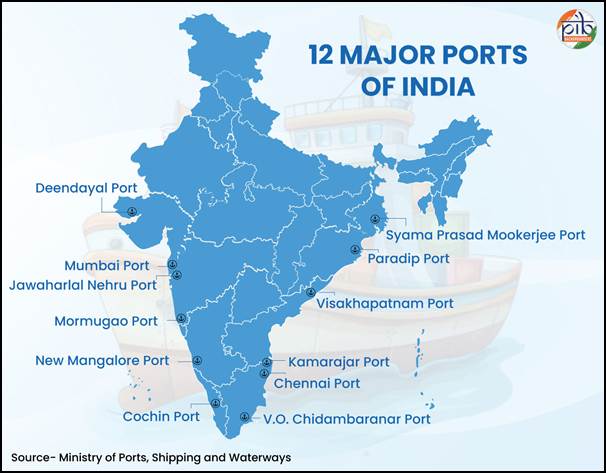
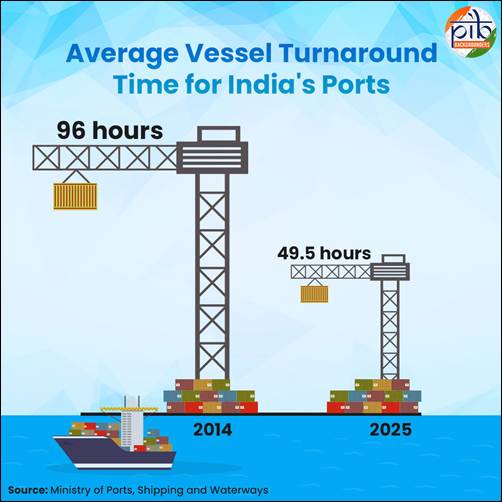
The scale of the programme itself is indicative of its ambition. With over 845 projects worth more than ₹6 lakh crore identified, and hundreds already completed or under implementation, Sagarmala is one of the largest maritime infrastructure initiatives undertaken by any country. The results are beginning to show. India’s major ports have handled record cargo volumes in recent years, while improvements in operational efficiency—such as reduced vessel turnaround times—signal a gradual but significant transformation in port performance.
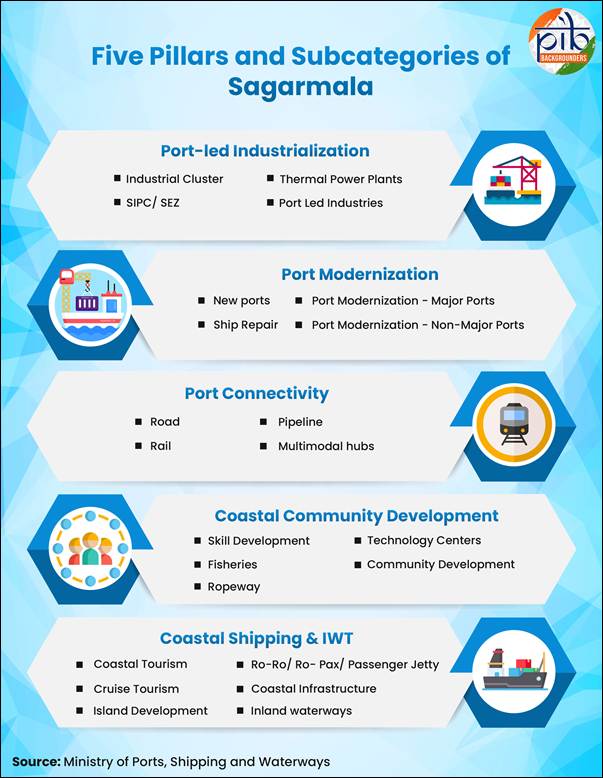
However, to understand Sagarmala purely as a port modernization programme would be to underestimate its scope. Its real strength lies in its integrated approach, built around multiple interconnected pillars that collectively aim to transform the maritime landscape.
At the forefront is port modernization and new port development. For decades, Indian ports struggled with congestion, outdated infrastructure, and inefficiencies that increased logistics costs and reduced global competitiveness. Sagarmala’s focus on mechanization, digitization, and capacity expansion seeks to address these long-standing challenges. The addition of new cargo-handling capacity and the modernization of existing facilities are critical steps toward aligning India’s ports with global standards.
Equally important is the emphasis on connectivity. Ports, no matter how efficient, cannot function in isolation. The real challenge lies in ensuring seamless movement of goods between ports and their hinterlands. Sagarmala addresses this through multimodal connectivity—integrating road, rail, coastal shipping, and inland waterways into a unified logistics network. This integration has the potential to significantly reduce transportation costs, which in India remain higher than global benchmarks, thereby improving the competitiveness of Indian exports.
Another transformative dimension of the programme is port-led industrialization. By promoting the development of industrial clusters in proximity to ports, Sagarmala seeks to create manufacturing hubs that are directly linked to global markets. This reduces logistics costs, enhances efficiency, and attracts investment. In many ways, this model mirrors the success of coastal economic zones in countries like China, where proximity to ports has played a crucial role in driving industrial growth.
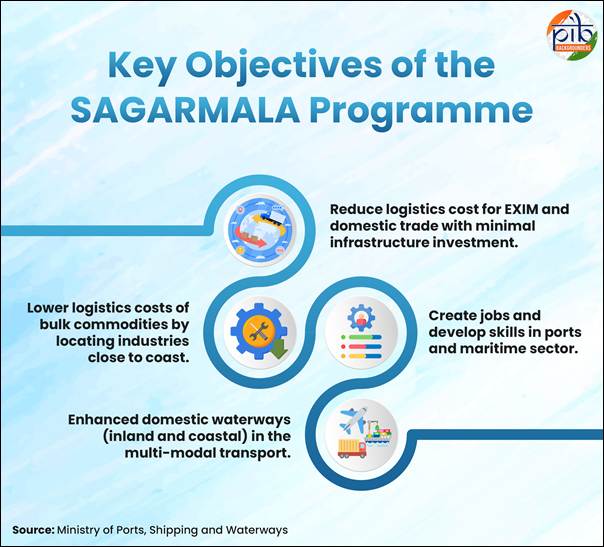
Yet, infrastructure and industry alone do not define development. Recognizing this, Sagarmala incorporates a strong focus on coastal community development. India’s coastal regions are home to millions of people, many of whom depend on traditional livelihoods such as fishing. The programme’s initiatives in skill development, fisheries, and tourism aim to ensure that economic growth is inclusive. By improving livelihoods and creating new opportunities, Sagarmala seeks to transform coastal communities from passive observers into active participants in the growth story.
The promotion of coastal shipping and inland waterways further adds to the programme’s significance. Traditionally, India has relied heavily on road and rail transport, leading to congestion, higher costs, and environmental stress. Coastal shipping and waterways offer a more sustainable and cost-effective alternative. The remarkable growth in cargo movement through inland waterways in recent years highlights the untapped potential of this mode of transport. If developed effectively, it could redefine India’s logistics landscape.
The achievements of Sagarmala over the past decade provide a glimpse into its transformative potential. The expansion of cargo-handling capacity, the modernization of ports, and the growth in maritime trade all point toward a sector in transition. Initiatives such as Ro-Pax ferry services have not only improved connectivity but also reduced travel time and eased congestion, demonstrating how maritime infrastructure can directly impact everyday life.
Equally significant is the programme’s impact on employment. With the potential to generate millions of jobs—both direct and indirect—Sagarmala is not just an infrastructure initiative but a driver of economic opportunity. From construction and logistics to fisheries and tourism, the ripple effects of maritime development extend across multiple sectors.
Institutionally, the programme is supported by a robust framework involving central and state governments, along with specialized bodies such as the Sagarmala Finance Corporation Limited. This multi-tiered structure ensures coordination, financing, and monitoring—critical elements for the success of a programme of this scale.
Looking ahead, the proposed Sagarmala 2.0 signals the next phase of this maritime transformation. With a significantly larger investment outlook and a broader vision aligned with long-term national goals, the next phase aims to position India as a global maritime hub. It seeks to deepen integration, enhance sustainability, and foster innovation, while continuing to focus on inclusive growth.
However, the journey is not without challenges. Land acquisition, environmental concerns, financing constraints, and the need for continuous technological upgradation remain critical issues. Moreover, the success of port-led development depends on the broader efficiency of the logistics ecosystem. Without parallel improvements in customs processes, regulatory frameworks, and supply chain management, the full benefits of infrastructure investments may not be realized.
There is also the question of sustainability. As maritime activity expands, it is essential to ensure that development does not come at the cost of environmental degradation. Coastal ecosystems are fragile, and their preservation must be integral to planning and implementation.
Despite these challenges, the direction is clear. Sagarmala represents a strategic shift in how India views its geography—not as a constraint, but as an opportunity. By leveraging its coastline and waterways, India is positioning itself to become a key player in global trade.
In the broader context of India’s aspiration to become a developed nation, the importance of such initiatives cannot be overstated. Efficient logistics, robust infrastructure, and competitive trade systems are essential components of economic growth. Sagarmala, in its vision and execution, addresses all three.
Ultimately, the success of the programme will be measured not just by the number of projects completed or the volume of cargo handled, but by its ability to transform India’s economic landscape. If implemented effectively, Sagarmala has the potential to do for maritime infrastructure what earlier reforms did for roads and telecommunications—unlock growth, create opportunities, and connect India more deeply with the world.
In doing so, it may well redefine the role of the seas in India’s development story—from distant frontiers to central pillars of progress.

Comments are closed.