

Muhsin Ahmad Malik
Education is the strongest antidote to addiction—lighting minds before drugs can darken lives.
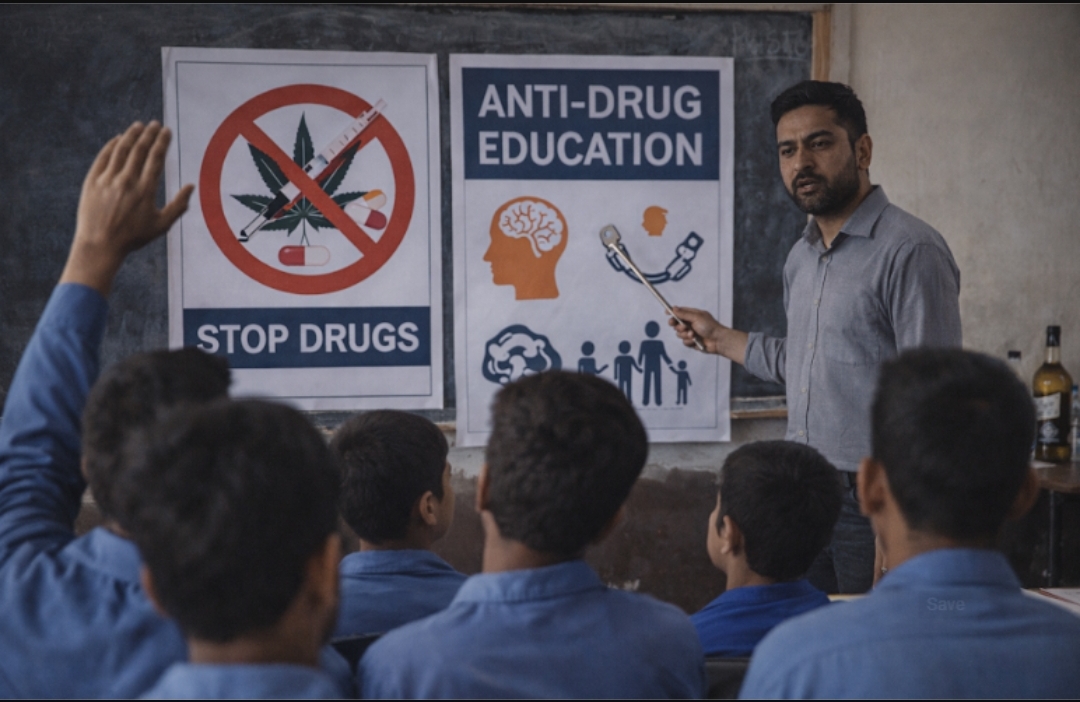
Education constitutes a formidable bulwark against drug abuse and illicit trafficking by imparting the knowledge, skills, and ethical grounding required to withstand substance misuse and criminal drug networks. Academic institutions function as strategic arenas for disseminating awareness about the physiological, psychological, and legal ramifications of narcotics consumption and trafficking. Well-designed educational interventions—integrating life-skills training, emotional resilience, critical thinking, and community-based campaigns—significantly curb vulnerability among youth.A holistic pedagogical framework, supported by educators, policymakers, families, and communities, enables prevention, early intervention, and rehabilitation. By addressing underlying catalysts such as social pressures, mental health challenges, and socio-economic inequities, education nurtures an informed, resilient, and law-abiding young population.
Globally, the drug menace has evolved into a complex, transnational crisis. The UNODC reports over 275 million drug users, with synthetic opioids like fentanyl precipitating catastrophic overdose rates, particularly in North America. Europe faces rising cocaine and synthetic drug consumption, while Africa and Asia grapple with methamphetamine and heroin trafficking. Latin American states remain entangled in violence and instability driven by narcotics cartels. Technological innovations—darknet markets and encrypted platforms—further complicate enforcement efforts.Governments worldwide have adopted multidimensional strategies, combining harm-reduction initiatives, strengthened law-enforcement mechanisms, cyber-surveillance, and international cooperation. However, pervasive stigma undermines rehabilitation, underscoring the imperative for a public-health-centric approach over punitive responses.
India confronts an escalating narcotics crisis, exacerbated by its geographic position between the Golden Crescent and Golden Triangle. Opioids, heroin, cannabis, and emerging synthetic drugs remain widely misused, with Punjab, Jammu & Kashmir, and northeastern states disproportionately impacted. The darknet has expanded accessibility, outpacing enforcement capacities. Despite stringent legislation like the NDPS Act and national anti-drug campaigns, systemic corruption and inadequate de-addiction infrastructure impede progress. Combating India’s drug challenge requires fortified intelligence-sharing, international collaboration, community participation, and robust preventive education. Addressing deep-rooted socio-economic vulnerabilities—poverty, unemployment, and social distress—is essential for a sustainable and meaningful response.
Role of Education in Preventing Drug Abuse and Illicit Trafficking
Education serves as a powerful preventive mechanism against drug abuse and illicit trafficking by enlightening individuals, strengthening decision-making abilities, and promoting constructive lifestyles. Through structured learning and community involvement, education reduces vulnerability to substance misuse and discourages participation in illegal drug activities.
Awareness and Knowledge Building:
Education provides clear, factual information on the physical, psychological, and social harms of drug abuse and trafficking. Comprehensive school- and community-based programs help individuals understand the risks, consequences, and long-term impact of drug misuse.
Strengthening Critical Thinking and Decision-Making:
By developing analytical skills and sound judgment, education empowers learners to make informed choices. Activities such as discussions, role-plays, and real-life case analyses prepare students to resist peer pressure and avoid drug-related behaviour.
Promotion of Positive and Healthy Lifestyles:
Educational institutions encourage participation in sports, cultural activities, and creative pursuits, offering healthy alternatives for stress relief and personal growth. These outlets reduce susceptibility to drug use by fostering purpose and engagement.
Early Identification and Support:
Schools often act as early detection platforms where teachers and counsellors can identify at-risk individuals. Timely guidance, counselling, and referral services help prevent progression into substance abuse or trafficking.
Building Resilience and Self-Confidence:
Education nurtures emotional strength, self-esteem, and coping mechanisms. Programs focused on life skills and emotional intelligence equip individuals to navigate challenges without resorting to drugs.
Community Involvement and Social Responsibility:
Educational initiatives extend to families and communities, promoting shared responsibility in creating drug-free environments. Collaborative efforts reinforce positive norms and discourage behaviours linked to drug abuse and trafficking.
Legal Literacy and Policy Awareness:
Education enhances understanding of drug-related laws and the consequences of violating them. By fostering legal awareness and civic responsibility, educational programs contribute to a more vigilant and law-abiding society.
Key Components of Effective Educational Strategies for Combating Drug Abuse and Illicit Trafficking
Effective educational interventions must be holistic, multi-layered, and culturally attuned to successfully deter drug abuse and trafficking. The following components underpin strong, impactful strategies:
Comprehensive Drug Education Curriculum
Age-Appropriate Content: Deliver material that aligns with learners’ developmental stages, introducing foundational concepts early and addressing complex issues as students mature.
Scientific Accuracy: Provide factual, evidence-based information on drugs, their physiological and psychological effects, and associated risks.
Skill Development: Integrate training in refusal skills, critical thinking, decision-making, and stress management to strengthen resistance to peer pressure.
Parental and Community Engagement
Parent Awareness Programs: Equip parents with the knowledge and confidence to discuss drug risks and monitor behavioural changes in their children.
Community Collaboration: Build partnerships with NGOs, healthcare workers, law-enforcement agencies, and local groups to reinforce prevention efforts and create a unified support system.
Life-Skills Training
Emotional and Social Competence: Teach students to manage emotions, build healthy relationships, and enhance self-worth.
Coping Mechanisms: Provide tools to handle stress, conflict, and setbacks without resorting to substances.
Peer Education and Mentorship
Peer-Led Initiatives: Engage trained peer educators to facilitate sessions, as youth often respond more effectively to guidance from their own age group.
Mentorship Support: Pair students with responsible role models who can offer consistent encouragement and guidance.
Interactive and Engaging Pedagogy
Experiential Learning: Use role-plays, group discussions, case studies, and hands-on workshops to promote active participation.
Digital and Multimedia Tools: Employ videos, apps, and social media content to make learning dynamic, relatable, and relevant.
Cultural Sensitivity and Relevance
Contextualised Content: Align educational messages with local cultural values, social realities, and community norms.
Accessible Language: Provide multilingual resources and use simple, clear language to ensure understanding across diverse groups.
Continuous Evaluation and Adaptation
Programme Assessment: Monitor effectiveness through surveys, feedback mechanisms, and impact studies.
Regular Improvement: Update content and teaching methods based on findings to ensure the programme remains effective and responsive.
Supportive School Environment
Clear Anti-Drug Policies: Establish and enforce school rules that discourage drug use and outline consequences.
Support and Counselling Services: Offer access to trained counsellors, peer-support groups, and referral services for at-risk or affected students.
Conclusion
Education remains a cornerstone in the fight against drug abuse and illicit trafficking, functioning as both a preventative measure and a critical intervention mechanism. Through structured and comprehensive learning initiatives, individuals acquire essential knowledge about the health risks of substance use, the legal repercussions of drug-related offences, and the wider social consequences. By fostering awareness, critical thinking, and informed decision-making, education strengthens the ability of young people in particular to resist experimentation and avoid high-risk behaviours. School-based programs and community-driven outreach efforts equip learners with practical life skills, enabling them to identify warning signs, navigate peer pressure, and adopt healthier alternatives for coping with stress. By cultivating resilience, emotional stability, and a sense of personal responsibility, education effectively disrupts the pathways that lead to substance dependence and involvement in trafficking.Ultimately, a coordinated approach—uniting educational institutions, government bodies, and community organisations—ensures a robust and sustainable response to the growing challenge of drug abuse. In this way, education serves as a transformative force, contributing to safer communities and a more informed, resilient, and healthier society.
Author is a Teacher at GMS Pinjura. He can be mailed at malikmuhsin92@gmail.com

Comments are closed.