
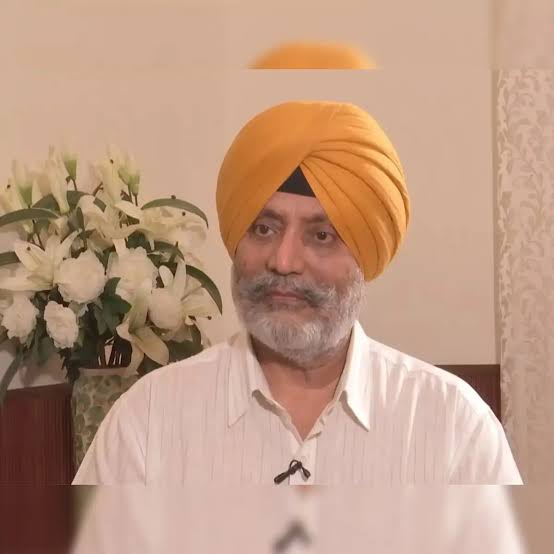
Retired Gen. Calls Citizens the “Nation’s First Line of Defence”
Warns of a "ticking time bomb," linking the Delhi blast to the Pulwama attack and Pakistan's "deep state."

Suhail Khan
NEW DELHI, Nov. 22: Following the recent Delhi car blast that resulted in fifteen fatalities and numerous injuries, Lieutenant General K.J.S. Dhillon (Retd) described the attack as bearing the “clear signature of Jaish-e-Mohammad (JeM) with suspected backing from the ISI—Pakistan’s deep state.”
According to Kashmir Convener, Lt. Gen. Dhillon emphasized that “every civilian is a soldier without a uniform” and must remain vigilant. He urged citizens to “verify [tenants] with police and inform police if you suspect anyone around you,” positioning the public as the nation’s first line of defence.
Quoted by ANI, he asserted that “Pakistan’s deep state has only one agenda — to spread terror in India, and Jaish remains a product and asset of that system.” Noting that the pattern of the Delhi blast is strikingly similar to the 2019 Pulwama attack, the retired general pointed to a “ticking time bomb” that India must address with utmost seriousness.
The discussion also covered the Red Fort blast and the emergence of what was termed ‘white-collar terrorism.’ While acknowledging that sleeper cells and the indirect involvement of educated individuals are not new, Lt. Gen. Dhillon stated that recent incidents suggest a more direct involvement of individuals with professional backgrounds.
He firmly emphasized that no religion justifies terrorism, self-destruction, or the killing of innocent civilians. He described the Red Fort blast as an operation by a JeM module, indicating the group’s embedded network.
When asked how India plans to counter this evolving threat, Lt. Gen. Dhillon stated that India’s counter-terror strategy is unequivocal, declaring that any reaction would be delivered at a “time and place of its own choosing.”
He also highlighted the severity of a recently thwarted plot, revealing that security forces had recovered 20 detonators and 24 remote control units. He explained that this equipment had the capability to detonate 20 separate bombs weighing 150 kg each.
“They could have been detonated simultaneously at nearby places or even pan-India… You can imagine the catastrophic impact it could have had in population centres. It is a great action by the security forces, J&K Police, and intelligence agencies,” he was quoted as saying by ANI.
Pertinently, Like in other parts of India, the Jammu and Kashmir Police have also intensified valley-wide security operations in response to the November 10 car bomb explosion at New Delhi’s Red Fort, conducting inspections at hospitals, automotive dealerships, and fertilizer shops.
The crackdown, which continued through Friday, aims to dismantle potential support networks and prevent the misuse of commercial and institutional premises for illicit activities.
Police spokesperson informed Kashmir Convener that special teams conducted surprise checks on staff lockers in hospitals across the Ganderbal and Handwara districts. The action was described as part of “ongoing efforts to strengthen security and maintain a safe and accountable environment within healthcare institutions.”
The drive, police said, was intended “to ensure transparency and proper adherence to security protocols,” and to “prevent any misuse of hospital premises, curb illegal activities, and reinforce institutional discipline.” Medical staff were also briefed on the importance of reporting suspicious activities.
This heightened scrutiny follows a recent incident where an AK-47 rifle was recovered from the locker of Dr. Adeel Rather at the Anantnag Medical College. Dr. Rather, who worked as a senior resident until October 24, is among two doctors arrested in connection with an inter-state module case.
Simultaneously, in south Kashmir’s Anantnag district, police launched a proactive drive targeting vehicle dealerships and fertilizer shops.
“Rigorous checking of vehicle dealers was done across the district,” a police spokesperson further said, emphasizing efforts to ensure strict compliance with legal norms and prevent the trade of unregistered or suspicious vehicles.
He said that fertilizer outlets are also under scrutiny to prevent the potential diversion of materials for manufacturing explosives.
Meanwhile, The National Investigation Agency (NIA) announced on Thursday the arrest of four more individuals linked to the Red Fort blast, bringing the total arrests in the case to six. The agency identified them as Muzammil Shakeel Ganai (Pulwama), Adeel Ahmed Rather (Anantnag), Mufti Irfan Ahmad Wagay (Shopian), and Shaheen Saeed (Lucknow). The NIA stated all four played a “key role” in the terror attack, which left 13 dead.
In the aftermath, security forces have intensified measures across Jammu and Kashmir.
Official sources informed Kashmir Convener that extra checkpoints have been established from Srinagar to all border areas, with intensified vehicle frisking and identity verification at major junctions and entry points.
“Cordon and Search Operations (CASOs) are being launched to ensure public safety,” an official stated, adding that the Army and Border Security Force (BSF) are maintaining a high state of vigilance along the International Border and the LoC.
In a separate initiative, Poonch police have announced a reward of ₹5 lakh for “credible, specific, and actionable” information on terrorist movement, guaranteeing complete confidentiality for informants.
Meanwhile, the Jammu and Kashmir Students Association has raised concerns, flagging that Kashmiri students in several northern states are facing profiling, eviction, and intimidation following the November 10 blast.

Comments are closed.