

![]()
Shoiab Mohmmad Bhat

“In moments of tragedy, humanity is measured not by how quickly we post — but by how thoughtfully we respond.”
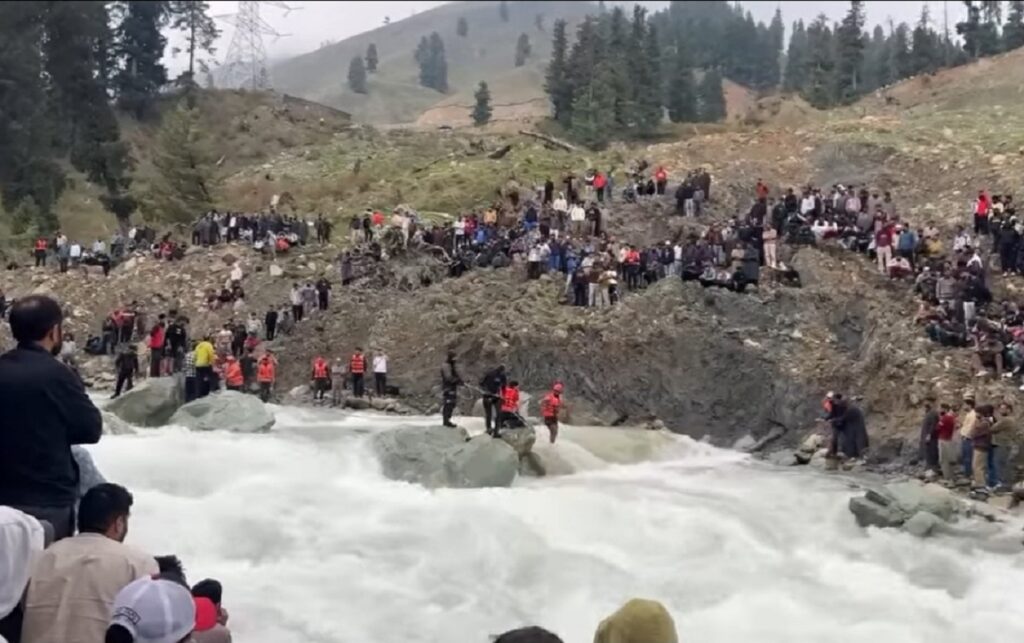
The recent death of a child in Kashmir, where the body of a little boy who died by drowning in a river was discovered after a few days, is an event that will forever stay etched in the hearts of everyone in the region. The news may spread quickly, but its impact lasts for a long time. For the affected family, it is a defining moment. Their grief is profound and unquantifiable. For everyone else, it serves as a stark reminder of how fleeting life is.
In Kashmir, grief rarely stays confined to one household. When something like this happens, it spreads through conversations, neighbourhoods, and communities. People speak about it with sadness, offer prayers, and try in their own ways to show support. There is a shared understanding of pain, a feeling that the loss of one family touches everyone in some way. This sense of togetherness has always been a strength of the region.
Yet alongside this shared grief, a different pattern has started to appear. Images and videos of the child have been circulating on social media. They are being shared repeatedly, sometimes with emotional captions, sometimes turned into short content pieces. Many who post such material may feel they are expressing sorrow or drawing attention to the tragedy. Still, the effect of these actions tells a different story.
A loss like this carries a certain privacy. It belongs to the family first. When personal images begin to circulate widely, that boundary starts to fade. The child, who should be remembered with respect, becomes part of a constant online stream. The tragedy shifts from a moment of reflection into something that people react to quickly, often without thinking deeply about its impact.
For the parents and family members, the situation becomes even more painful. Grief already takes a heavy toll, and it does so in waves that come and go. Each time an image appears online, it can reopen that pain. It brings back memories in a way that feels sudden and overwhelming. What appears as a simple post for one person can carry a completely different meaning for those who are directly affected.
There is also the question of dignity. A child deserves respect at every stage of life. That respect should continue even after death. When images are used for gaining attention, even unintentionally, it reduces that sense of dignity. It turns a human life into something that can be viewed, shared, and reacted to without limits.
Social media has made it easier than ever to share information. A single click can send a photo across thousands of screens within minutes. This speed often leaves little room for thought. People act quickly, sometimes guided by emotion, sometimes by habit. In such moments, a brief pause can make a real difference. Thinking about the consequences of a post can change the way people engage with such sensitive content.
Awareness can serve as an effective tool in this case, especially because it pertains to the aspect of safety. The incident has served to bring into sharp focus how important it is to be aware, supervise, and understand the risks involved. This is all very crucial, especially when it comes to young children and people who live in proximity to these locations.
There is a broader impact when tragedy becomes a source of content, too. The more people come across such posts in the long run, the more their reaction to such matters evolves. They may end up normalizing painful experiences, which people tend to breeze past without any deep thoughts. It makes it easier to forget that behind every image there is a real person, a real family, and a real loss.
Respect becomes the most important response in such moments. Respect for the child who has passed away, respect for the family who is grieving, and respect for the situation itself. Support does not always need to be visible or public. Sometimes it exists in silence, in prayers, in giving space to those who need it the most.
The choice not to share those images can be considered small and insignificant. However, there is something important about such actions. It means that one realizes and considers things when making certain decisions. Some situations demand more control than response. This way, a person preserves his/her humanity in hard times.
The event is not just a cause for sorrow; it has taught us something about our responsibility in real life and in cyberspace. We have learned how to be more cautious and considerate of other people. All our actions, particularly those on social media, bear consequences.
Ultimately, what will remain is the memory of the untimely death of an innocent youth. This memory is something that should be cherished and respected. How one deals with such events tells a lot about their value system as a person. Empathy, dignity, and self-control are easy things that can help someone remember such a memory.
Comments are closed.