

Gowhar Maqbool
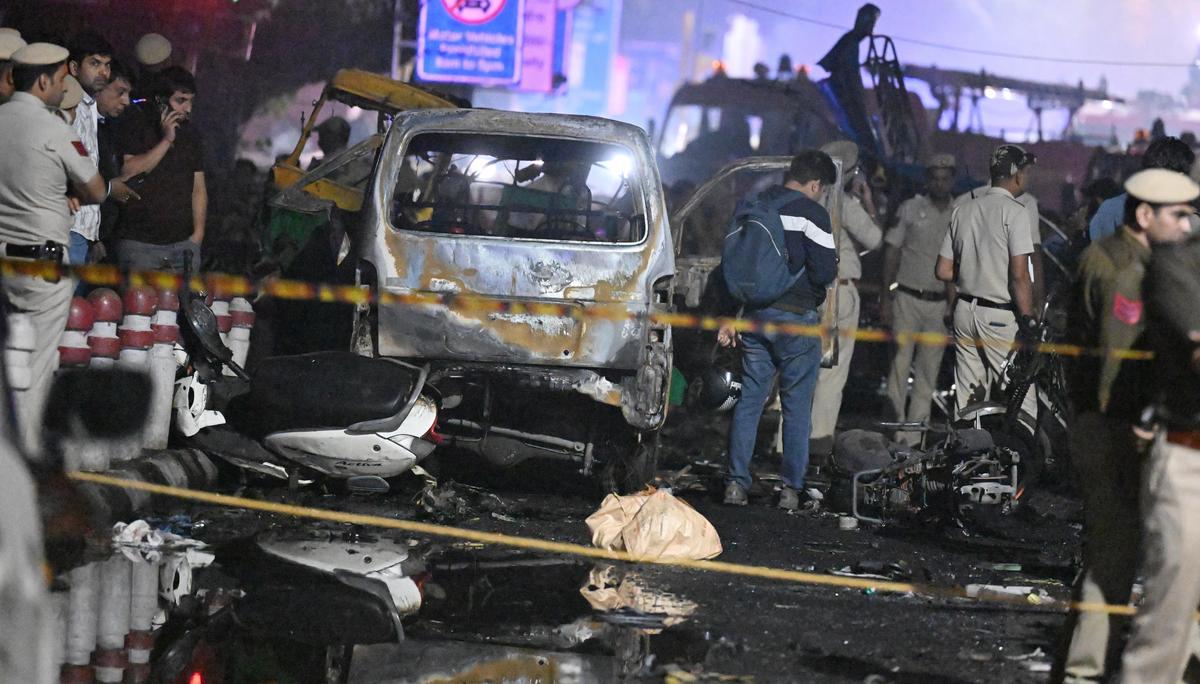
The gruesome blast near Delhi’s historic Red Fort — a monument that has witnessed centuries of India’s trials and triumphs — has once again shaken the nation’s conscience. The explosion, which snatched away the lives of more than 15 innocent civilians, was not merely an attack on a bustling evening crowd; it was an assault on India’s collective sense of security, its democratic fabric, and its belief in peaceful coexistence. In a fraction of a second, the serenity of a routine evening turned into a night of horror: flames rising from shattered stalls, cries for help piercing the air, and the ground littered with debris and despair.
Those who perished were not soldiers in uniform or policy-makers in positions of power. They were ordinary Indians — the very heartbeat of this nation. A father returning from a long shift to meet his waiting children, a young student dreaming of brighter days, a small vendor trying to earn enough to feed his family, an elderly man who had seen life’s many struggles yet carried hope in his eyes.
Today, their homes echo with silence. A young child stands at a doorway that will never again welcome the familiar footsteps of his father. A mother holds her son’s belongings with trembling hands, trying to comprehend how life changed in a single moment. A newlywed woman, whose married life had barely begun, is now left to navigate a future she never prepared for — one marked by grief, uncertainty, and unanswered questions.
Terrorism has many targets, but innocent civilians remain the softest and the most heart-breaking of them all. The perpetrators of this attack — with mounting evidence pointing towards Pakistan-backed terror outfits — once again demonstrated the cruel calculus of cross-border terrorism: maximum casualties, maximum fear, and maximum disruption. These groups thrive not on ideology but on hatred; not on courage but on cowardice. They strike at marketplaces, public gatherings, places of worship — spaces that represent everyday life — because their aim is not military confrontation but psychological devastation.
For India, this is not a new tragedy but a repeated wound. For decades, cross-border terror networks have tried to destabilize the country by creating a climate of fear and mistrust. Whether it is Mumbai, Pulwama, Uri, or now the Red Fort area, the pattern is unmistakable: attacks meticulously planned from across the border, executed with the sole intention of killing civilians and shaking national confidence. Each such attack raises a painful yet necessary question — how does any human conscience justify the killing of innocents? What ideology celebrates the act of blowing up crowds? What belief system finds glory in orphaned children, widowed women, and shattered homes?
There is no political goal, no religious cause, no national argument that can ever justify the murder of unarmed citizens. Terrorism in all its forms is a declaration of war against humanity itself. And every time a bomb explodes in a marketplace or at a heritage site, the world is reminded that the cost of terrorism is paid not by governments alone but by ordinary people whose only crime is living their daily lives.
The blast near Red Fort also raises critical questions about global responsibility. Terror networks do not survive in isolation; they thrive on sustained support — financial, ideological, and logistical — often from state actors or agencies that view terrorism as a strategic instrument. Pakistan’s long-documented habit of nurturing extremist groups for geopolitical leverage has turned South Asia into one of the most vulnerable regions in the world. When states fail to dismantle the terror infrastructure within their borders, the consequences are inevitably borne by innocent civilians across the region.
But in the face of such brutality, India’s resilience remains its greatest strength. The nation mourns, but it does not break. The pain is real, but so is the determination to bring those responsible to justice. Each tragedy reinforces the country’s commitment to dismantling terror networks and strengthening internal security frameworks. Justice for the victims is not merely a constitutional duty; it is a moral obligation — to the families who lost their loved ones, to the citizens who demand safety, and to the principles of humanity that terrorism seeks to destroy.
The Red Fort blast is a chilling reminder that terrorism has not disappeared; it has only changed its face. It forces us to question, to grieve, but also to unite. It compels governments to act decisively and communities to remain vigilant. And above all, it strengthens the nation’s collective resolve that the blood of innocent civilians will never be shed in vain.
India stands together — wounded but resolute, grieving but unbroken. Cross-border terror may claim lives, but it will never claim the spirit of this nation.
Author can be mailed at mirgowhar7@gmail.com

Comments are closed.