

Suhail Khan
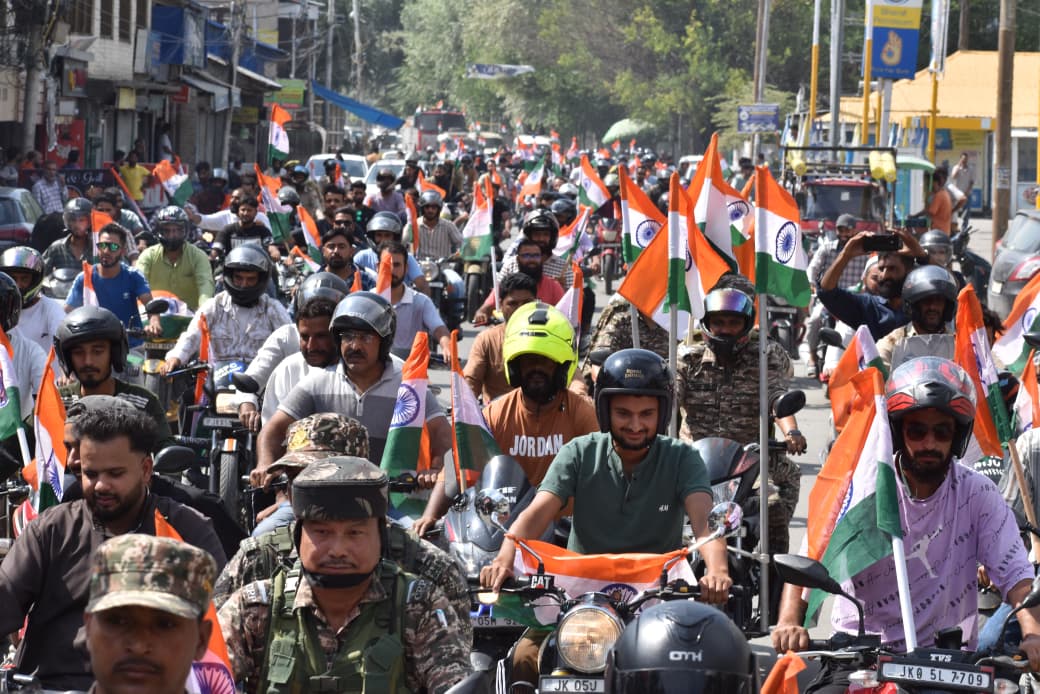
A palpable shift towards open displays of national pride is sweeping through Kashmir, marking a decisive break from a past where hoisting the Tricolour was often met with apprehension.
Gone are the days when Republic Day and Independence Day were occasions for concern rather than celebration. Since the abrogation of Article 370, the national flag has become a visible and voluntary symbol of affinity with the rest of the country.
From schoolchildren and university students to private institutions and marketplaces, the Tricolour is now ubiquitous. Similarly, the national anthem is played and sung with respect at every conceivable forum.
This liberated atmosphere, where national symbols are becoming commonplace, points to a newfound connection with the nation—a transformation most visible among the youth. They now openly hoist the flag at homes, in marketplaces, and during public functions without the fear of reprisal that once prevailed.
“This is a change felt in the heart,” said Mohammad Afzal, a prayer leader from Srinagar, in a conversation with Kashmir Convener. “Singing the national anthem in Kashmir is now done with love and dignity. While it was not immediately embraced by all, people have wholeheartedly accepted this change. To hear it played in every corner and to see people show it respect is a profoundly positive sign.”
He added that this change has been actively fostered by government initiatives like the ‘Har Ghar Tiranga’ campaign. Where national flags were once a rarity, they now adorn public buildings, private homes, and institutions.
Social activist Touseef Raina, speaking with Kashmir Convener, stated that the national anthem, once seldom heard in public, now resonates regularly and is “sung with enthusiasm rather than under coercion.”
According to Akthar Ahmad, a Srinagar-based political activist, this new patriotism is rooted in the restoration of normalcy. “For the first time in nearly three decades, schools function without forced shutdowns, business life is smooth, and the curse of stone-pelting and hartals has been largely contained. This has created a space where national identity can flourish organically.”
He emphasized the symbolic importance of this shift, stating, “The widespread respect for the national flag and anthem sends an unambiguous message that the people of Kashmir are an integral part of India. This is a foundational step toward complete integration and unity.”
Echoing this sentiment, a government teacher who wished to remain anonymous said that this open expression of patriotism represents a decisive departure from a past marked by inhibition. It signals a collective embrace of a national identity and a hopeful step toward a stable future for the region.
A civil official, reacting to this development, told Kashmir Convener that where security concerns once dominated the landscape, town squares and government buildings now fly the national flag with pride. He noted that the change is not merely administrative but appears to be a cultural shift taking root.
From schools in the bustling streets of Srinagar to public offices in the remote villages of Kupwara, the day begins with the collective recitation of “Jana Gana Mana.” This daily ritual, once a fragmented exercise, has become a unifying force for a new generation.
“There is a palpable sense of belonging and national identity that has been rekindled,” observes Prof. Suresh, a sociologist based in Jammu. “The constitutional integration was the first step; what we are witnessing now is the emotional and cultural integration. The flag and the anthem are powerful symbols of this new reality.”
He explained that the administration has actively encouraged this sentiment through campaigns like ‘Har Ghar Tiranga,’ which saw an overwhelming response. Markets were flooded with flags, and social media was awash with images of families posing proudly with the national symbol. For many, this public display of patriotism represents a newfound sense of security and participation in the national mainstream.
“We now sing the anthem with the same pride as any other Indian in Delhi or Mumbai,” says Majid Qayoom, a college student from Sopore, a region once known as a hotbed of militancy. “It makes us feel part of something larger. Our aspirations are no longer different; we want peace, education, and a future full of opportunities,” he added.
The sight of the Tiranga fluttering against the backdrop of the Himalayas and the sound of the National Anthem echoing through the valleys are no longer just acts of protocol, but a heartfelt affirmation of a region steadily marching in step with the rest of the nation.

Comments are closed.