
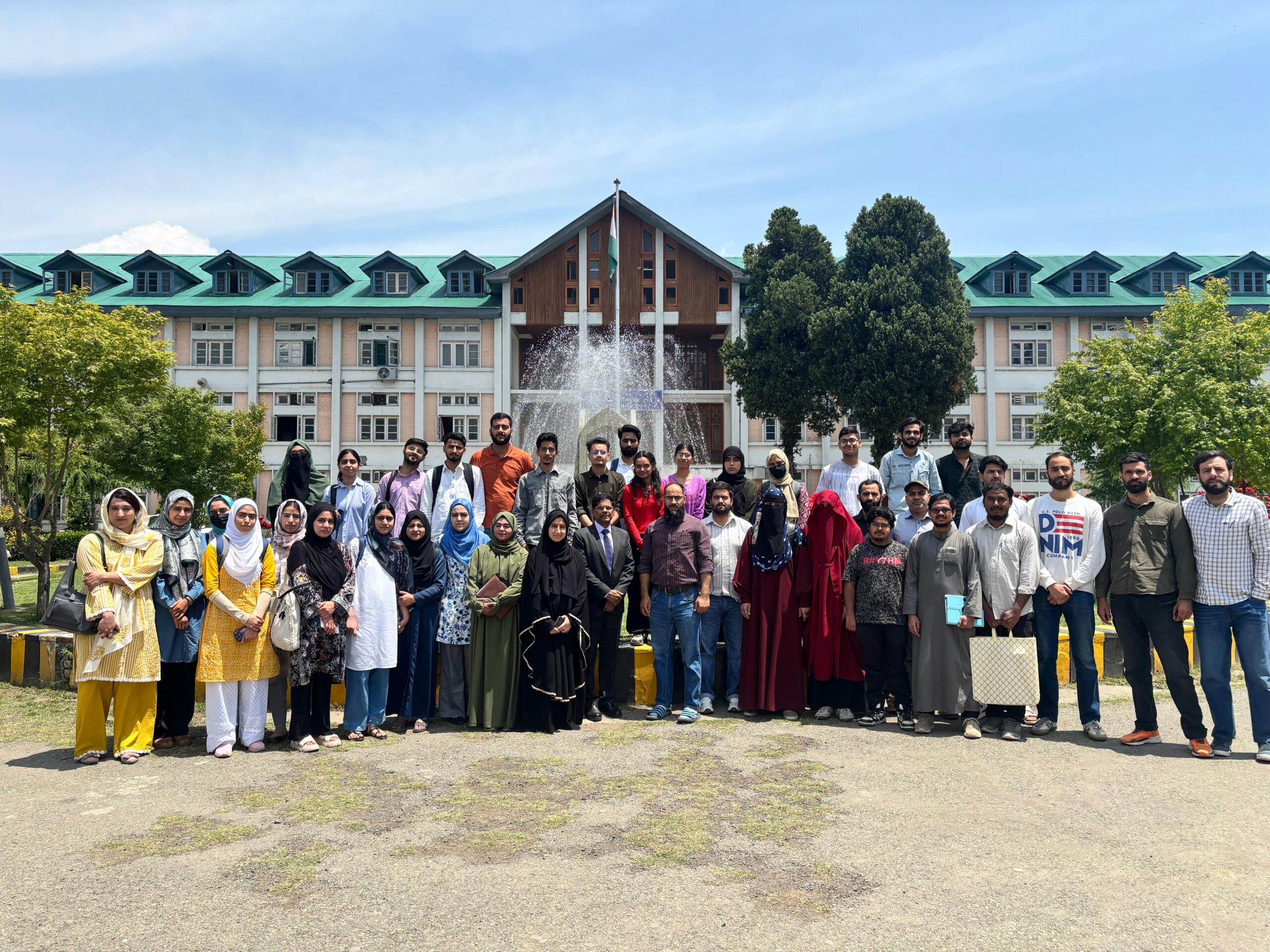

NIT Srinagar concludes lecture series on Himalayan Engineering Challenges

Experts highlight sustainable infrastructure solutions

Convener News Desk 

Srinagar, May 16: A two-day lecture series on “Engineering in the Himalayas: Advances in Rock Mechanics and Ground Improvement” concluded successfully at National Institute of Technology (NIT) Srinagar.

The programme was organised by the Department of Civil Engineering, NIT Srinagar, in collaboration with the Indian Geotechnical Society Srinagar Chapter.


The event was inaugurated by Prof. F.A. Mir, Chairman of IGS Srinagar Chapter; Prof. J.A. Bhat, Head of the Civil Engineering Department at NIT Srinagar; and Prof. B.A. Mir, Honorary Secretary of the IGS Srinagar Chapter.

Faculty members, including Prof. Syed Kaiser Bukhari and Dr. R.P. Shukla, along with event coordinators Dr. Majid Hussain and Dr. Falak Zahoor, were also present.

While Undergraduate and postgraduate engineering students participated enthusiastically in the lecture series.

The programme featured lectures by eminent experts in geotechnical and infrastructure engineering, including Prof. K. Seshagiri Rao of Indian Institute of Technology Delhi and Prof. Arif Ali Baig of NIT Warangal.

Their sessions highlighted emerging challenges and innovative solutions in sustainable Himalayan infrastructure development.

Prof. Arif Ali Baig delivered a lecture on the growing significance of polymer biogeotechnics and its applications in sustainable environmental engineering.

Stressing the need for eco-friendly ground improvement techniques, he encouraged students to actively engage in research in this evolving field. His insights and technical expertise inspired young researchers to contribute towards sustainable engineering solutions.

Prof. K. Seshagiri Rao, who described Jammu and Kashmir as his “second home,” shared his experiences from landmark Himalayan infrastructure projects, including the Chenab Bridge and Anji Khad Bridge under the USBRL railway project.

He discussed the geological, social, and technical challenges faced during the construction of these mega projects and highlighted the collaborative role of researchers and agencies in overcoming them.

In another lecture, Prof. Rao elaborated on tunnelling in complex Himalayan terrain, drawing examples from the Chenani-Nashri Tunnel and the Pir Panjal Tunnel.

His sessions provided students with valuable insights into the innovation, engineering expertise, and perseverance required to execute large-scale infrastructure projects in challenging mountain conditions.

The lecture series successfully bridged the gap between academic research and practical engineering, leaving participants motivated to contribute towards sustainable and resilient infrastructure development in the Himalayan region.

Comments are closed.