NEP 2020, Low-Weight School Bags and the Stark Reality of Private School Violations

Malik Mushtaq


“‘No Bag Days’ were meant to free young minds — yet in practice, they are often reduced to empty gestures without meaningful change.”

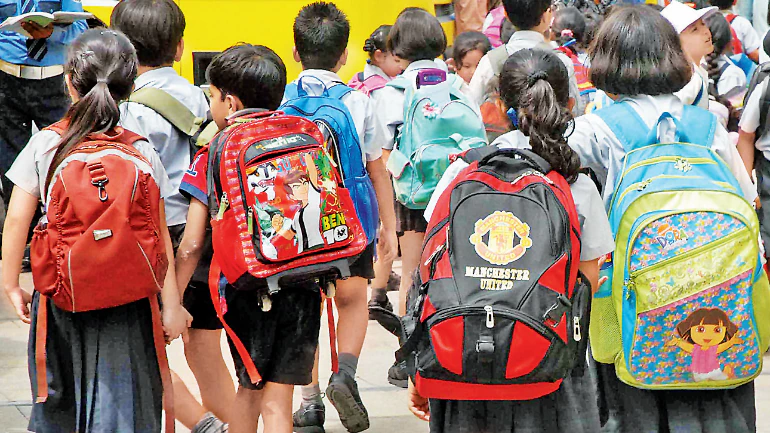
Education, at its core, is meant to liberate the mind, nurture curiosity, and shape confident individuals. It is not meant to weigh children down—literally or metaphorically. Yet, across towns and cities, a troubling image has become all too familiar: young children, their shoulders bent under the weight of overloaded school bags, trudging toward classrooms with visible strain. This everyday sight raises an urgent and uncomfortable question—are we truly educating our children, or are we burdening them in the name of learning?

The issue of heavy school bags is neither new nor trivial. It represents a deeper structural flaw in the education system, where outdated practices, excessive academic pressure, and commercialization have combined to create an environment that often neglects the well-being of the very learners it is meant to serve. Recognizing this, the National Education Policy 2020 (NEP 2020) emerged as a landmark reform, promising to transform education into a more child-centric, flexible, and holistic experience. Among its many progressive recommendations were clear guidelines aimed at reducing the physical and psychological burden on students—most notably, limits on school bag weight and the introduction of innovative concepts such as “No Bag Days.”

These reforms were not arbitrary; they were grounded in research, expert recommendations, and a growing global consensus that children learn best in environments that are engaging, stress-free, and supportive of their overall development. The School Bag Policy, aligned with NEP 2020, explicitly states that a school bag should not exceed 10 percent of a child’s body weight. It further mandates that pre-primary students should not carry bags at all and that homework should be eliminated for children up to Class 2. Schools are expected to regularly monitor and regulate the weight of bags to ensure compliance.

The rationale behind these guidelines is clear and compelling. According to the Ministry of Education, such measures are essential to reduce physical discomfort and psychological stress among school children, thereby promoting a culture of joyful and meaningful learning. Medical research strongly reinforces this position. The Indian Academy of Pediatrics has consistently warned that excessively heavy school bags can lead to musculoskeletal strain, spinal stress, and long-term posture-related issues in children. A study published in the Indian Journal of Orthopaedics revealed that more than two-thirds of school children experience back pain linked directly to the weight of their bags—a statistic that underscores the urgency of reform.

Beyond physical health, the psychological implications are equally concerning. A child who begins the day with physical discomfort is less likely to engage actively in learning. Fatigue, anxiety, and reduced enthusiasm for school become inevitable consequences. Education, instead of being a source of joy, turns into a daily ordeal.

In this context, one of the most visionary aspects of NEP 2020 is the concept of “No Bag Days.” This initiative seeks to fundamentally reimagine the learning process by temporarily freeing students from the constraints of textbooks and notebooks. On these designated days, children attend school without bags, and learning shifts from rote memorization to experiential, hands-on activities. The emphasis is on creativity, critical thinking, and real-world skills.

For students in Classes 6 to 8, the policy even recommends a structured 10-day bagless period, during which they can explore vocational skills such as carpentry, gardening, and local crafts. This approach resonates deeply with the philosophy of Rabindranath Tagore, who believed that true education goes beyond the mere accumulation of information and instead harmonizes life with the world around us. “No Bag Days” embody this vision by transforming classrooms into spaces of exploration, curiosity, and discovery.

However, as with many well-intentioned policies, the gap between vision and implementation remains wide—particularly in private schools.

Despite clear guidelines and compelling evidence, the reality on the ground paints a very different picture. Surveys conducted across various regions in India indicate that school bags often weigh between 15 to 25 percent of a child’s body weight—far exceeding the prescribed limit. Reports by the National Council of Educational Research and Training (NCERT) reveal that even primary school students are frequently required to carry six to eight textbooks daily, along with multiple notebooks and supplementary materials.

In many private schools, the concept of “No Bag Days” is either ignored altogether or reduced to a token gesture with little real impact. Instead of genuine activity-based learning, these days often become symbolic exercises that fail to deliver the intended benefits.

The voices from the ground further highlight the gravity of the situation. Parents express deep concern over the physical strain their children endure, while teachers—often speaking anonymously—acknowledge the systemic pressures that compel them to comply with institutional demands. Completing extensive syllabi, adhering to prescribed materials, and meeting performance targets often take precedence over student well-being.

At the heart of this issue lies the growing commercialization of private education. What was once a noble endeavor has, in many cases, transformed into a profit-driven enterprise. Schools increasingly mandate the purchase of private publishers’ books, multiple guidebooks, and excessive notebooks. Homework loads are amplified, not necessarily to enhance learning, but to justify the use of these materials.

Education activist Anil Sadgopal aptly observed that when education becomes a commodity, the child is reduced to a consumer rather than a learner. This shift in perspective has profound implications. It prioritizes financial interests over pedagogical integrity, leading to practices that burden students unnecessarily.

The consequences of these practices extend beyond the classroom, evolving into a significant public health concern. The World Health Organization (WHO) has warned that excessive physical load during formative years can result in chronic back pain, spinal deformities, and long-term musculoskeletal disorders. Poor posture, developed early in life, can have lifelong repercussions.

The psychological toll is equally alarming. Heavy school bags and excessive academic demands contribute to increased stress, fatigue, and anxiety among children. The joy of learning is replaced by a sense of obligation and pressure. This stands in stark contrast to the educational philosophy of Maria Montessori, who emphasized that effective education enables children to learn naturally and independently, without undue burden.

If the problem is so evident and the solutions so clearly articulated, why does implementation continue to falter?

The answer lies in a combination of systemic weaknesses. Enforcement mechanisms remain inadequate, with limited inspections and a lack of strict penalties for non-compliance. Administrative inertia further compounds the issue, allowing violations to persist unchecked. Awareness among parents is often limited, and even when concerns are recognized, many hesitate to raise their voices due to fear of retaliation or social pressure.

This culture of silence and compliance enables the status quo to continue.

Parents, however, are not powerless. They are key stakeholders in the education system and have a crucial role to play in driving change. By becoming informed about policy guidelines, engaging with school authorities, and collectively advocating for student well-being, they can help create pressure for reform. As Mahatma Gandhi famously कहा, meaningful change begins when individuals take responsibility for the world around them.

Moving forward, the path to reform must be both practical and collaborative.

First, there is an urgent need for stricter monitoring and accountability. Educational authorities must conduct regular inspections and enforce penalties for schools that violate prescribed norms. Without consequences, policies remain mere recommendations.

Second, curriculum rationalization is essential. The number of textbooks and supplementary materials must be reduced, with a shift toward integrated and streamlined content. This will not only lighten physical loads but also enhance conceptual clarity.

Third, schools must invest in infrastructure solutions such as lockers and digital learning platforms, allowing students to store materials on campus and access resources electronically.

Fourth, the implementation of “No Bag Days” must be genuine and structured. Teachers should be trained in experiential learning methods, ensuring that these days are meaningful and impactful rather than symbolic.

Finally, public awareness campaigns are critical. Parents must be informed of their rights and encouraged to report violations. Community engagement can serve as a powerful catalyst for change.

The vision of the National Education Policy 2020 is both ambitious and inspiring. It recognizes that education should be joyful, inclusive, and aligned with the holistic development of children. Yet, the continued disregard for bag weight norms and the superficial implementation of progressive ideas reveal a stark disconnect between policy and practice.

This is not merely an administrative lapse—it is a matter of children’s health, dignity, and future.

If we fail to act, we risk raising a generation weighed down not only by heavy school bags but by an education system that prioritizes compliance over care. The burden they carry today may translate into long-term physical and emotional consequences tomorrow.

The responsibility, therefore, is collective. Authorities must enforce, schools must reform, parents must advocate, and society must awaken.

Because education, in its truest sense, should elevate minds, inspire curiosity, and nurture potential—not burden shoulders or diminish the joy of learning.

Comments are closed.