

Shahbaaz Bashir Shah
Imam Al-Ghazali (RA) beautifully observed: “The company of the teacher is like the fragrance of musk; even if you do not take anything from him directly, his presence will inevitably leave its imprint upon you.” This timeless wisdom captures the essence of what it means to sit in the presence of a scholar: knowledge may be transmitted through words, but wisdom, refinement, and noble character are absorbed through companionship.
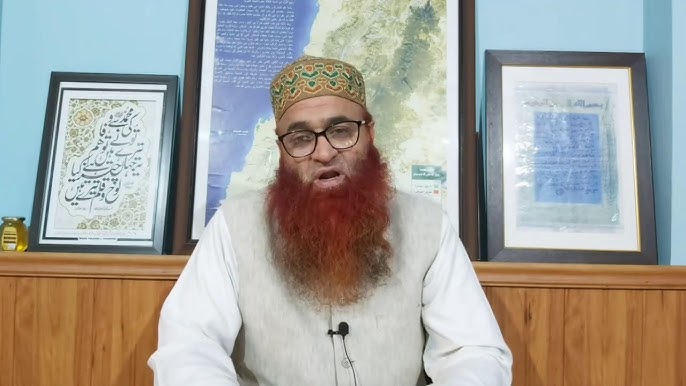
Every accomplished scholar carries within his heart a treasury of such moments—times when discipline was instilled, sincerity was nurtured, and the intellect was sharpened under the watchful gaze of teachers. The life of Mufti Nazir Ahmad Qasmi is one such journey, enriched by the prayers of mentors, shaped by the rigour of great teachers, and refined by the responsibility of carrying forward a sacred scholarly tradition. His story is not only about personal achievement but also about the continuity of an intellectual heritage in Kashmir that spans centuries.
Kashmir has long been a valley of saints and scholars, where the fragrance of spiritual devotion has always intertwined with the pursuit of knowledge. Institutions like Darul Uloom Deoband in North India provided a strong foundation for Islamic education in the subcontinent, and Kashmir was no exception in embracing this tradition. In the late 20th century, Darul Uloom Raheemiyyah in Bandipora emerged as one of the most influential seminaries in the Valley, producing scholars who would later guide communities, lead institutions, and engage in intellectual discourse at the highest level.
It was into this landscape that Mufti Nazir Ahmad stepped, contributing not only as a teacher but as a builder of institutions, a mentor of scholars, and a voice of moderation and balance at a time when Kashmir was passing through social and political upheavals.
As a young student, Mufti Nazir Ahmad had the privilege of studying under some of the greatest luminaries of the age. His teachers included:
- Maulana Mujahidul Islam Qasmi (RA) – a visionary who founded the Islamic Fiqh Academy and steered the All India Muslim Personal Law Board.
- Mufti Mahmood Hasan Gangohi (RA) – the Grand Mufti of India and Pakistan, remembered as a pillar of Deobandi scholarship and spirituality.
- Maulana Saeed Ahmad Akbarabadi (RA) – a noted intellectual who headed Islamic Studies at Aligarh Muslim University.
- Mufti Nizamuddin Azmi (RA) and Mufti Saeed Ahmad Palanpuri (RA) – both Grand Muftis and Hadith masters of Darul Uloom Deoband.
- And a constellation of other luminaries who left deep impressions on his mind and heart.
From them, Mufti Nazir learned that scholarship is not merely the memorisation of texts, but the cultivation of humility, patience, and service. His brilliance as a student soon became apparent, and his teachers nurtured him with affection and confidence, laying the foundation for his future role as a teacher of teachers.
After completing his studies, Mufti Nazir Ahmad began his career as an Imam in Srinagar, leading prayers and offering sermons marked by sincerity and clarity. Soon, Maulana Rahmatullah Qasmi, the founder of Darul Uloom Raheemiyyah, invited him to join the seminary. At the time, Raheemiyyah was in its formative stage, but with the steady presence of Mufti Nazir, it began to grow into a formidable institution.
He was entrusted with teaching a wide range of subjects—Arabic grammar and literature, Logic, Philosophy, Fiqh, Tafseer, and Hadith. When advanced classes in Daur-e-Hadith were introduced, the revered texts of Sahih al-Bukhari and Jami‘ al-Tirmidhi were assigned to him. Later, with the establishment of the Darul Iftaa, he began training students in the methodology of issuing fatawa, a responsibility requiring both intellectual depth and immense caution.
What distinguished Mufti Nazir Ahmad was not only his command over the curriculum but his unique teaching style. His lessons were steady, clear, and free of unnecessary rhetoric. He had the rare ability to explain even the most complex jurisprudential debates in a way that students could grasp. In his public talks, he was never argumentative or harsh; instead, he emphasised balance, reasoning, and practical insight. These qualities made him one of the most respected speakers at Khatm-e-Bukhari gatherings in seminaries across Kashmir and beyond.
Over the years, Mufti Nazir Ahmad taught almost the entire Dars-e-Nizami curriculum, guiding students through the intellectual treasures of classical scholarship. Texts such as Mukhtasar al-Quduri, Sharh al-Wiqayah, Hidaya, Tafseer-e-Jalaleen, and the Hadith collections of Bukhari and Tirmidhi were illuminated in his classroom.
But he was not a teacher who confined himself to books alone. For him, teaching was about shaping students into future leaders of faith. His classroom was as much about moral training as it was about intellectual instruction. In this, he carried forward the Deobandi legacy—where scholarship and spirituality go hand in hand.
The truest measure of a teacher is found in the calibre of his students. In this, Mufti Nazir Ahmad’s legacy shines brightly. His students now serve as muftis, teachers, professors, and imams across Kashmir and beyond. From Mufti Muhammad Ayoub Qasmi Naqshbandi, a khalifa of great spiritual masters, to Qazi Muhammad Imran Qasmi, a renowned Hadith teacher in Srinagar, and from senior muftis in Anantnag and Shopian to professors in Jammu and Kashmir’s education department—his influence has spread far and wide.
These students, now shaping communities and educating new generations, are living extensions of his vision. They represent not only his intellectual legacy but also his ethical and spiritual imprint.
At a time when Kashmir’s social and political landscape was often turbulent, Mufti Nazir Ahmad’s approach stood out for its sobriety and moderation. He avoided extremes, focusing instead on nurturing communities through knowledge, clarity of faith, and patience. His scholarship was not divorced from reality; it was grounded in the needs of society. Whether in issuing fatawa or in addressing gatherings, his words reflected balance, ensuring that faith was not a tool for division but a source of strength and guidance.
The life of Mufti Nazir Ahmad Qasmi is an enduring testimony to the power of knowledge, faith, and service. From sitting at the feet of great masters to becoming a master himself, his journey reflects the continuity of a scholarly tradition that has shaped Islamic thought in Kashmir for centuries. His service to Darul Uloom Raheemiyyah, his clarity as a teacher, and his impact through generations of students have placed him firmly in the lineage of scholars whose influence outlives them.
As Imam Ghazali’s metaphor reminds us, the fragrance of a teacher lingers long after one leaves his company. In the same way, the intellectual and spiritual musk of Mufti Nazir Ahmad’s life will continue to enrich hearts and minds across Kashmir and beyond, ensuring that his journey remains a source of inspiration for generations to come.
Author is Student at Darul Uloom Nadwa Tul Ulama Lucknow and can be reached at shahbaazshah469@gmail.com

Comments are closed.