

Shoiab Mohmmad Bhat
“Mahatma Gandhi proved that moral strength and non-violence can achieve political freedom and awaken the conscience of a nation.”
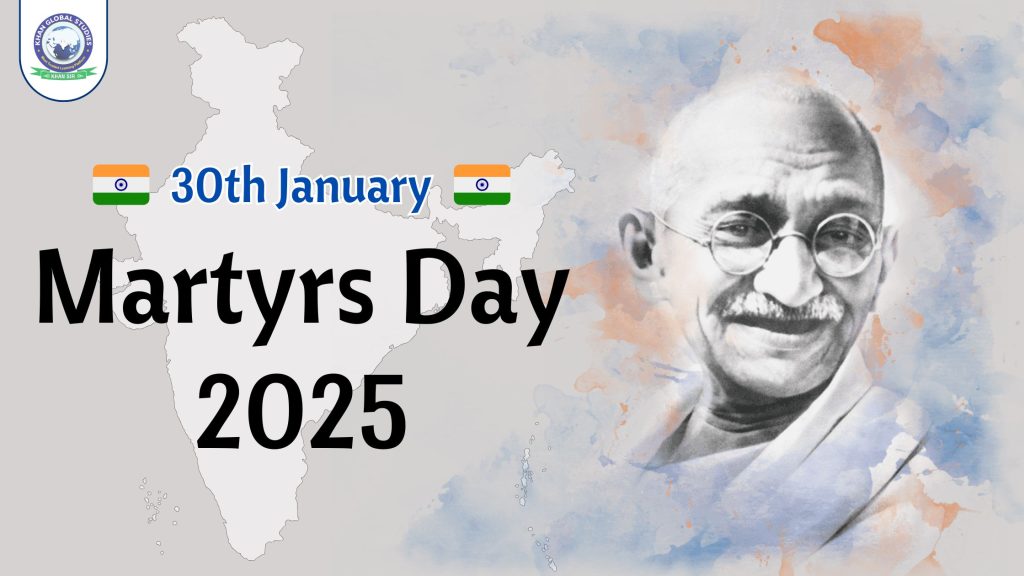
In India, 30 January is observed as Martyrs’ Day to commemorate the supreme sacrifice of Mahatma Gandhi and all those fearless individuals who laid down their lives for the country. It is a very important day in terms of emotions and history of the country because it is the day when the Father of the Nation was assassinated in 1948. In addition to the memory, the day is an effective reminder of the traditions of peace, bravery, service, and self-sacrifice, which continue to guide the spirit of India.
The life of Mahatma Gandhi was an ideal of truth, minimalism and virtue. His ideology of non-violence has transformed the freedom movement into a mass movement based on moral values. Gandhi led millions of people through peaceful protest, civil disobedience and undying faith in humanity, proving that moral strength can achieve political freedom. The assassination on 30 January 1948 was a stunning jolt to the country, which had just gotten out of the colonial regime and was trying to create a united, democratic society.
Martyrs Day honours the legacy of Gandhi and the millions of freedom fighters whose sacrifices led to the achievement of independence. Their lives were full of heroism and undying devotion to justice, dignity and self-respect. Their contributions encourage generations of people to appreciate the freedom and safeguard the principles enshrined in the Constitution.
Educational institutions such as schools and colleges play a significant role in keeping the spirit alive. Students actively participate in debates, speeches, essay competitions, and cultural programmes organised around the themes of patriotism and national values. These activities expose young minds to the vision of the freedom movement and instil in them respect for the sacrifices made by previous generations to achieve freedom. Such awareness enhances civic consciousness and encourages young people get involved in benefiting society.
The Martyrs Day is an occasion that highlights the value of unity and social harmony. Gandhi did not confine his vision to political liberation, he also included social equality, communal harmony, and respect for the dignity of human beings. His teachings were based on compassion, tolerance, and peaceful coexistence. They are quite applicable in a multicultural country such as India. This day reminds citizens that unity and mutual understanding are the strongest foundation for national development.
The day holds special significance for the families of martyrs, particularly those who lost their loved ones in wars, internal security operations, and peacekeeping operations. Soldiers, police personnel, and people living in the country have remained courageous and selfless to serve the nation even after independence. Martyrs Day recognises their valuable contributions and assures families that the nation will always honour and remember their sacrifices.
Beyond remembrance, it encourages introspection, urging citizens to reflect on their roles and responsibilities in a democratic society. True freedom attains meaning when it is accompanied by integrity, respect for the law, social responsibility and service to national development. The ideals of martyrs offer guidance for daily life, whether through honesty at work, service to society, or care for the environment.
Martyrs’ Day connects the lessons of history with the challenges of the present. The issues faced by the nation require collaboration, strength, and moral leadership. The significance of dialogue, patience, and moral behaviour as discussed by Gandhi will always be useful in conflict resolution and plural development. His faith in the strength of common individuals remains an enduring inspiration for those working towards social reform, education, health and sustainable development.
It bridges generations, linking past sacrifices with present aspirations and future hopes. By honouring martyrs, citizens demonstrate their commitment to defending freedom and democracy. This sense of continuity strengthens national identity and responsibility.
The importance of Martyrs’ Day lies in its call to action as much as in remembrance. It encourages citizens to give back to the country through professional excellence, serving society, creative expression or leadership. Patriotism becomes meaningful when translated into efforts that improve society and foster peace.
The memory of martyrs lights the path of India, guiding its journey of development and progress. Citizens are reminded that the sacrifices of those who achieved freedom were made through struggle, discipline, and moral courage. Martyrs’ Day enhances appreciation for history and inspires the present and future generations to work towards a peaceful and prosperous nation.
Essentially, 30 January is a day of solemnity and hope in the national calendar. Martyrs’ Day, celebrates lives devoted to the country and reaffirms the ideals that form the soul of India. Reflection, remembrance, and renewed commitment continue to unite the nation and serve as a source of inspiration for all citizens.

Comments are closed.