
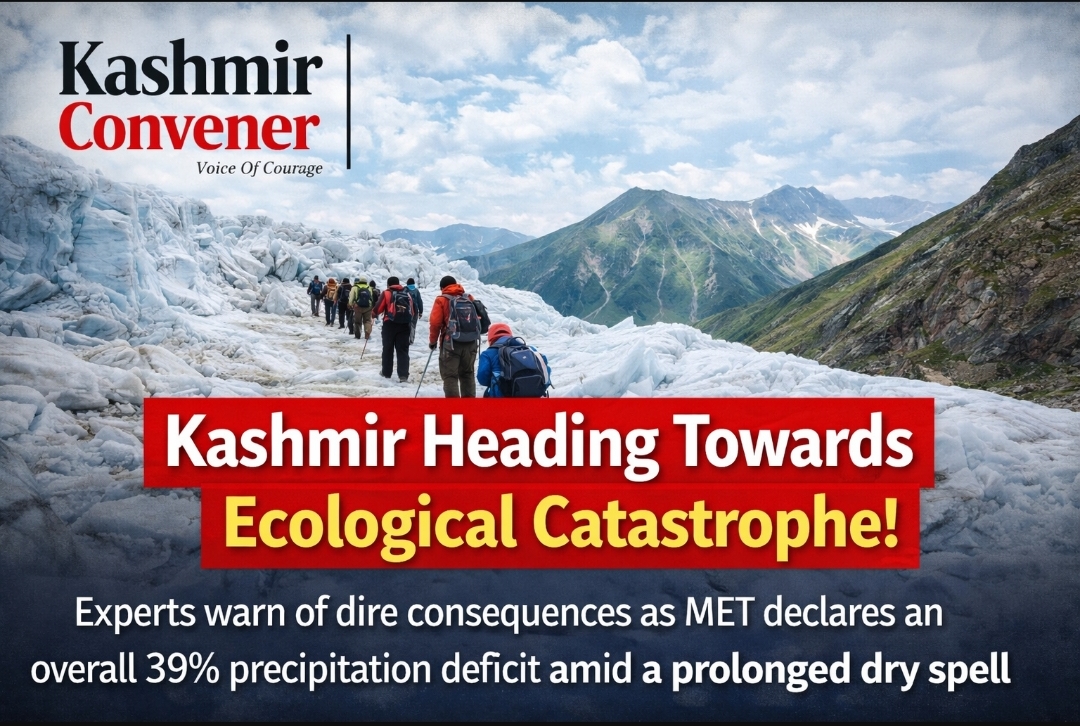
Kashmir Heading Towards Ecological Catastrophe!
Experts warn of dire consequences as MeT declares an overall 39% precipitation deficit amid a prolonged dry spell

Muqeet Mubashir
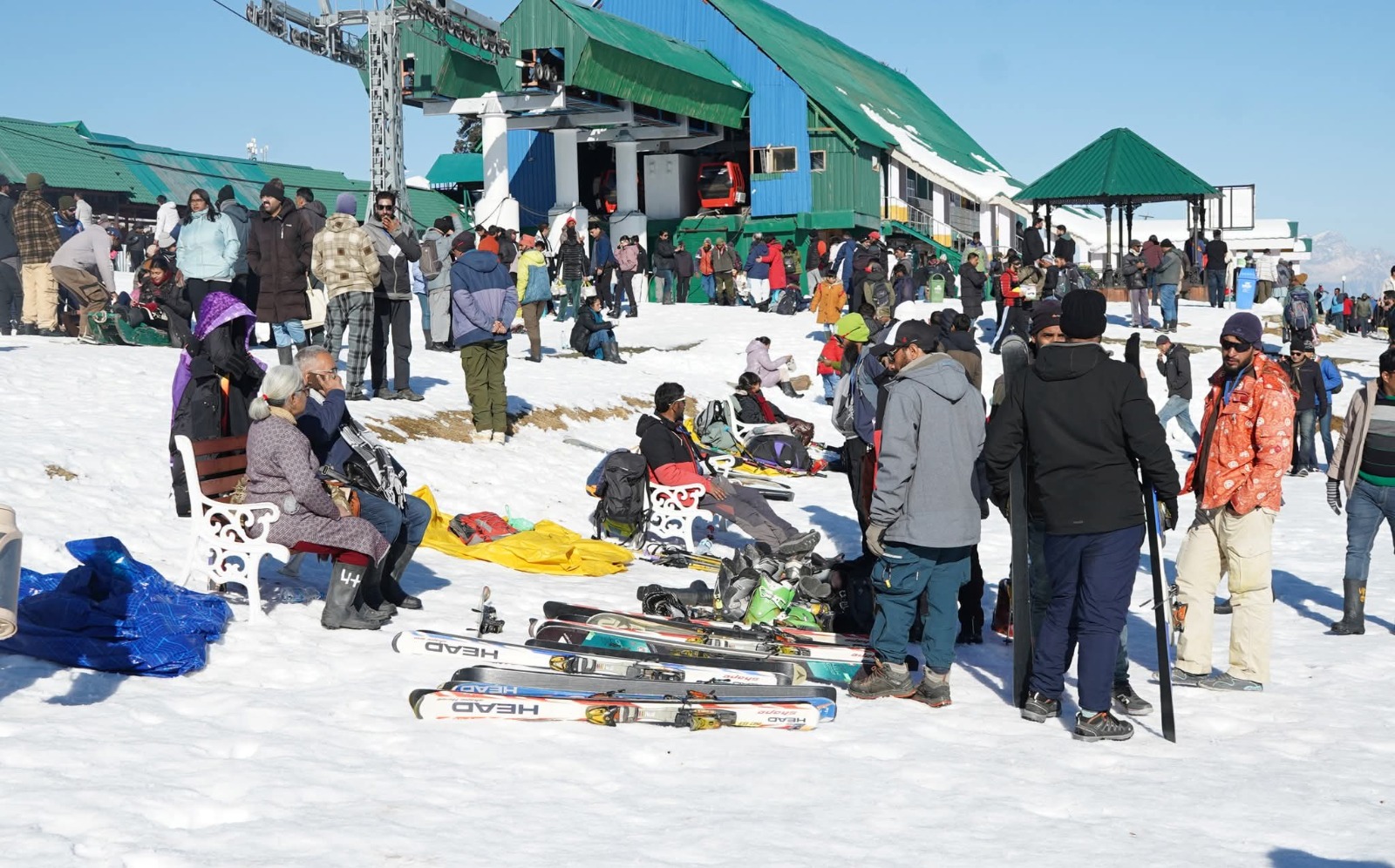
Srinagar, Jan 07: The pristine beauty of Kashmir, often described as “Paradise on Earth,” is facing an unprecedented ecological challenge. While tourism continues to thrive on the Valley’s snow-clad mountains and scenic landscapes, activities that exploit these fragile natural resources are accelerating climate disruption, threatening Kashmir’s delicate ecological balance and long-term sustainability.
High-altitude regions such as Sonamarg, Pahalgam and Afarwat (Gulmarg) have traditionally acted as Kashmir’s natural lifeline, sustaining the Valley through harsh winters and scorching summers. The Himalayan glaciers like Thajwas, Harmukh and Kolhai play a crucial role in regulating water availability, supporting domestic requirements, agriculture and maintaining ecosystem stability.
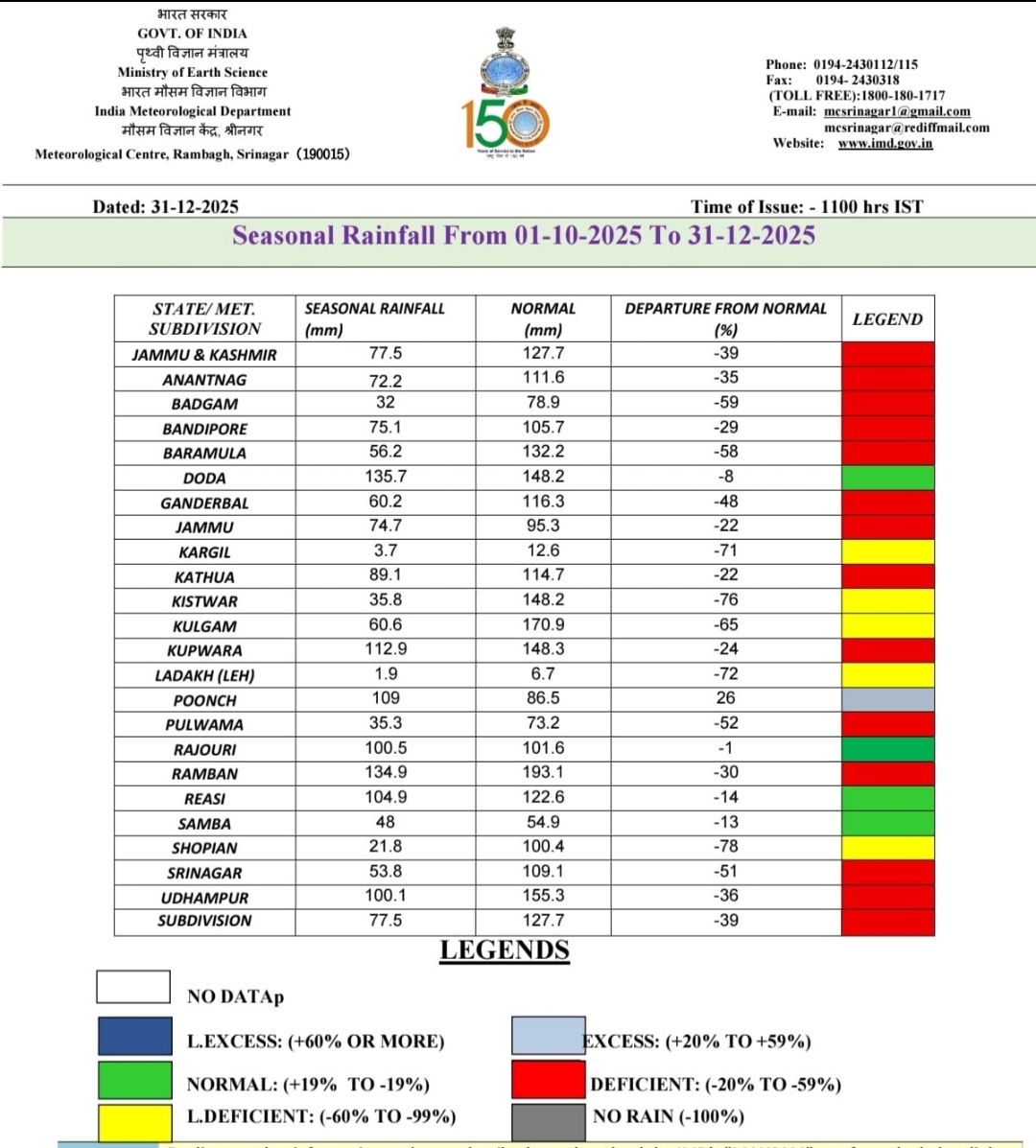
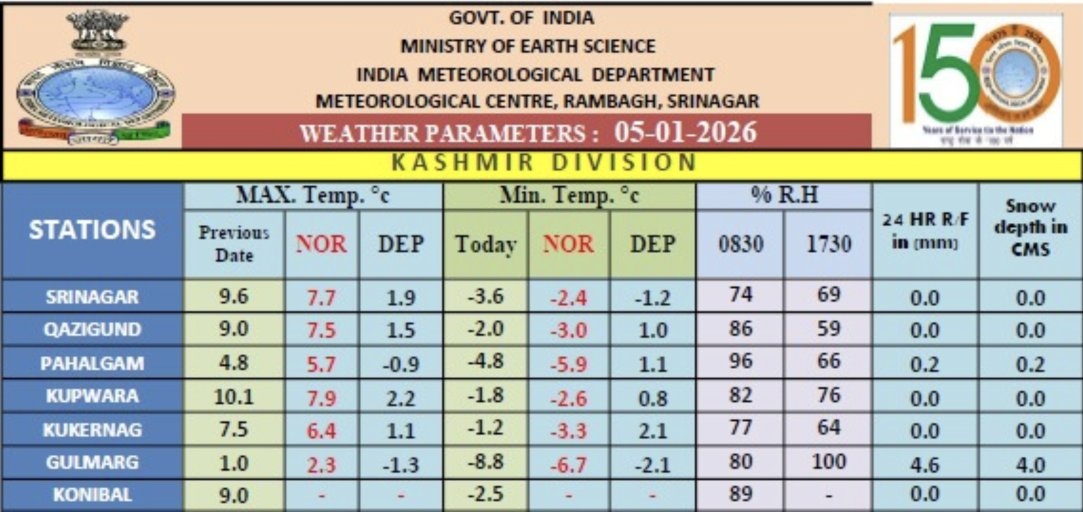
However, the current winter has raised serious alarming bells. According to data released by the Meteorological Centre, Srinagar, Jammu and Kashmir recorded a 39 percent precipitation deficit during the period from October 1 to December 31, 2025, with Anantnag, Budgam, Bandipora, Baramulla and Srinagar receiving only 72.2 mm, 32 mm, 75.1 mm, 56.2 mm and 53.8 mm precipitation against a normal of 116.6 mm, 78.9 mm, 105.7 mm, 132.2 mm and 109.1 mm respectively. Several districts, including Srinagar, Baramulla, Budgam and Shopian, have experienced large scale precipitation deficit. Adding to the concern, snowfall depth recorded so far is far below that of previous years. As per data available with the Meteorological Centre Srinagar, Gulmarg has recorded just 4.0 cm of snowfall, while Pahalgam has recorded a mere 0.2 cm. Other locations including Srinagar, Qazigund, Kokernag, Konibal and Kupwara have recorded 0 cm snowfall as on January 5, 2026.
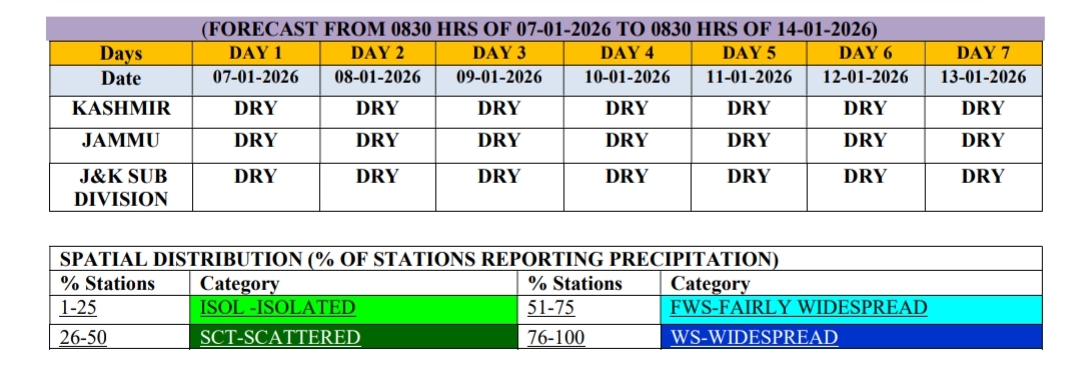
Compounding concerns, the Meteorological Department has also predicted dry weather conditions for the next week, further deepening fears of prolonged dryness.
Speaking to Kashmir Convener, a top official from the Meteorological Centre Srinagar, cautioned that the situation could turn extremely challenging in the coming months if the prevailing conditions persist.
“Snowfall, once reliable and widespread by this time of year, has remained delayed and scant, reinforcing evidence of shifting climate patterns in the region. If this dry spell continues, the months of June and July onwards are going to be very tough for us,” the official said.
He warned that sectors heavily dependent on water, particularly agriculture, would face severe stress. “At a time when snowfall is already far below normal, allowing traditional and adventure tourism and related activities only adds to carbon footprints.
This accelerates snowmelt, increases glacier retreat at significant proportions and directly feeds into the larger phenomenon of global warming,” he explained.
The official added that early and rapid melting of glaciers would further reduce water availability during peak summer months, aggravating both ecological and livelihood challenges across the Valley.
Despite these clear warnings, authorities appear to be turning a blind eye. Tourism-related activities continue unabated even as the snow is still struggling to accumulate, while the Valley grapples with a growing precipitation deficit. Such short-sighted decisions risk intensifying water scarcity and undermining the region’s ability to cope with the upcoming summer.

Comments are closed.