Srinagar, Sep 22: A Congress legislator on Tuesday alleged that Jammu and Kashmir’s dual power structure has spawned a “devil’s authority,” creating administrative paralysis and accelerating the ecological ruin of Wular Lake, once the world’s largest freshwater lake.
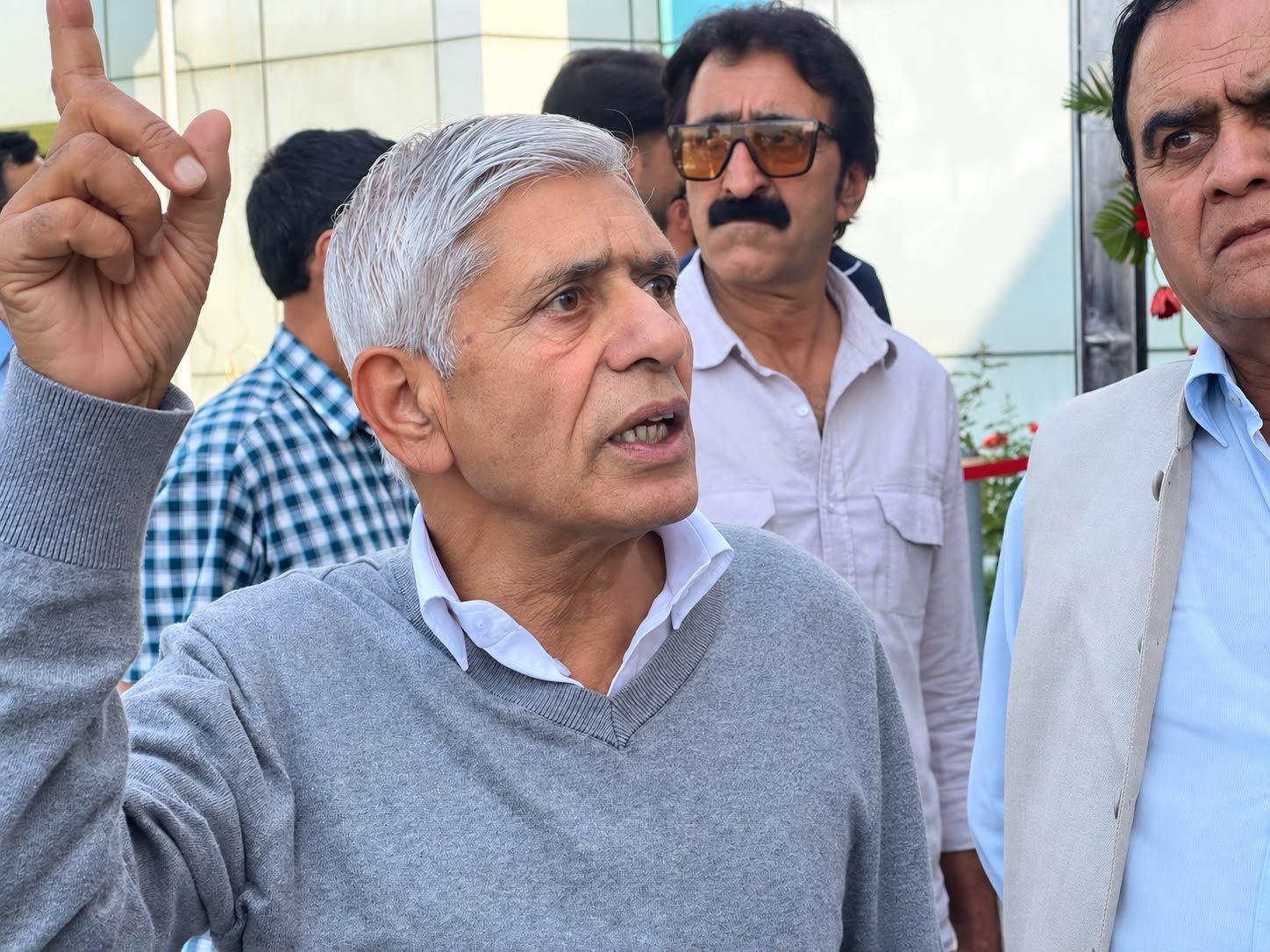
Bandipora MLA Nizamuddin Bhat, speaking to Kashmir Convener outside the JK legislative assembly said the secretariat stands divided with no hierarchy and no link between authority and subordination.
“There is one elite class which is controlled by the people. There is another class of officers which is controlled by the popular government. It is natural that there are two types of decisions,” he said, calling it the first problem. The second, he added, is the lack of power with the elected government.
MLA Nizamuddin Bhat said the Lieutenant Governor earlier held absolute authority before the popular government was created. “He made the law. He broke the law. He could do whatever he wanted to do because there was one single authority. This is the nature of democracy. Now they are in authority. Their power is limited,” he said.
He said authority now stands divided at administrative, political, constitutional and legal levels. “You have divided the law also. There is one constitution which is in J&K. We are being attributed to the Reorganisation Act. When there are two laws, there is no need to go to the second law,” he said.
Wular Lake Slipping Away
Turning to Wular, MLA Nizamuddin Bhat said the lake was the largest clean water body in the world, with Walur behind it once hosting a larger community. “But when human fiddling, population boom and negligence at administrative or environmental level came, our natural assets suffered,” he said.
He rejected the popular notion that the lake is fed by the Jhelum, Kishan Ganga or their tributaries, calling them merely flowing streams. “Walur’s source is not in Jehlum, not in Kishan Ganga, not in his tributaries. If you sit in a boat and go, Jehlum passes through the middle. When Jehlum has a level, it comes to the level of Walur . When Jehlum weakens, the ground is visible below. So that was not the source,” he said.
The actual source, he said, was a natural, gushing, oozing spring in the Watlab area that cleaned the lake and maintained its water level. “That closed,” he said.
MLA Nizamuddin Bhat said the Wular project was conceived at ₹3,060 crore, with ₹307 crore allocated in 2011 and ₹120 crore released, leading to the formation of the Wular Development Authority. “Then that Wular Development Authority was also divided. So there too, devil authority was formed again. To save this lake, ₹360 crore was not enough money — to make an authority, create human resources, infrastructure, then add inhabitants of the lake. That cannot be done in ₹360 crore,” he said.
‘Scientific Approach Missing’
Asked about the Manasbal and Wular development authorities, both linked to tourism and equipped with monetary and human resources, MLA Bandipora Nizamuddin Bhat said the core question remains unanswered. “Why has Walur lost its size and the level of the water? Why has that declined?” he asked.
He said the government has not adopted the scientific approach it should have and has failed to stop human fiddling. “Sand mafia is either growing on Jhelum or is growing on Walur. Look at the banks of Walur — so deep. The sound of fish is also gone. The sound of sandals is also gone. The water is also unclean, ugly. Size is cheesy. These are all diseases,” he said.
MLA Bhat said he has raised the issue at thousands of forums without a highlight. Asked whether improvement can be expected, he said, “It is possible when one of the two is kind.”


Comments are closed.