

Suhail Khan
Srinagar, Jan 05: Union Power Minister Manohar Lal Khattar stated on Monday that all major power initiatives in Jammu and Kashmir are adhering to strict deadlines, with previously stalled issues now fully resolved.
His statement, as per Kashmir Convener, directly countered recent reports of a severe crisis in J&K’s energy sector. The minister specifically highlighted progress on key hydroelectric ventures in the Kishtwar district, affirming they are advancing as scheduled.
Earlier analyses had attributed power shortages to reduced output from hydroelectric facilities on the Chenab and Jhelum rivers. These run-of-the-river projects, governed by the Indus Waters Treaty, experience predictable annual declines in generation during the low-flow period from October to March—a situation that has historically necessitated substantial power imports. Minister Khattar, however, rejected the characterization of a sectoral crisis, stating all challenges have been decisively overcome.
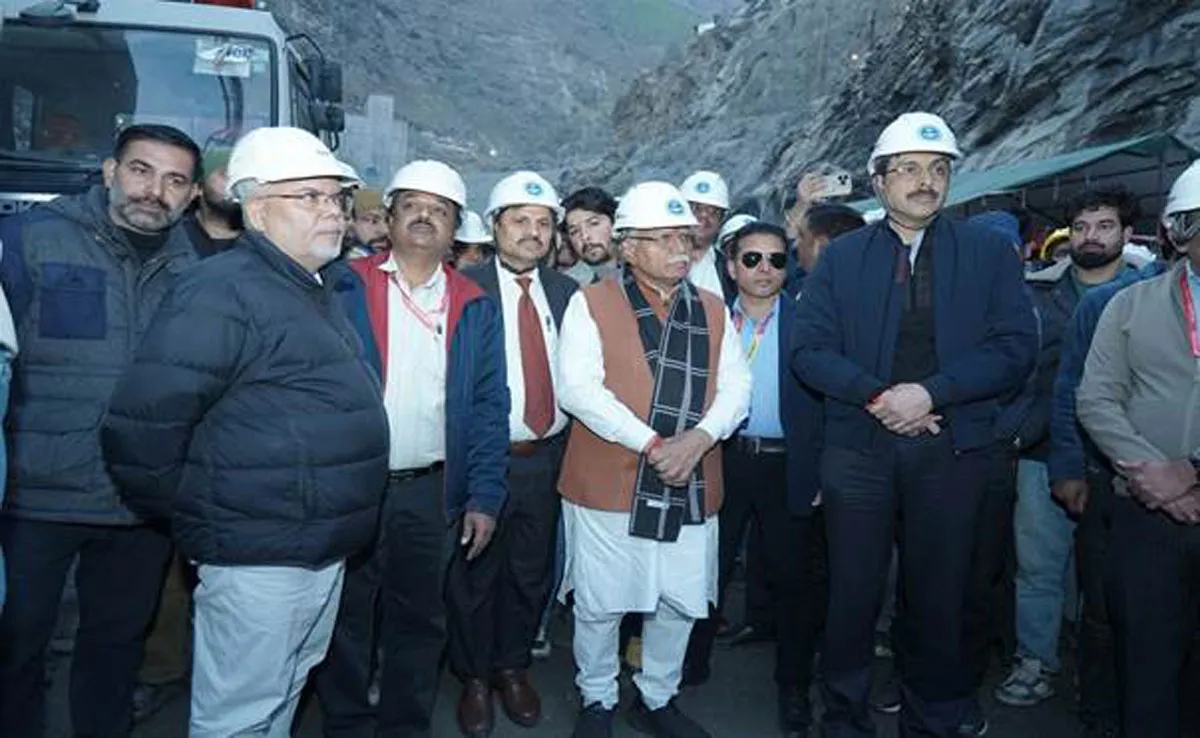
Following a recent tour of Kishtwar—described as the first by a federal power minister since recent deliberations on the Indus Waters Treaty—Khattar confirmed to Kashmir Convener that he has mandated executing agencies to avoid any further delays. During inspections, he assessed several critical projects, including the Ratle, Salal (Stages I & II), and Sawalkot Hydroelectric Power Plants, and reported renewed momentum at each site.
“Timely completion is non-negotiable,” Khattar stated. “After years of encountering obstacles, every lingering problem has been settled. These projects will be finalized sequentially, with power generation commencing as per the established plan.” He emphasized that operationalizing these assets would substantially benefit the region and bolster national energy security.
Addressing persistent objections from Pakistan regarding Indian hydro projects in Jammu and Kashmir, the minister dismissed them as baseless rhetoric. He asserted that such critiques hold no weight, particularly following India’s firm decision to review the Indus Waters Treaty in response to ongoing cross-border terrorism. “Pakistan’s statements are inconsequential,” Khattar said, referencing the Prime Minister’s clear stance on the treaty’s re-evaluation.
Despite the optimistic project updates, the territory’s power sector grapples with profound structural and financial deficits. Official data reveals a staggering revenue shortfall of Rs 4,200 crore, translating to daily losses of approximately Rs 11.50 crore. Power procurement remains the single largest expenditure, estimated at Rs 6,000 crore for the 2025-26 fiscal year.
The system is plagued by extreme inefficiency, with aggregate transmission and distribution losses nearing 48%—roughly triple the national average. This implies that for every 100 units of electricity procured, only about 52 units are effectively billed, with the remainder lost to technical faults, theft, and billing inaccuracies.
A deep-seated culture of non-payment, entrenched since the early 1990s, exacerbates the revenue crisis. Efforts to modernize the grid through smart meter installations have faced significant resistance, including incidents of organized vandalism that often go unprosecuted due to political sensitivities.
With indigenous generation from local and NHPC-operated plants estimated to have fallen by nearly 70%, the UT is forced to import around 3,000 MW from the Northern Grid, placing an unsustainable burden on its finances. Projections for FY 2025-26 indicate revenue requirements of Rs 6,827.18 crore, but realistic collections are anticipated at only Rs 2,688 crore, perpetuating a critical financial gap that officials acknowledge remains a paramount concern.
Meanwhile, according to a Government Spokesperson, the power minister’s visit underscores the Centre’s focus on strengthening hydropower capacity in Jammu and Kashmir as part of broader efforts to enhance energy security and regional development.
Upon reaching Kishtwar, he visited the Ratle Hydroelectric Project, where he laid the foundation stone for dam concreting works. The Minister encouraged the project team to complete construction activities efficiently and within the stipulated timelines.

Comments are closed.