
Invoking Plato in Kashmir: Mysticism, Rishis, and the Call of Wisdom
By Dr. Muhammad Maroof Shah

Column Name: Mystic Thoughts
Next to scriptures and writings of great saints Plato should be read by everyone who can read. In fact one of the best uses of education is opportunity to read Plato. Plato is a mirror into which we lesser mortals are required to see their images and ask ourselves with Socrates whether we have dispassionately examined our lives or views. Reading Plato diverse communities find the lost address of their own sages and archetypal embodiment of wisdom. Let me illustrate by the case of Kashmir.
Invoking Plato in Kashmir
Who has not read or heard of Plato? Only the truly uneducated people called mud-i or mujwont in Kashmiri. In Kashmir everyone knows something of Plato as an ideal, an embodiment of wisdom or final reference point to settle intellectual issues. We often hear a retort Chi kyah Aflatoon chukha? (Are you a Plato?) if one finds the addressee floundering or parading wisdom. It is a subtle invitation to keep conversation open and be humble. Many statements and legends about Socrates and Plato have been assimilated in folklore and proverbs across cultures. One may illustrate through the case of Kashmir.
One can easily see Kashmiri mystic poets restating what may loosely be called Platonism (which in turn echoes key formulations of the culture shaped by Vedanta/Kashmir Saivism/Sufism) for the masses. The idea of hikmah has been central to the notion of Rishi who personifies both intellectual and spiritual ideal in Kashmir.
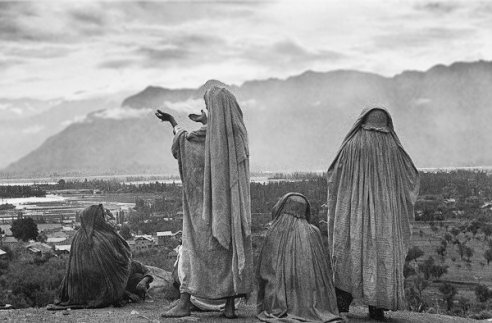
“In Kashmir, the figure of the Rishi, embodying both intellectual and spiritual ideals, recalls Socrates and Plato. The parting blessing—‘Gech Sahib-es hawale,’ go under the Master’s patronage—echoes the call to wisdom that unites Plato, Saivism, and Sufism.”
The Master is a sage who recalls a Socrates or Plato and who is not interested in meeting or following a Master in Kashmir? Gech Sahibes hawale (Go under the patronage of the Master) is what is often heard as a parting message between parents and children or friends and relatives in Kashmir. Siva Sutra and other Saivist classics demonstrate the convergence and continuity between sagely (Platonic/Rishi) and mystical poles of Kashmiri culture. It has been a singular misfortune of moderns Kashmiris that they have been nurtured on philosophy deficient diet contributing to manifold ills besides criminal betrayal of our cultural heritage. This applies to many other cultures including Indo-Pak cultures.
Essential Plato
Certain key insights articulated in Plato corpus – Plato and Plato’s Socrates – constitute perennial heritage of mankind. Some of them may be summed up in the words of Kraut:
“Human well-being does not consist in wealth, power, or fame, but in virtue; that so long as one remains a good person one is immune to misfortune; that to possess the virtues is to have intellectual mastery over a distinct subject matter,- that this mastery can be acquired only by means of a successful investigation of what the virtues are; and that if one leaves these questions unexamined, one’s life is not worth living.”
“Ordinary human beings, untouched by philosophical education, are likened to prisoners in a cave who are forced to gaze on shadows created by artificial light and cast by artifacts paraded by unseen manipulators. Their conception of what exists and of what is worth having is so severely limited and the deception by which they are victimized is so systematic that they cannot even recognize that they are confined, and would not immediately regard an interruption in their routine ways of thought as a liberation.”
Plato’s insistence that Heaven can’t be bribed and there is a Providence that shapes our ends and no man is wilfully bad constitute standing testimonies to the rights of the Spirit or sacred core in the constitution of things and man.
“Plato is a mirror into which we lesser mortals are required to see our own image and ask, with Socrates, whether we have dispassionately examined our lives or views. In reading him, diverse communities rediscover the lost address of their sages and the archetypal embodiment of wisdom.”
Why Plato?
Plato, like one’s father or Master, needs no introduction for oneself and if one feels one does that only shows the grave crisis modern education has precipitated. The greatest Sufi metaphysician called him divine Plato and another great authority reported about his great status in the otherworld. If it has taken such a brilliant philosopher-mystic as Simone Weil five years to learn how to approach Plato and avoid common misreadings that have become so influential today, it calls for extreme caution and humility to approach Plato. Since Plato bashing is so common and all kinds of errors are attributed to him in an age singularly known for tolerating ugliness and hatred of wisdom, religion, mysteries and death and ousting in practice the science of virtues from business and many other spheres of life, a few points are in order on reclaiming Plato. We need to reclaim Plato as traditionally understood or received by Judeo-Christian-Islamic cultures and the greatest Platonists to clarify certain popular perceptions hindering appreciation of Plato legacy that in turn would better facilitate our understanding of traditional world and the problems precipitated by turn against Plato in modernity.
Why philosophy concerns everyone and Plato is to be heard by all and sundry may be understood by noting a few points. First few points from Taylor, arguably the greatest Platonist of last century, reading whom is an antidote to poisonous propaganda against Plato in Plato scholarship.
Quoting Hierocles who said that “Philosophy,” says Hierocles, “is the purification and perfection of human life. It is the purification, indeed, from material irrationality, and the mortal body; but the perfection, in consequence of being the resumption of our proper felicity, and a reascent to the divine likeness. To effect these two is the province of Virtue and Truth; the former exterminating the immoderation of the passions; and the latter introducing the divine form to those who are naturally adapted to its reception.” Taylor stipulates that
Of philosophy thus defined, which may be compared to a luminous pyramid, terminating in Deity, and having for its basis the rational soul of man and its spontaneous unperverted conceptions,—of this philosophy, August, magnificent, and divine, Plato may be justly called the primary leader and hierophant, through whom, like the mystic light in the inmost recesses of some sacred temple, it first shone forth with occult and venerable splendour. It may indeed be truly said of the whole of this philosophy, that it is the greatest good which man can participate: for if it purifies us from the defilements of the passions and assimilates us to Divinity, it confers on us the proper felicity of our nature. Hence it is easy to collect its pre−eminence to all other philosophies; to show that where they oppose it, they are erroneous; that so far as they contain any thing scientific they are allied to it; and that at best they are but rivulets derived from this vast ocean of truth (Taylor, 2003:1).
He further states:
The end of all the writings of Plato is that, which is the end of all true philosophy or wisdom, the perfection and the happiness of man. Man therefore is the general subject; and the first business of philosophy must be to inquire what is that being called man, who is to be made happy; and what is his nature, in the perfection of which is placed his happiness. (Taylor, 2003: 39).
Taylor has attempted to show in his work that the philosophy of Plato “possesses this pre-eminence; that its dignity and sublimity are unrivalled; that it is the parent of all that ennobles man; and, that it is founded on principles, which neither time can obliterate, nor sophistry subvert.” And showing this constitutes the principal design of his Introduction to Philosophy and Works of Plato.
Accustomed to modern notions regarding philosophy as conceptual or linguistic analysis or problem solving enterprise or that raises questions and synthesizes knowledge of other domains it looks extremely anachronistic to assert with Socrates that philosophy’s task is preparation for death. I wish to understand this claim in its proper setting in ancient traditional cultures to make sense of Socratic claim and ground his arguments in cross disciplinary fashion.
Author can be mailed at marooof123@gmail.com

Comments are closed.