

Gulfam Barji
“The status of women in any society reflects its moral and social progress. When women are given dignity, opportunity, and recognition, communities move closer to justice and balance.”
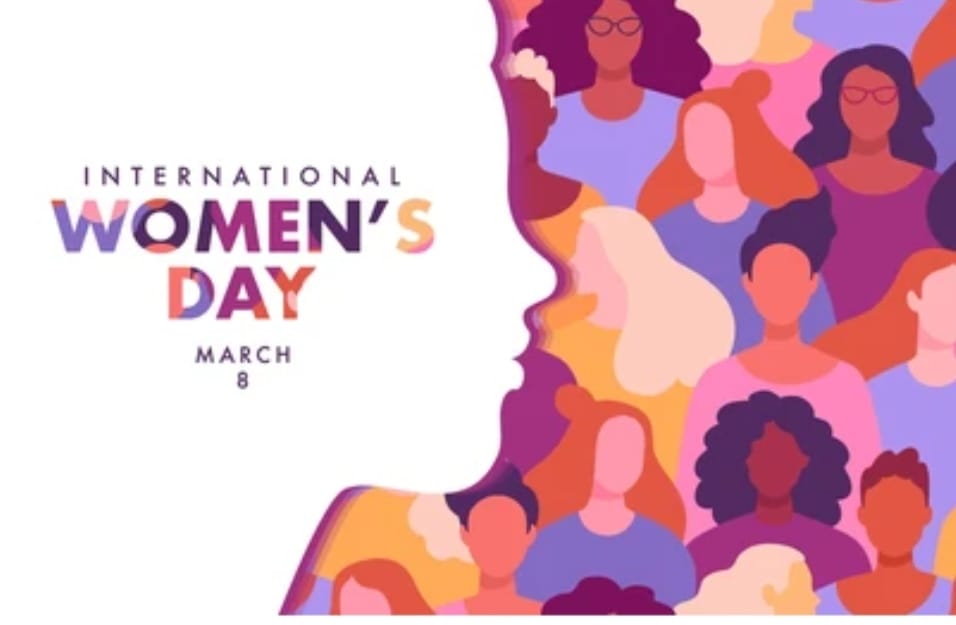
Every year on March 8, the world marks International Women’s Day, a global occasion dedicated to recognising the achievements of women and renewing the commitment to gender equality. It is both a celebration and a reflection — a moment to acknowledge the sacrifices, struggles and accomplishments of women across generations while also confronting the unfinished journey toward equality. More than a ceremonial event marked by speeches and symbolic gestures, the day serves as a reminder that societies must continually examine whether women have truly been given the dignity, opportunity and recognition they deserve.
The origins of International Women’s Day are closely tied to the labour movements of the late nineteenth and early twentieth centuries. During a period of rapid industrialisation, women entered factories and workplaces in increasing numbers, yet they often faced harsh working conditions, long hours and wages significantly lower than those of their male counterparts. In 1908, women garment workers in New York organised protests demanding better pay, improved working conditions, shorter working hours and the right to vote. Their struggle brought international attention to the inequalities faced by women and laid the foundation for a broader global movement advocating gender justice.
Inspired by these developments, the German activist Clara Zetkin proposed the idea of an international day dedicated to women at the Socialist Women’s Conference held in Copenhagen in 1910. The proposal received unanimous support from delegates representing several countries, reflecting the growing momentum of the women’s rights movement across Europe and beyond. The following year, in 1911, International Women’s Day was observed for the first time in Austria, Denmark, Germany and Switzerland. Decades later, in 1975, the United Nations officially recognised March 8 as International Women’s Day, giving the occasion a global institutional platform. Since then, it has been commemorated annually with themes that draw attention to key issues affecting women and encourage societies to work collectively toward gender equality.
While the global conversation around women’s rights has evolved significantly over the past century, discussions about dignity and justice for women are not new to many cultural and religious traditions. More than fourteen centuries ago, Islamic teachings introduced principles that emphasised dignity, justice and rights for women at a time when many societies denied them basic freedoms. Within this framework, women were granted rights to education, property ownership, inheritance and the freedom to consent to marriage. These rights represented a profound shift in social norms and continue to be cited as examples of the ethical emphasis placed on justice and human dignity.
Historical accounts from early Islamic society also highlight the influential role played by women in intellectual, economic and social life. Khadija bint Khuwaylid, the first wife of Prophet Muhammad, was a successful and respected businesswoman known for her wisdom and integrity. Another prominent figure, Aisha bint Abu Bakr, was widely recognised for her scholarship and contributions to Islamic jurisprudence and knowledge. Their lives illustrate that women have historically been active participants in shaping social and intellectual traditions. However, in many contemporary societies cultural practices sometimes overshadow these ethical foundations, making it necessary to revisit the principles of justice and equality embedded in religious teachings and align social practices with them.
In modern India, women have made remarkable strides across multiple fields since independence. From politics and education to science, sports and the armed forces, Indian women have demonstrated exceptional talent, leadership and resilience. During the country’s struggle for freedom, women played an important role in mobilising communities and supporting the national movement, often at great personal risk. Their contributions helped shape the political and social consciousness of the nation.
In the contemporary era, women continue to make their mark on the global stage. Activists such as Malala Yousafzai, who courageously advocated for girls’ education despite facing grave threats, have drawn international attention to the importance of empowering young women through learning. Within India, women athletes have brought pride to the country through their achievements in international competitions. The growing presence of women in fields such as aviation, the judiciary, policing and the armed forces reflects gradual but meaningful shifts toward greater gender inclusivity in public life.
Education remains one of the most powerful instruments of empowerment. When a girl receives quality education, the impact extends far beyond her individual life. Educated women contribute to healthier families, stronger economies and more inclusive societies. They are better equipped to make informed decisions, pursue professional opportunities and participate actively in civic life.
While significant improvements in female literacy and school enrolment have been recorded in urban areas, many rural regions still face persistent challenges. Poverty, social norms and limited access to educational institutions often prevent girls from completing their studies. Addressing these barriers requires both policy-driven initiatives and sustained social awareness. In India, the Beti Bachao Beti Padhao initiative has sought to improve the status of girls by combating gender discrimination and encouraging education for the girl child. Although the campaign has made important contributions, continued efforts are necessary to ensure that every girl has equal access to learning opportunities.
Economic independence is another crucial dimension of women’s empowerment. When women gain access to financial resources and employment opportunities, they develop greater confidence and autonomy while contributing meaningfully to economic development. Across rural India, women are actively engaged in small-scale industries, handicrafts, agriculture and livestock management, helping sustain household incomes and local economies.
In urban areas, the expansion of digital technology has opened new opportunities for women. Increasingly, young women are entering fields such as information technology, entrepreneurship and online services. Digital platforms have enabled many to connect with global markets, pursue remote work and launch small businesses from their homes. Such developments demonstrate how technology can serve as an important catalyst for women’s economic participation.
Despite these encouraging trends, significant challenges remain. Across the world, women continue to face issues such as domestic violence, workplace harassment, child marriage, unequal pay and limited access to healthcare. In many cases, legal protections exist but weak enforcement limits their effectiveness. Addressing these concerns requires stronger institutional mechanisms, including responsive law enforcement, accessible judicial systems and proactive social organisations that advocate for women’s rights.
The role of media and social media has also become increasingly significant in shaping the conversation around gender equality. In the digital age, online platforms have provided women with powerful tools to share their experiences, raise awareness and mobilise support for social change. Social media campaigns have amplified voices that were once marginalised, allowing women from different backgrounds to connect and advocate collectively for justice.
However, the growing influence of media also brings responsibility. The ethical use of digital platforms is essential to prevent misinformation, cyber harassment and character assassination. Media institutions and users alike must ensure that online spaces promote dignity, truth and constructive dialogue rather than hostility and division.
The struggle for women’s rights has always been a global endeavour. Across continents, women have fought for fundamental freedoms such as the right to vote, equal pay, education and political participation. Although progress has been made, systemic inequality and discrimination continue to affect millions of women worldwide. International cooperation therefore remains vital to advancing gender equality.
Governments, institutions and communities must work together to ensure that women everywhere have access to education, healthcare and economic opportunities. Empowering women is not only a matter of fairness but also a key requirement for sustainable development and social harmony. When women are educated, safe and economically independent, families become stronger and societies more resilient.
International Women’s Day serves as a powerful reminder that gender equality requires collective commitment and continuous effort. Ensuring girls’ education, enforcing laws that protect women, promoting equal economic opportunities and fostering a culture of respect are responsibilities shared by all members of society.
Women are not the weaker half of society; they are its foundation. When women flourish, communities prosper and nations move forward with greater strength and stability. As the philosopher-poet Muhammad Iqbal beautifully expressed:
“The colours of the universe are shaped by the existence of woman;
From her melody springs the inner passion of life.”
On this International Women’s Day, the message remains clear: the path toward equality may still be long, but the resolve to walk it must remain stronger than ever.

Comments are closed.