

Mir Muzamil
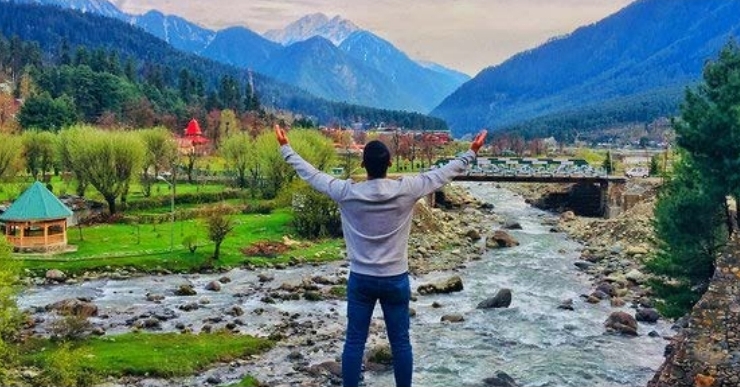
There are places in this world that appear not merely on a map but in the very architecture of human emotion. Kashmir, cradled within mountains and memory, is one such place. Its rivers carry stories, its forests hold wounds, and its silence often speaks louder than its words. Today, as I look at Kashmir’s unending turbulence, and recall the deep shock of the Delhi Red Fort blast, the heart instinctively whispers: “I want to take Kashmir in my arms and cry.”
Not because the valley is weak, but because it is tired.
Not because its people are broken, but because they have been misread.
“The tragedy of Kashmir is that the crimes of a few were turned into the burden of an entire people. Suspicion became a shadow that followed every Kashmiri heart.”
A Valley Misunderstood: The Weight of Collective Judgment
The blast at the Red Fort was not just an act of terror; it was a philosophical rupture. It severed trust. As Hannah Arendt once wrote, “The greatest evil is the evil committed by nobodies, by people who refuse to be persons.” The tragedy of Kashmir is that the crimes of a few “nobodies” men detached from moral responsibility were projected onto an entire population.
This collective suspicion cast upon Kashmiri Muslims pushed a people already carrying grief into deeper loneliness. For decades, they have lived not only under political conflict but under the existential burden of being misunderstood, a state of being many philosophers argue can be more painful than oppression itself. Søren Kierkegaard noted that “the deepest form of despair is to be misunderstood without possibility of explanation.”
And that is the silent misery of Kashmir.
The Wounds Within: Radicalisation as a Philosophical Failure
Radicalisation is born not in faith but in the cracks of society. It is the outcome of despair misdirected, meaning misplaced, purpose hijacked. As Allama Iqbal, the philosopher-poet of the East, warned:
“Jahaan mein ahsan se zyada jahl ka hai raj…”
(“In the world, ignorance rules far more often than goodness.”)
The tragedy is that sacred words, Quran and Hadith, are twisted by those who weaponise emotions. Young people, already burdened by social alienation, find themselves vulnerable to misinterpretations framed as divine commands.
But as Imam Al-Ghazali wrote, “If your interpretation of the faith leads to chaos, cruelty, and destruction, then your interpretation is wrong even if your reasoning feels right.”
This is a profound truth that Kashmiri youth must internalize: Violence is not an outcome of Islam; it is an outcome of wounded identities misled by clever manipulators.
Understanding Life: A Message to the Youth of Kashmir
Every civilisation has passed through periods when its youth stood at a crossroads. Viktor Frankl, the Austrian psychiatrist who survived the Holocaust, said that human beings do not suffer from lack of means but from lack of meaning. His philosophy of Logotherapy teaches that:
“Life never stops asking one question: What is your purpose?”
To the youth of Kashmir, this question echoes louder than ever.
Your purpose is not to surrender your reason to rage.
Your purpose is not to be a pawn in someone else’s politics.
Your purpose is not to confuse despair with destiny.
Rumi reminds us: “When you are torn apart, that is where the light enters you.”
Kashmir has been torn, yes, but this valley can still become a beacon of wisdom, not destruction.
The Moral Imperative: Reclaiming the True Message of Islam
Truth needs no sword. Faith needs no violence. God needs no avenger.
The Prophet Muhammad (peace be upon him) was once stoned by the people of Taif, yet he prayed not for their destruction, but their enlightenment. What greater lesson can be drawn for the youth today?
Martin Luther King Jr. famously said: “Darkness cannot drive out darkness; only light can do that.”
The Philosophical Weight of Suffering
Nietzsche once wrote:
“He who has a why to live can bear almost any how.”
Perhaps the greatest tragedy in Kashmir is that many young people were deprived of the “why.”
Conflict blurred it, propaganda hijacked it, exploitation manipulated it.
But the “why” can be rediscovered:
In meaningful education
In entrepreneurship
In art, poetry, and intellect
In faith purified from political distortion
In community service and nation-building
What Kashmir needs is not more martyrs, suicides, accidents, killings, bloodshed, it needs thinkers, builders, peacemakers, and creators.
Kashmir’s Cry: A Cry for Human Understanding
As I look upon this valley, its hopes and heartbreaks, I feel a profound urge to take Kashmir in my arms and cry. Not out of hopelessness, but out of an overwhelming desire for its healing, Khalil Gibran wrote: “Out of suffering have emerged the strongest souls.”
Kashmir’s suffering, too, can give birth to a generation that will redefine its destiny.
Towards a Future of Wisdom
The Red Fort blast was a tragedy that widened the chasm between Kashmir and the rest of India. But chasms can be bridged when wisdom guides emotion. Kashmiris have wisdom centuries of it. From Sheikh-ul-Alam’s verses to Iqbal’s philosophy, from Sufi shrines to ancient traditions of hospitality and humility.
The world has healed deeper wounds.
People have risen from darker nights.
Civilizations have rebuilt themselves after unspeakable tragedies.
Why not Kashmir? Why not now?
In the End
Kashmir does not ask for pity; it asks for understanding.
It does not seek tears; it seeks dignity.
It does not want isolation; it wants inclusion.
It does not need radical slogans; it needs philosophical clarity.
And perhaps someday, when this valley finds peace within and around itself,
Kashmir will no longer be held in our arms in sorrow, but lifted in our hearts with pride.
A Final Reflection with Edward Said
As we close the pages of this reflection, let us remember the words of Edward Said, a voice of intellectual courage who understood the pain of being misrepresented and unheard. His insights echo deeply within the Kashmiri experience:
“If you want to understand a people, listen to their narrations of their own history, not the history written for them by others.”
“Human beings are not abstractions; they are individuals with stories, fears, hopes, and dreams.”
“The greatest battle is the battle of representation. Once a people lose control over how they are represented, they lose part of their identity.”
“No cause, however just, is served by the silence of the people whose voice must be heard.”
Edward Said reminds us that dignity begins with being seen, being heard, and being understood. His philosophy carries one timeless truth relevant to Kashmir today:
“The power to narrate your own story is the first step toward reclaiming your humanity.”
Author can be mailed at myemailid1126@gmail.com

Comments are closed.