

Suhail Khan
Srinagar, Jan 31. The Border Roads Organisation (BRO) has significantly reduced the winter closure period of several high-altitude highways in Jammu and Kashmir this winter, reopening crucial routes in a timeframe officials describe as “record-breaking.”
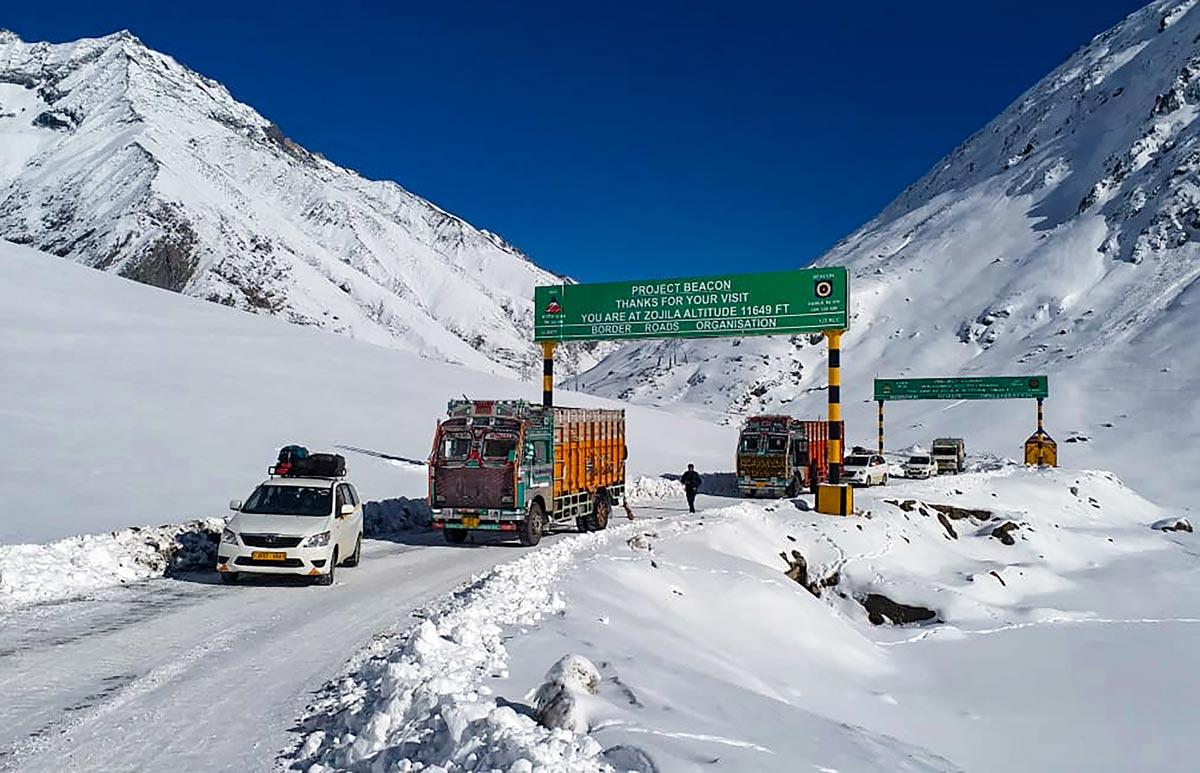
A senior BRO official told Kashmir Convener that the Srinagar-Kargil National Highway (NH-301), which crosses the 11,500-foot-high Zojila Pass, was reopened to traffic on Saturday.
He said the pass had been closed for just nine days following heavy snowfall between January 22 and 27. Official stated that BRO teams cleared approximately four feet of fresh snow in a rapid clearance operation.
In a more striking departure from the norm, the BRO restored connectivity on the 112-kilometre Kishtwar-Sansari road, which links Jammu and Kashmir’s Chenab Valley region with the Lahaul-Spiti district of Himachal Pradesh.
This high-altitude road, which typically remains closed until late April or May due to snow, was cleared of nearly 3.5 feet of snow within 72 hours and is now open.
A senior engineer at BRO told Kashmir Convener that authorities attribute the quicker openings to a revised operational approach. “There has been a concerted effort to initiate snow clearance at the earliest possible weather window, rather than waiting for a prolonged period. This prevents snow from compacting into hard ice, which is far more difficult and time-consuming to clear,” he said.
He added that this strategy is also being applied to the Mughal Road, a historically significant route connecting the Pir Panjal regions of Shopian with Poonch and Rajouri. For the first time since the BRO assumed its maintenance from the J&K Roads and Buildings Department, snow-clearance machinery has been deployed on the road during the Chillai Kalaan, the 40-day harshest winter period. Work is focused on clearing avalanche-prone stretches near the Razdan Pass.
Similarly, proactive clearance operations are underway on the Bandipora-Gurez road, a vital lifeline for communities in the isolated Gurez valley near the Line of Control.
Another senior engineer involved in the operation told Kashmir Convener that the early restoration of these routes holds substantial practical importance. For the Union Territory of Ladakh, a shorter closure of the Zojila Pass reduces reliance on air transport for essential supplies during the winter months. For districts like Kishtwar, Doda, and Gurez, it mitigates the prolonged isolation traditionally faced by border communities.
“The early opening of the Kishtwar-Sansari road is unprecedented. It will have a positive impact on the local economy and the movement of people in the Chenab Valley region,” the official noted.
He added that military logistics also benefit from the extended window of road accessibility in sectors that are typically cut off.
The official also advised motorists that although the roads have been cleared, they should exercise extreme caution. The department has mandated the use of anti-skid chains on tyres and warned of the persistent risks of slippery road conditions and sudden avalanches in certain sectors.
Notably, the BRO’s efforts this winter indicate a move towards minimising, rather than merely managing, the seasonal disruption caused by snowfall on J&K’s strategic highways. The success of maintaining even limited accessibility on routes like the Mughal Road through the winter will be closely watched as a potential model for future seasons.

Comments are closed.