

Yamin Mohammad Munshi
“History insists that society is intelligible only through time. It reveals that institutions, hierarchies, and moral vocabularies are not natural inheritances but accumulated choices—formed, contested, and preserved through power. To remove history from the humanities is not to simplify understanding, but to flatten it into a present stripped of causation, memory, and responsibility.”
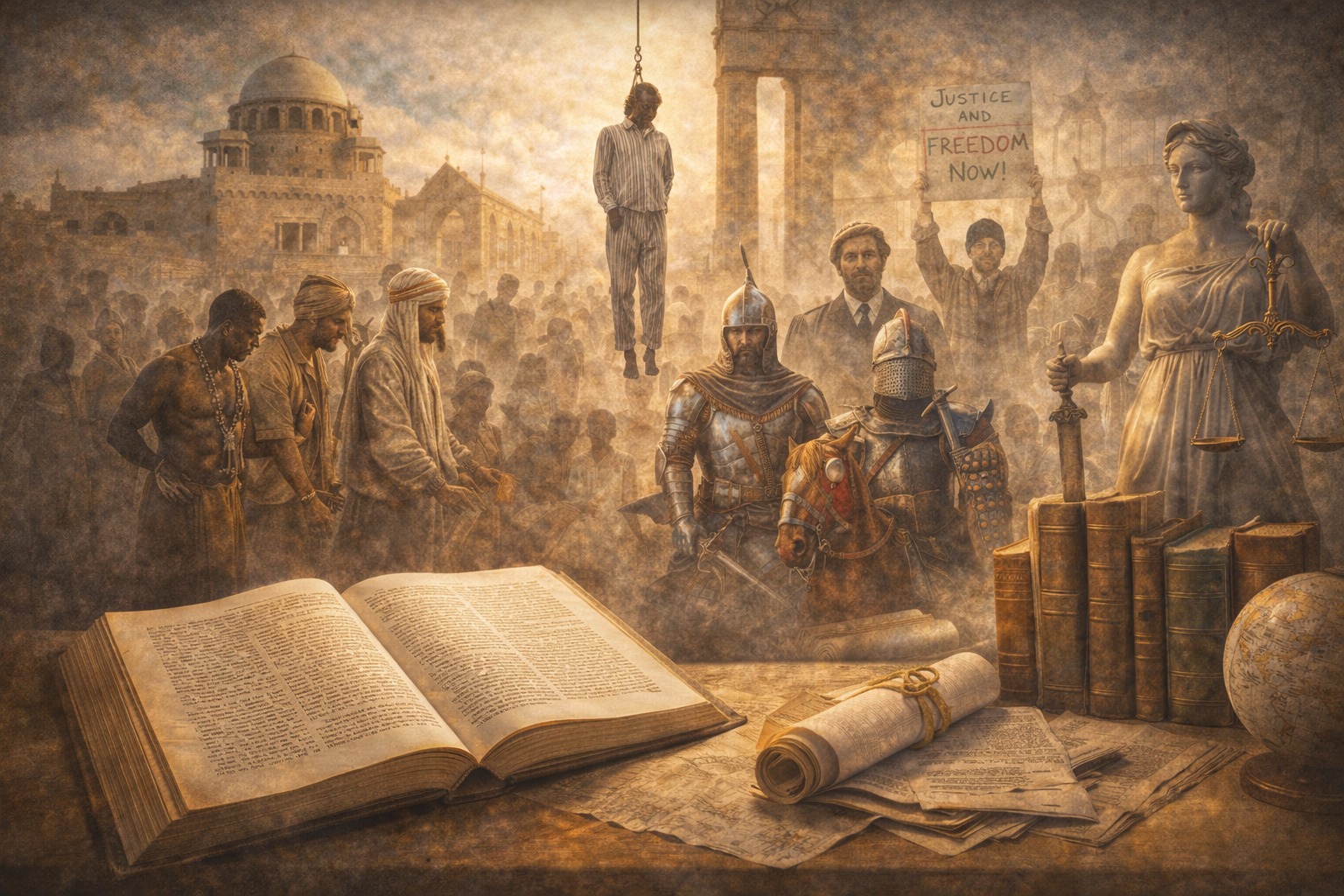
Among the humanities, history occupies a singular epistemic position: it insists that society is intelligible through time. While philosophy interrogates concepts, literature inhabits subjectivity, and anthropology observes culture synchronically, history alone reconstructs the temporal depth through which institutions, beliefs, violence, and solidarities are formed, contested, and inherited. To remove history from the humanities is not to simplify understanding but to flatten it, to reduce society to a snapshot stripped of causation, memory, and responsibility.
The role of history in understanding society is therefore not descriptive but constitutive. History does not merely explain how society came to be; it reveals how power disguises itself as inevitability, how suffering is normalized through repetition, and how moral vocabularies are shaped by precedent. Societies do not exist in the present tense alone. They are accumulations of unresolved pasts, sedimented within law, language, ritual, and hierarchy¹. To understand society without history is to mistake the visible for the natural.
This chapter argues that history functions within the humanities as (1) a critical method that destabilizes claims of permanence, (2) a moral archive that preserves evidence of injustice and resistance, and (3) an interpretive discipline that mediates between memory and power. Through these functions, history equips societies not with certainty, but with judgment
History Against Naturalization: The Undoing of Social Inevitability
One of history’s most radical contributions to social understanding lies in its capacity to denaturalize. Practices that appear timeless; patriarchy, caste stratification, religious authority, national borders, are revealed as historically produced arrangements rather than ontological facts. This is not merely an academic insight; it is a political one. Power depends on the belief that existing arrangements are either divinely sanctioned or socially inevitable. History interrupts this belief.
-
H. Carr’s insistence that historical facts are inseparable from interpretation is often misread as relativism². In reality, Carr was articulating a deeper claim: that history exposes how present interests shape what societies choose to remember. This exposure does not weaken truth; it strengthens it by demanding reflexivity. The historian is not an oracle but a mediator between evidence and meaning.
The denaturalizing force of history is particularly evident in the study of law. Legal systems often present themselves as neutral arbiters of justice, yet historical analysis reveals their origins in conquest, exclusion, and coercion. From colonial legal codes to modern national constitutions, law bears the imprint of power relations that continue to structure access to rights³. Without historical inquiry, these structures appear morally neutral; with it, they become ethically contestable.
History thus functions as a solvent of inevitability. It reveals that what exists could have been otherwise; and therefore can be otherwise again.
History as Moral Archive: Remembering What Power Would Prefer to Forget
History is not merely an intellectual practice; it is a moral one. Societies routinely attempt to forget their own violence. Genocide, slavery, mass rape, forced displacement, and state terror are often rebranded as necessity, collateral damage, or civilizational progress. History resists this erasure by preserving evidence against denial.
The concept of history as a moral archive does not imply moralism. Rather, it acknowledges that documentation itself is an ethical act. To record atrocity is to deny perpetrators the final victory of silence. Primo Levi’s reflections on the Holocaust emphasize that survival alone does not guarantee memory; testimony must be actively preserved against distortion and fatigue⁴. History performs this preservation not through sentiment but through rigor.
Yet archives themselves are sites of power. Colonial and authoritarian regimes produce records that speak in the voice of administrators, generals, and judges. The absence of marginalized voices is not accidental but structural. Subaltern historians have shown that recovering suppressed histories often requires reading archives against their intended meaning, treating silence itself as evidence⁵.
This archival struggle is central to understanding society. What a society chooses to document, commemorate, or omit reveals its moral priorities. History, within the humanities, trains readers to interrogate these choices rather than accept them passively.
Time, Memory, and the Politics of Commemoration
Collective memory is not the same as history. Memory simplifies; history complicates. Memory seeks coherence; history uncovers contradiction. Yet memory often dominates public consciousness because it is emotionally efficient and politically useful. States cultivate memory through monuments, textbooks, anniversaries, and rituals. These practices do not merely recall the past; they actively shape present identity.
Historical scholarship exposes the mechanics of this process. Pierre Nora’s concept of lieux de mémoire demonstrates how societies construct symbolic sites to compensate for the loss of lived memory⁶. These sites stabilize national narratives but also exclude inconvenient truths. History interrogates these exclusions by asking whose suffering is memorialized and whose is rendered peripheral.
This interrogation is not destructive; it is democratic. A society that cannot tolerate historical complexity is a society that fears moral accountability. History expands the ethical imagination by insisting that national identity is neither innocent nor uniform.
Genealogy and Power: History as Critique Rather Than Chronicle
Traditional history often focused on chronology: rulers, wars, treaties. Modern historical thought, influenced by thinkers such as Michel Foucault, reconceptualized history as genealogy; the study of how systems of knowledge and power emerge through conflict rather than progress⁷. This shift profoundly altered the role of history within the humanities.
Genealogical history does not ask, “What happened?” alone. It asks, “How did this come to appear natural?” Discourses surrounding madness, sexuality, punishment, and religion were shown to be historically contingent rather than universal. This insight destabilized moral certainties that had long justified exclusion and violence.
For society, this means that norms are no longer self-evident. They are historically produced effects of authority. History, therefore, becomes a tool of critique; one that exposes how moral language is often retrofitted to legitimize dominance.
History and Violence: Making Sense of Catastrophe Without Normalizing It
Few domains reveal the indispensability of history more starkly than violence. Wars, genocides, and state repression cannot be understood through statistics alone. History reconstructs the processes; bureaucratic, ideological, psychological, through which violence becomes administratively manageable and morally permissible.
Hannah Arendt’s analysis of totalitarianism emphasized that extreme violence does not arise from chaos but from hyper-rational systems that erase moral responsibility⁸. Historical inquiry reveals how ordinary individuals become participants in atrocity without perceiving themselves as criminals.
This understanding is not exculpatory. It is preventative. By identifying patterns; dehumanization, legal exceptionalism, moral absolutism, history equips societies to recognize early warning signs of mass violence. Without history, catastrophe appears sudden; with it, catastrophe appears prepared.
The Longue Durée: History Beyond Crisis and Sensation
Modern societies are obsessed with immediacy. News cycles compress time; social media fragments attention. In this environment, historical thinking offers resistance. The longue durée perspective, associated with the Annales School, emphasizes structural forces; economics, geography, climate, social institutions, that operate beyond individual events⁹.
This perspective does not deny agency; it contextualizes it. Revolutions, for example, are not spontaneous eruptions but culminations of long-term pressures. By situating crisis within continuity, history prevents both fatalism and sensationalism.
For social understanding, this matters profoundly. It allows societies to distinguish between rupture and pattern, between novelty and recurrence. History thus refines judgment rather than offering prediction.
Education, Historical Literacy, and Democratic Responsibility
The pedagogical role of history within the humanities is inseparable from its civic function. Historical literacy trains individuals to evaluate evidence, recognize bias, and tolerate ambiguity. These skills are not merely academic; they are democratic necessities.
In an era of misinformation, simplified narratives gain traction precisely because they demand little historical awareness. History counters this by cultivating skepticism toward absolutist claims. As Richard Evans argues, defending history is defending the possibility of truth against both propaganda and nihilism¹⁰.
A society that devalues historical education does not become neutral; it becomes manipulable.
Identity, Nation, and the Myth of Origins
National and religious identities often rely on mythic origins presented as eternal truths. History disrupts these myths by tracing how identities are assembled through narrative selection. Benedict Anderson’s concept of imagined communities revealed that nations are sustained not by ancient bonds but by shared stories made plausible through print, ritual, and education¹¹.
This does not render identity meaningless. It renders it accountable. By showing how identities are constructed, history opens space for pluralism without erasure.
History, Progress, and the Ethics of Time
The idea of progress is one of modernity’s most powerful myths. History complicates this myth by revealing that technological or economic advancement often coexists with moral regression. Walter Benjamin’s critique of progress warned that history written as triumph inevitably forgets the defeated¹².
History’s ethical task is not to celebrate improvement but to preserve memory of cost. Every social achievement carries a history of exclusion. Recognizing this does not paralyze action; it disciplines optimism with responsibility.
Conclusion: History as the Conscience of the Humanities
History’s role in understanding society cannot be reduced to information retrieval or nostalgia. It is a discipline of ethical attention. It teaches societies how to remember without myth, critique without cynicism, and judge without illusion.
Within the humanities, history anchors interpretation in time, responsibility, and evidence. It refuses both the comfort of inevitability and the seduction of amnesia. A society that engages history critically does not become trapped in the past; it becomes capable of choosing its future with open eyes.
To abandon history is not to escape burden, but to surrender judgment to power.
Endnotes
¹ Fernand Braudel, On History (Chicago: University of Chicago Press, 1980).
² E. H. Carr, What Is History? (London: Penguin, 1961).
³ Martin Chanock, Law, Custom, and Social Order (Cambridge: Cambridge University Press, 1985).
⁴ Primo Levi, The Drowned and the Saved (New York: Vintage, 1989).
⁵ Ranajit Guha, Subaltern Studies I (Delhi: Oxford University Press, 1982).
⁶ Pierre Nora, “Between Memory and History,” Representations 26 (1989).
⁷ Michel Foucault, Discipline and Punish (New York: Pantheon, 1977).
⁸ Hannah Arendt, The Origins of Totalitarianism (New York: Harcourt, 1951).
⁹ Marc Bloch, The Historian’s Craft (New York: Knopf, 1953).
¹⁰ Richard J. Evans, In Defence of History (London: Granta, 1997).
¹¹ Benedict Anderson, Imagined Communities (London: Verso, 1983).
¹² Walter Benjamin, “Theses on the Philosophy of History,” in Illuminations (New York: Schocken, 1968).

Comments are closed.