

Shabeer Ahmad Lone
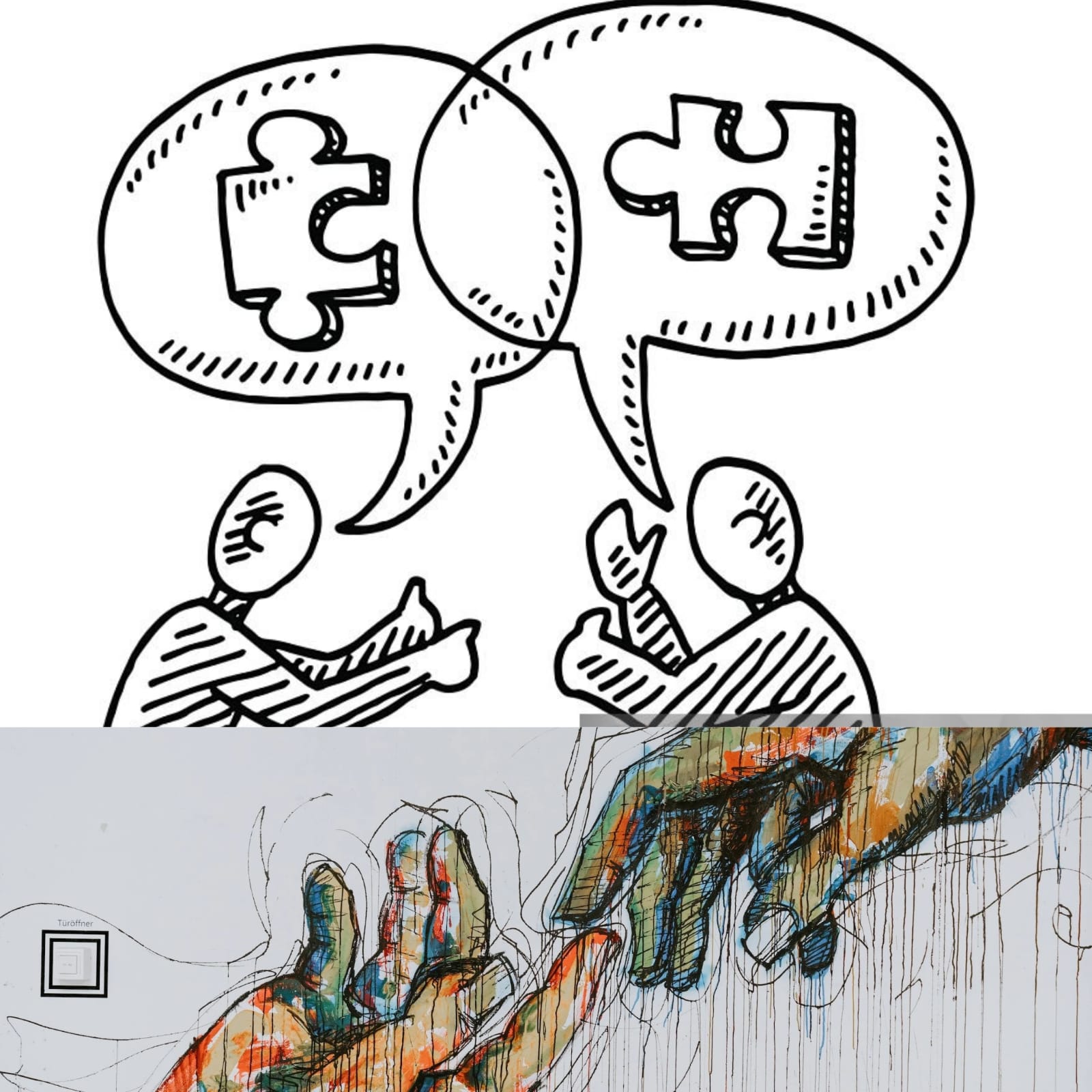
At the heart of human civilization lies the art of dialogue, a bridge that binds differences without erasing them, and a means of negotiation that aspires not merely to settle disputes but to cultivate understanding, dignity, and shared flourishing.
Genuine dialogue and negotiation is neither a tactical maneuver nor a superficial exchange of courtesies; it is a profound moral practice rooted in listening, humility, empathy, and the courage to transcend narrow self-interest.
From the Platonic dialogues of Athens to the Qur’anic call to “come to a common word between us and you” (Qur’an 3:64), from Confucius’ teachings on reciprocity to Martin Buber’s vision of the I-Thou relationship, humanity has consistently affirmed that genuine dialogue is transformative.
Negotiation that is principled seeks not to dominate or manipulate but to unearth the higher ground where justice, compassion, and mutual recognition converge. In interfaith collaboration, literary interpretation, diplomacy, business, organizational leadership, and even conflict resolution, such an approach resists the temptations of expediency and instead turns toward the enduring values that illuminate both human difference and unity.
To engage in principled dialogue is to recognize that truth reveals itself most fully in encounter, and that negotiation achieves its noblest form when it serves both integrity and peace.
The deepest insights of human traditions affirm that principled dialogue is inseparable from humility and justice. Confucius taught that the noble person corrects himself before correcting others, reminding us that dialogue begins with self-reflection rather than accusation. Lao-Tzu’s Tao Te Ching cautions leaders to act so gently that their presence is scarcely felt, emphasizing that persuasion rests not in force but in allowing others to recognize their own interest in agreement.
The Socratic method, preserved in Plato’s dialogues, insists that truth is approached through questioning that exposes assumptions, while Aristotle’s phronesis—practical wisdom—shows that negotiation is not reducible to rigid principle or expedient tactics but must weigh particulars with prudence.
In the Indic traditions, the Bhagavad Gita dramatizes dialogue as an existential negotiation: Arjuna is caught between despair and duty, and Krishna teaches him that principled action emerges from harmonizing inner conviction with cosmic order. Buddhist wisdom, in the Dhammapada, reminds us that cycles of antagonism cannot be ended through retaliation but only through compassion, which is itself the deepest form of principled negotiation.
Jewish and Islamic traditions both carry within them luminous examples of dialogical practice. The rabbinic method of pilpul, in which differing interpretations are not suppressed but recorded and valued, affirms that truth is enriched by multiplicity rather than diminished by it.
The Prophet Muhammad’s covenant with the Christians of Najran is remarkable not only for its tolerance but for its recognition of the other’s right to flourish under one’s own protection, showing that negotiation rooted in justice generates security rather than submission. Similarly, the Qur’an’s command to argue “in the best of manners” (16:125) is an injunction not toward silence in the face of difference but toward principled persuasion grounded in wisdom and gentleness.
From the Christian tradition, St. Augustine’s reminder that “we are bound together not by likeness of opinions, but by charity” underlines the ethical basis of dialogue beyond doctrinal difference.
Across cultures, indigenous traditions preserve an ethos of relational negotiation that modern societies often forget. African ubuntu declares that “I am because we are,” compelling leaders to ask whether their agreements enhance communal dignity rather than individual advantage.
Maori wisdom insists that decisions must be taken with the seventh generation in mind, making negotiation not merely a present bargain but a covenant with the unborn. Such traditions offer a corrective to short-term and adversarial thinking, showing that principled dialogue is inseparable from responsibility to community and to posterity.
Diplomatic history testifies repeatedly to the difference between negotiations conducted on principle and those driven only by expediency. The Congress of Vienna in 1815, despite its flaws, managed to restore stability to Europe through balance rather than vengeance, while the Versailles Treaty of 1919, with its punitive spirit, sowed the seeds of further conflict.
Kissinger’s observation that statesmanship is the recognition of limits captures the wisdom that true diplomacy requires restraint as much as ambition. Dag Hammarskjöld, who carried the burden of the United Nations during its formative crises, saw peace not as an achievement secured once and for all but as a perpetual work, demanding patience, integrity, and the humility to continue even when outcomes are uncertain.
In business and organizational life, principled negotiation demonstrates that trust and sustainability are stronger currencies than opportunistic gains. Drucker’s distinction between doing the right things and merely doing things right points to the necessity of aligning efficiency with ethics.
Stephen Covey’s movement from compromise to synergy reframes negotiation as creativity: instead of splitting the difference, principled negotiation generates possibilities neither party had foreseen alone. Leadership that refuses dialogue risks coercion; dialogue without principle risks drift. The marriage of the two—integrity with openness—produces not only successful organizations but resilient communities.
Conflict resolution and peacebuilding represent the crucible where principled dialogue is tested most severely. John Paul Lederach’s notion of moral imagination, the capacity to envision ourselves in relationship even with the enemy, exemplifies the depth required to transform antagonism into partnership.
Here Rumi’s line, “Out beyond ideas of wrongdoing and right doing, there is a field. I’ll meet you there,” is not a mystical escape but a radical invitation to encounter the other outside the prison of binary judgment. Gandhi understood that disagreement itself is a sign of vitality and that principled negotiation must hold space for dissent without collapsing into enmity. Martin Buber’s “I-Thou” captures the ethical mystery at the heart of dialogue: to face another as subject, not object, is to allow the possibility of transformation on both sides.
Literary studies remind us that interpretation itself is a form of principled negotiation. Mikhail Bakhtin’s concept of dialogism asserts that texts live only through their encounter with readers, each interpretation a negotiation between voices across time. The richness of literature lies in its plurality; the act of reading requires the humility to listen to meanings that are not entirely our own. In this sense, literary hermeneutics parallels diplomacy, interfaith dialogue, and business ethics: all require recognition of otherness, patience in listening, and willingness to be changed by the encounter.
In an age scarred by wars from Palestine to Ukraine and the unresolved estrangement of South Asia, principled dialogue and negotiation emerge not as idealistic gestures but as the last reservoir of human wisdom, where justice, dignity, and empathy replace conquest, humiliation, and mistrust. In Gaza and Israel, dialogue that acknowledges wounds yet affirms mutual legitimacy could turn dispossession into shared survival; in Russia and Ukraine, listening across divides can restore truth where domination has silenced it; in India and Pakistan, negotiation rooted in moral imagination could transform Kashmir from contested territory into a bridge of coexistence. In this way principled dialogue serves as the Last Bridge to Peace, Justice, and Human Futures across.
As the Qur’an enjoins, “Reconciliation is best”, as the Psalms call us to “seek peace and pursue it”, and as Gandhi reminded, “honest disagreement is often a good sign of progress”. Václav Havel’s insistence that “without reconciliation, there is no future” resonates with Mandela’s conviction that “courageous people do not fear forgiving, for the sake of peace”, while Rumi’s luminous vision—“Out beyond ideas of wrongdoing and right doing, there is a field. I’ll meet you there”—invites adversaries into a horizon beyond violence.
Habermas underscores that true communication rests not on manipulation but on the search for understanding through “communicative action”, Arendt reminds us that responsibility in political life requires facing “the reality of plurality”, and Edward Said calls reconciliation “an act of imagination” rooted in justice rather than erasure. Wars may redraw borders, but dialogue redraws possibilities; negotiation guided by principle becomes not merely a tool of settlement but an act of moral courage, the highest form of political intelligence, and the only path by which fractured humanity may yet reclaim its shared future.
This vision of genuine dialogue and negotiation is not an ideal sealed in the past but a living necessity for our fractured present and uncertain future , humanity’s last bridge to peaeful co-existance .The lessons of diverse traditions—from the Gandhian ethic of satyagraha to Native American council practices, from the West African palaver tree to the United Nations’ painstaking consensus-building—show us that dialogue, when pursued with principle, creates space not for temporary compromise but for the reimagining of relationship itself. The enduring challenge is to prevent dialogue from being reduced to rhetoric and negotiation to transaction; their transformative power rests only when anchored in sincerity, transparency, and the willingness to be changed by the encounter.
In an age where conflict too often overshadows conversation, and expediency undermines integrity, principled dialogue emerges as both timeless and timely: timeless in its rooting in the deepest human and spiritual wisdom, and timely in its urgent relevance to the crises of our day.
To embrace this path is to recover the essential art of being human together—lucid, courageous, inclusive, and visionary—where every exchange becomes not only a settlement of interests but a step toward the horizon of a shared, dignified, and luminous future.
Author can be mailed at shabirahmed.lone003@gmail.com

Comments are closed.