
Eid-ul-Fitr: A day after the holy month of Ramadhan
The spirit of Eid in Kashmir rests on three strong pillars. Faith, charity, and community.

Mohammad Aalim
“Thousands standing shoulder to shoulder at Eidgah and Hazratbal reflect the true meaning of Eid — unity beyond status, gratitude beyond words, and hope beyond hardship.”
As the crescent moon is sighted and the month of fasting draws to a close, Kashmir prepares to welcome Eid-ul-Fitr with a mix of devotion, joy, and reflection. The festival marks the end of Ramadhan, a period defined by restraint, prayer, and compassion. In the Valley, Eid is not just a religious occasion.
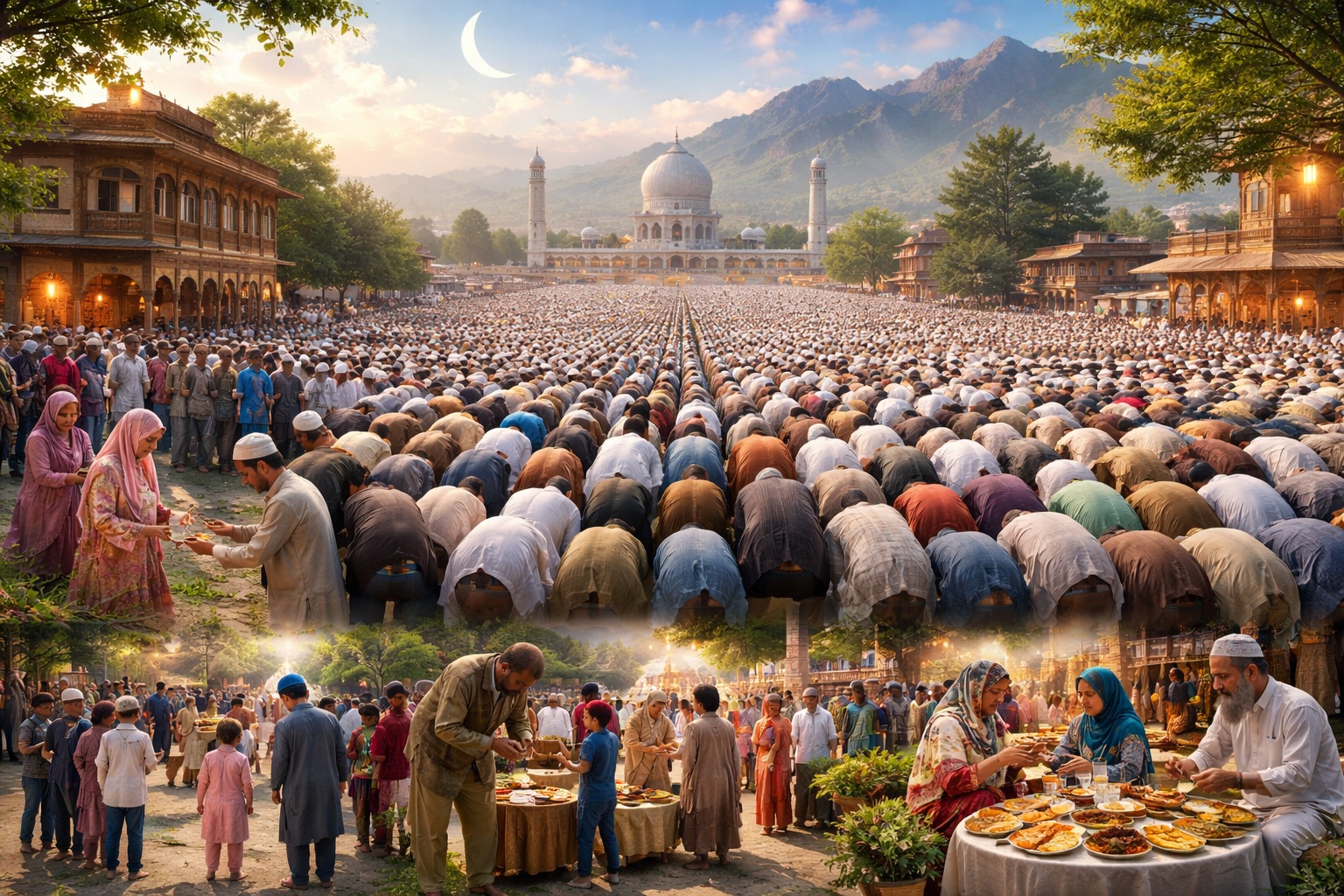
In the early hours of Eid morning, Srinagar and other towns wake to a quiet energy. Streets begin to fill as people, dressed in fresh attire, make their way to mosques and Eidgah’s. The largest congregations gather at the historic Eidgah grounds and at Hazratbal. The air carries a sense of unity. Thousands stand shoulder to shoulder in prayer, offering gratitude after a month of discipline and seeking peace for the days ahead.
Ramadhan teaches self control. It trains the body to endure hunger and the mind to remain patient. Eid becomes the reward. Yet the essence lies beyond celebration. It lies in empathy. Every household, regardless of status, makes an effort to ensure that no one is left out. Zakat al-Fitr plays a key role. Families contribute before Eid prayers so that the less privileged can also celebrate with dignity. This act reflects a simple truth. Joy becomes meaningful when it is shared.
In Kashmir, traditions shape the rhythm of the day. Homes come alive with the aroma of local dishes. Noon chai, sheer khurma, and bakery items like kulchas and baqerkhani form the heart of the Eid breakfast. Families gather around the dastarkhwan. Conversations flow. Laughter returns to spaces that may have felt quiet in the past weeks. For many, this meal is not just about food. It is about connection.
Children carry a special excitement. They wait for Eidi, small gifts or money given by elders. They visit relatives, greet neighbors, and move from house to house with a sense of freedom. Their joy becomes the purest expression of Eid. It reminds the older generation of simpler times.
Markets across the Valley reflect the build up to Eid. In the days leading up to the festival, Lal Chowk, Residency Road, and local bazaars remain crowded till late evening. People shop for clothes, shoes, and sweets. Shopkeepers see a rise in business. For many small traders, Eid season brings a much-needed economic boost. Tailors work long hours to meet demand. Bakers increase production. This cycle supports livelihoods and keeps traditional trades alive.
Yet, Eid in Kashmir also carries a deeper emotional layer. Many families have faced loss. Some continue to live with absence. On Eid, these realities do not disappear. Instead, they shape a quieter form of celebration. Prayers often include remembrance of those who are no longer present. Visits to graveyards become part of the day. People offer Fateha and spend moments in reflection. Over the years, social changes have also influenced how Eid is observed. Digital communication now connects families across distances. Video calls replace physical visits for those living outside the Valley. Social media platforms fill with greetings and messages. While this has expanded the reach of celebration, it also raises questions about the loss of physical closeness. Many elders still prefer face to face interaction. They value the warmth of a handshake and the sincerity of a shared meal.
At the same time, younger generations are finding ways to blend tradition with modern life. They participate in prayers, engage in charity, and also create new forms of expression. Community driven initiatives have gained strength. Volunteers organize food drives, distribute clothes, and support orphanages. These efforts extend the meaning of Eid beyond personal celebration.
Women play a central role in shaping the festival. From preparing meals to managing household arrangements, their contribution remains vital. In recent years, more women have also stepped into public spaces during Eid. They engage in community work and participate in social initiatives. This shift reflects gradual change within society.
Another aspect that stands out is the sense of hospitality. Guests are welcomed without formality. Doors remain open. A visitor is offered food and tea without hesitation. This culture of openness strengthens social bonds. It builds trust and keeps the idea of community alive.
Religious scholars often use Eid sermons to address broader issues. They speak about unity, moral responsibility, and the need to avoid division. In a place like Kashmir, these messages carry weight. They encourage people to look beyond differences and focus on shared values.
Environmental awareness has also entered the conversation. In recent years, there has been a push to reduce waste during celebrations. Some families choose simpler gatherings. Others focus on sustainable practices. This reflects a growing understanding that faith includes responsibility towards the environment.
Eid-ul-Fitr 2026 arrives at a time when the world continues to face challenges. Conflicts, economic pressures, and social divisions remain part of global reality. In this context, the message of Eid becomes even more relevant. It calls for patience, generosity, and unity. It asks individuals to look beyond themselves and consider the well being of others.
In Kashmir, this message resonates deeply. The Valley knows the value of peace. It understands the cost of division. Eid becomes an opportunity to renew commitment towards harmony. It encourages dialogue within families and across communities.
As the day progresses, visits continue. People exchange greetings, often saying Eid Mubarak with warmth and sincerity. Evening brings a quieter mood. Families gather once again. Some step out to enjoy the festive atmosphere. Others choose to stay home and reflect on the day.
The true success of Eid does not lie in outward display. It lies in inner change. It lies in the ability to carry forward the lessons of Ramadhan. Patience, humility, and compassion should not end with the festival. They should continue to guide daily life.
Kashmir, with its rich cultural fabric and complex history, offers a unique lens to view Eid-ul-Fitr. Here, the festival is not just about celebration. It is about endurance. It is about finding light even in difficult times. It is about holding on to values that define humanity.
As the crescent fades and normal life resumes, the hope remains that the spirit of Eid stays alive. Not just in rituals, but in actions. Not just for a day, but throughout the year.
EID MUBARAK

Comments are closed.