
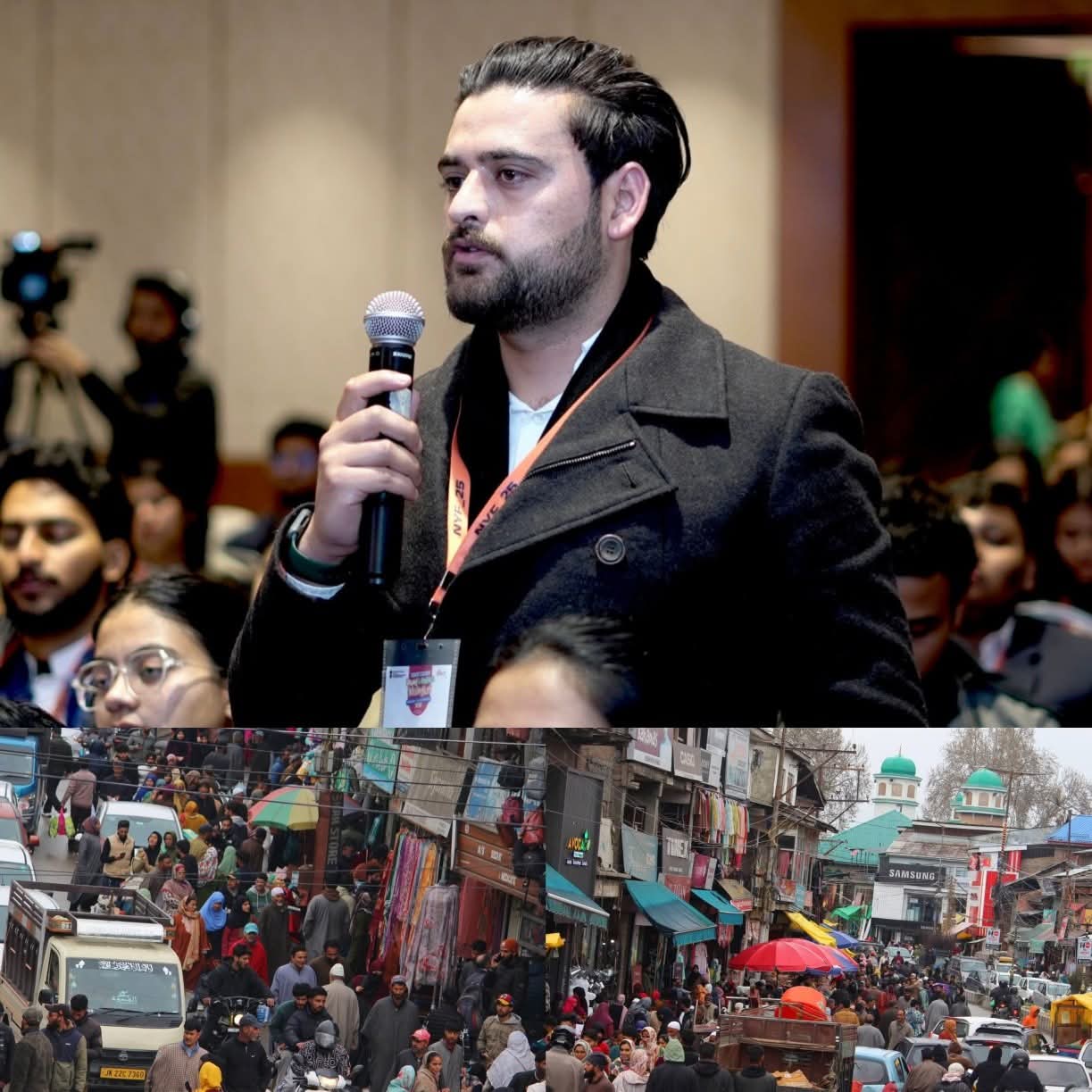

Bhat Musaddiq Reyaz
For many in Kashmir, Eid this year feels different. It feels like the return of something long missed — normalcy, healing and genuine celebration. The festive spirit that once flickered uncertainly now glows with renewed confidence. Markets bustle, bakeries overflow with customers, children tug at their parents for last-minute purchases, and the familiar excitement of Eid preparations has returned in its true sense.
Over the past few years, Jammu and Kashmir has witnessed a visible shift in public life. Business establishments function throughout the year without the looming fear of abrupt shutdowns. Educational institutions operate consistently. Streets that were once synonymous with disruption now reflect routine urban rhythm. This stability has not only strengthened economic activity but also reshaped the emotional landscape of society.
To understand the depth of this transformation, one must recall the turbulent periods of 2008, 2016 and 2018. Those years were marked by frequent street protests, shutdowns and a culture that often glorified funerals over festivities. Encounters and unrest created an atmosphere where uncertainty overshadowed celebration. The psychological toll on society was immense. Eid, a festival meant to signify gratitude and joy after a month of spiritual reflection, often arrived with a heavy heart. For many families, especially children and teenagers, the day felt muted, even conflicted.
Traditionally, the days preceding Eid — particularly the day of Arafah — are vibrant in Kashmir. Families visit markets to buy new clothes, bakery delicacies, meat and household essentials. Tailors work overtime, barbershops remain crowded late into the night and the fragrance of freshly baked bread fills the air. But during periods of turmoil, markets were frequently closed. Stone-pelting incidents and strike calls disrupted business activity. The anticipation that should have defined Eid preparations was replaced with anxiety. In such times, celebrating wholeheartedly almost felt out of place.
Today, that narrative has shifted. The atmosphere on the streets reflects a transformation not only in infrastructure but in mindset. There is an observable change in how public spaces are used and experienced. Peace is not merely the absence of conflict; it is the presence of opportunity. And opportunity is now visible in the energy of Kashmir’s youth.
A generation that once grew up amid slogans and shutdowns is now turning towards self-expression and entrepreneurship. Social media platforms have become tools for creativity rather than channels of unrest. Young Kashmiris are showcasing their talents, building personal brands and carving identities rooted in innovation.
Among the most striking symbols of this shift are young women entrepreneurs skilled in mehendi artistry. Eid without intricately designed, customised mehendi now feels incomplete. These artists, many of them operating from small home-based studios, have transformed their craft into thriving businesses. They take bookings weeks in advance, promote their designs online and train others in their skill. In doing so, they are not just earning livelihoods but also becoming job creators within their communities.
Young men, too, are redefining aspiration. Clothing brands inspired by Kashmiri aesthetics are emerging across Srinagar and other towns. Boutique food outlets and bakeries are competing not merely on taste but on presentation and digital presence. Every Eid becomes an opportunity to innovate — limited-edition collections, festive packaging and themed menus flood social media feeds. Creativity has replaced confrontation as the dominant force influencing the streets.
This cultural shift is also reflected in economic indicators. In the two days preceding Eid, Jammu and Kashmir Bank recorded digital transactions amounting to ₹8,394 crore. Such figures are not merely statistics; they tell a story of public participation, consumer confidence and financial circulation. Digital payments in markets that once echoed with slogans now signal trust in stability and continuity.
The transformation is visible in everyday imagery. Streets that were once clouded by the smoke of burning tyres and tear gas shells are now illuminated by decorative lights and storefront displays. The soundscape has changed from sirens and unrest to the hum of commerce and cheerful bargaining. Children move freely with balloons and shopping bags in hand. Families stroll without the apprehension that once defined public gatherings.
Kashmir has long been referred to as “Pir Vaer” — the Land of Saints. The phrase carries connotations of spiritual depth, harmony and resilience. In recent years, that identity seemed overshadowed by turbulence. Today, there is a palpable sense that the region is rediscovering its quieter strengths. The serenity associated with its cultural and spiritual heritage is re-emerging alongside economic revival.
It is important to recognise that healing is a gradual process. Stability does not erase memory, but it does create space for renewal. The return of festive vibrancy signifies more than economic recovery; it signals emotional rehabilitation. When children anticipate Eid with unburdened excitement, when markets operate without fear of abrupt closure, and when entrepreneurs invest confidently in seasonal collections, society demonstrates resilience.
Peace and prosperity are often shaped by those who influence public spaces. When creativity, entrepreneurship and constructive engagement dominate the streets, they redefine collective aspiration. The same spaces that once amplified unrest now amplify innovation. This transition underscores a broader lesson: the direction of public energy determines the trajectory of society.
Eid, in this context, becomes symbolic. It marks not only the culmination of Ramadan but also a reaffirmation of community bonds. The exchange of greetings, the sharing of meals and the collective prayers at mosques reinforce a sense of unity. In an atmosphere of stability, these rituals regain their full meaning.
For Kashmir, the renewed spirit of Eid represents a reclaiming of normalcy. It reflects a generation choosing enterprise over agitation and creativity over confrontation. It mirrors a society gradually stepping out of the shadows of turmoil into a phase of reconstruction and optimism.
As markets flourish and digital transactions surge, as young entrepreneurs shape trends and families celebrate without hesitation, the valley presents a different narrative — one of resilience and reinvention. The aura surrounding Eid today is not merely festive; it is hopeful.
In this healing phase, every decorated storefront, every intricate mehendi design and every crowded bakery counter stands as testimony to a deeper transformation. Kashmir’s streets, once marked by uncertainty, now echo with the sounds of commerce and celebration.
Eid, in its true essence, feels restored.

Comments are closed.