

Mahpara Saleem
“When fear replaces reason, the crisis deepens.
When patience replaces panic, the system stabilizes.
In moments of strain, a society reveals its true character;
not in what it fears, but in how it chooses to respond.”
In today’s world, conflict is no longer confined to borders. While certain regions endure the direct horrors of war , bombardments, destruction, and the constant shadow of other types of fear, though geographically distant from the battlefield, remain significantly affected by its consequences. The ripple effects travel far, influence economies, institutions and ultimately the daily lives of ordinary people.
Across parts of Asia and extending into the Middle East, the impact is often not experienced through physical destruction, but through disruption ,rising fuel scarcity concerns, rumours of shortages, institutional slowdowns, and a pervasive sense of uncertainty. What originates as a global crisis gradually manifests as a localized strain, affecting social and economic stability.
However, beyond these visible consequences, a more critical dimension emerges, the manner in which societies respond.
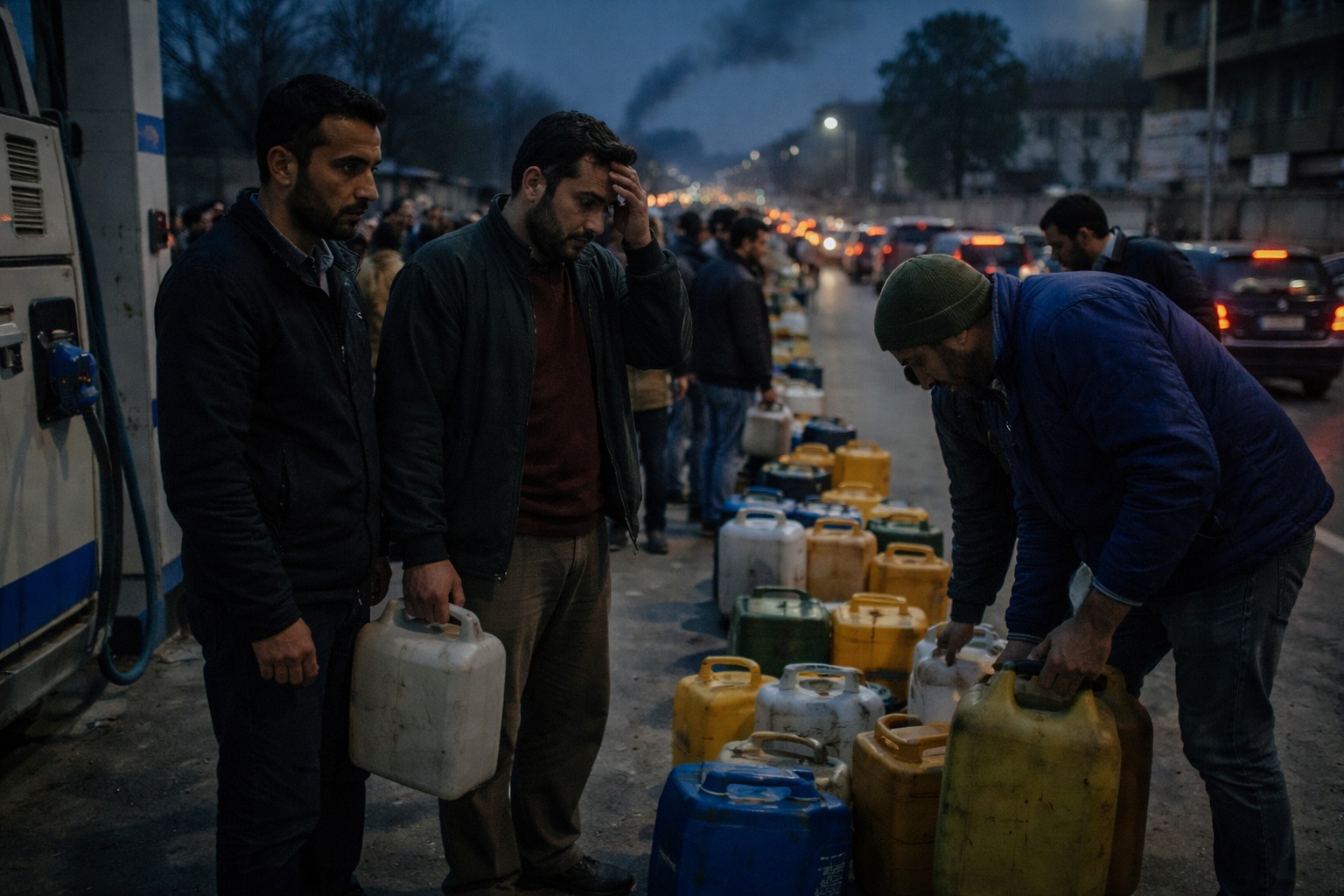
Recent developments have highlighted patterns of panic, long queues for fuel, hoarding of essential commodities, and actions driven not solely by necessity, but by fear and speculation. In such circumstances, the crisis ceases to be purely external, it is exacerbated by internal behavioural responses. When individuals act primarily in self-interest, guided by the instinct to “secure for oneself before others,” systemic pressure intensifies. This leads to deeper shortages, disorder, and, in certain unfortunate instances, risks to human life.
This raises a pertinent question: why does disorder sometimes appear more pronounced in regions distant from active conflict than in those directly confronting it?
Thus, the distinction is not merely geographical, but behavioural.
A mature society does not eliminate fear,rather it regulates it. It resists panic and instead upholds order, patience, and mutual consideration. It recognizes that in times of scarcity, unregulated individualism can be detrimental not only to the collective but also to the individual.
At the core of this distinction lies education not limited to formal instruction, but encompassing the broader cultivation of civic responsibility, ethical conduct, and social awareness. True education equips individuals to act with composure under pressure, to balance personal needs with societal obligations, and to respond to uncertainty with reason rather than impulse.
Furthermore, there exists a pressing need to ensure that future generations are raised with a strong sense of responsibility and preparedness in the face of crises. Upbringing must instill values of patience, cooperation, and disciplined conduct, enabling individuals to respond to panic situations with clarity and restraint rather than fear driven actions.
While development is often measured in terms of infrastructure, technological advancement, and economic growth, its true essence becomes evident during moments of crisis. It is reflected in the ability of people to choose discipline over disorder, cooperation over competition, and responsibility over reaction.
Ultimately, crises do not merely test systems or institutions, they test the character and maturity of societies.
And perhaps, in such moments of strain, they reveal not only our strengths, but also the areas where growth and reform remain necessary.
The need of hour is that there should be strict regulation against hoarding and black marketing, with timely monitoring of essential supplies. Public awareness campaigns should promote calm, responsible, and need-based consumption rather than fear-driven actions. Institutions must develop efficient crisis management systems to maintain order and equitable distribution of resources. Education systems should incorporate civic responsibility and crisis-handling training from an early stage. Communities should be encouraged to build a culture of collective support and cooperation, especially during emergencies.

Comments are closed.