
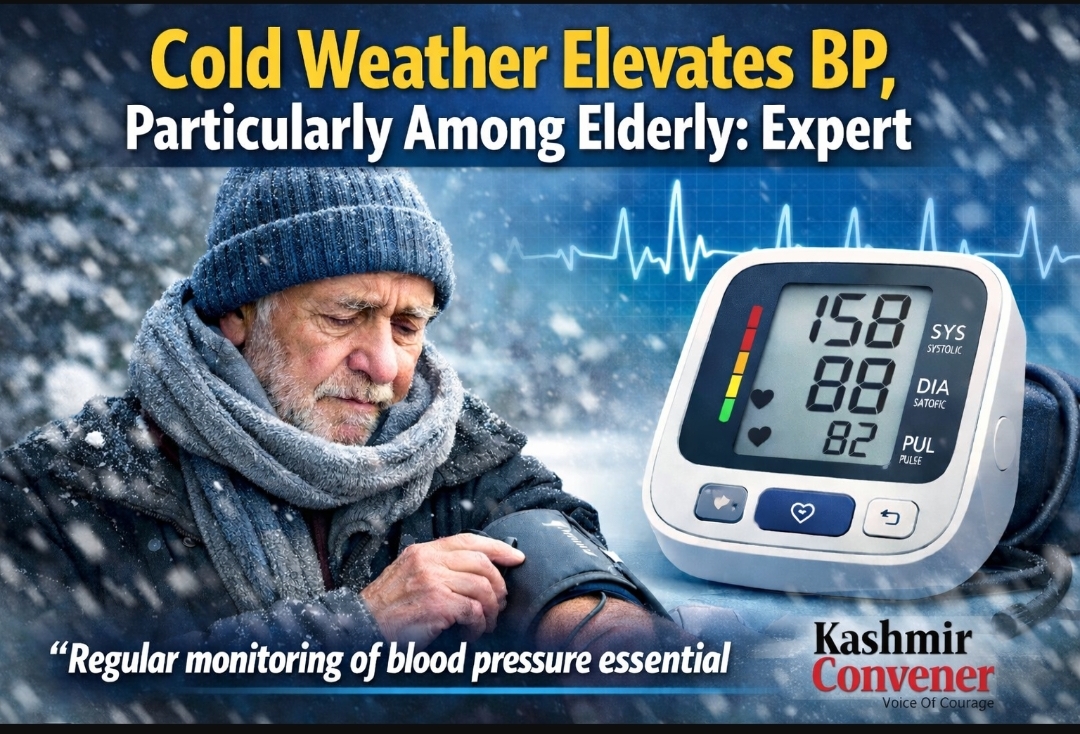
Cold Weather Elevates BP, Particularly Among Elderly: Expert
“Regular monitoring of blood pressure essential for the elderly”

Suhail Khan
Srinagar, Dec 31: Winter brings chilly winds and cozy evenings, but for many, it also brings health challenges. One of the less-discussed impacts of cold weather is its effect on blood pressure. This is not merely a discomfort—it is a hidden threat that can escalate quickly if left unmanaged.
Understanding how cold weather affects blood pressure helps you take proactive steps. From adopting simple lifestyle changes to consulting your doctor for tailored advice, you can protect your heart and stay healthy through the winter months.
Renowned medical expert Dr. Saiqa R. Shah highlighted the significant impact of cold weather on cardiovascular health, warning that it can cause a marked rise in blood pressure, especially among the elderly population.
In an exclusive interview with Kashmir Convener, Dr. Shah emphasized the critical importance of proactive hypertension management during the winter months, particularly for senior citizens residing in the Kashmir Valley.
“Regular monitoring of blood pressure is essential for the elderly during this season,” Dr. Shah stated. She advised individuals to consult their clinicians for potential adjustments to medication dosages, if necessary. “Even those with typically well-controlled blood pressure can experience dangerous spikes in the winter,” she added.
The expert outlined a series of precautionary measures to mitigate these seasonal risks including Maintain a warm indoor environment.
She said Keep living spaces adequately warm, but not excessively hot, to prevent dehydration.
Avoid sudden temperature changes: Steer clear of abrupt exposure to cold, such as stepping outside immediately from a heated room.
She said Ensure full coverage with warm clothing, including a mask, when venturing outside.
Dr Saiqa said that limit exposure during peak cold, Restrict outdoor activities in the early morning and late evening, especially for the elderly.
Adopt healthy habits: Maintain hydration and continue regular physical activity indoors she added
She further explained that in colder weather, our bodies have a natural tendency to retain salt and fluids. This increased retention can impact blood pressure, especially in individuals who are sensitive to sodium.
Dr. Saiqa R. Shah added that exposure to cold temperatures can induce stress responses in the body and trigger the release of hormones such as adrenaline. These stress hormones can temporarily increase blood pressure as part of the body’s fight-or-flight response to cold conditions.
She emphasized that maintaining regular physical activity is crucial for managing blood pressure. Engaging in indoor exercises such as yoga, Pilates, or home workouts can help individuals stay active during colder months.
She also noted that layering clothing to stay warm and comfortable when outdoors can help reduce the body’s response to cold temperatures, potentially minimizing the vasoconstriction that impacts blood pressure.
Dr. Shah further added by affirming that these deliberate, minor adjustments to winter lifestyle can play a crucial role in maintaining regulated blood pressure and safeguarding overall health during the challenging colder period.

Comments are closed.