

A.R. Matahanji
“The work of forest officers rarely finds headlines, yet it is among the most demanding forms of public service. In silent forests and harsh terrain, their vigilance protects Kashmir’s ‘green gold’ when no one else is watching.”
Public service often leaves behind statistics—years of duty, files handled, posts held. But there are some careers that cannot be measured in service records alone. They are written instead in sleepless nights, silent forests, and the quiet courage of those who stand guard when no one is watching.
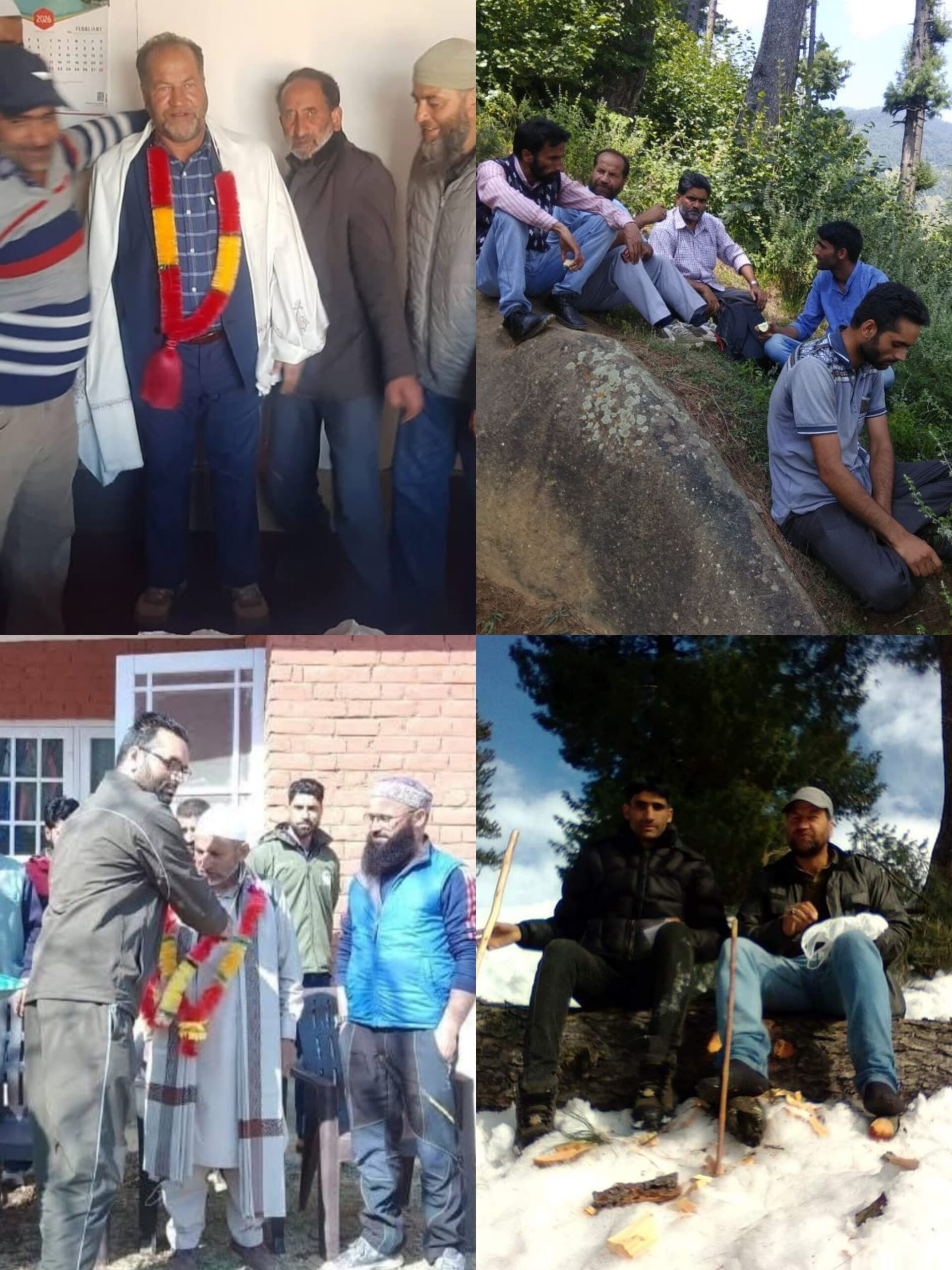
On February 28, 2026, two such journeys reached their formal conclusion in the Jammu and Kashmir Forest Department. As Reyaz Ahmad Shah, Range Officer at Eidipora Bomai Sopore, and Altaf Hussain Zargar of Ayatmullah Bandipora superannuated from service, an era defined by quiet dedication and lived experience quietly drew to a close.
Their retirement marks not merely the end of two official tenures, but the culmination of decades spent safeguarding what Kashmiris often call their “green gold” — the forests that sustain the Valley’s ecology, economy and cultural memory.
The work of forest officials rarely finds its way into headlines. Yet it is among the most demanding and often the most perilous forms of public service.
For officers like Shah and Zargar, duty unfolded far from offices and paperwork. It meant long nights deep inside forests, tracking timber smugglers through darkness and treacherous terrain. It meant confronting dangers with little more than determination and faith — sometimes facing wild animals, sometimes organised smuggling networks, and often the harsh indifference of nature itself.
There were nights spent without food or shelter, moments when exhaustion and uncertainty tested both endurance and resolve. Winters brought biting cold that froze hair under open skies as teams followed the faintest traces of illegal logging through snow and wind.
Comfort was rarely part of the job. Sleep often came on pebbled fields, in apple orchards, or under makeshift cover in paddy lands. Rain meant walking for hours without protection; summer meant endless patrols under a relentless sun.
And yet the work continued.
Among the most powerful memories of this long service are those tied to the holy month of Ramadan. Forest patrols rarely pause for festivals or fasting.
There were days when sehri was missed and iftar delayed, yet duty never faltered. Even while fasting, officers remained on patrol, guarding forests that could not defend themselves.
Such moments reveal the deeper nature of public service in Kashmir’s rugged terrain — where personal sacrifice becomes part of professional commitment.
Perhaps the greatest legacy of officers like Shah and Zargar lies not only in the forests they protected, but in the people they mentored.
For younger colleagues, their guidance extended far beyond official instructions. Their lessons were not confined to departmental briefings or files. They were lived lessons — in courage without arrogance, discipline without cruelty, and commitment without compromise.
They demonstrated that leadership does not require authority alone; it requires humility, patience and the willingness to stand beside one’s colleagues in the harshest conditions.
In the forests of north Kashmir, these values were often passed down quietly, in conversations around night patrols or during long treks through dense woods. Over time, such lessons became the moral compass for a new generation of forest officials.
Kashmir’s forests are more than natural resources. They are part of the Valley’s ecological balance, protecting watersheds, sustaining biodiversity and supporting livelihoods.
Guarding these forests requires more than administrative oversight. It demands vigilance, endurance and an intimate relationship with the land.
Officers like Shah and Zargar spent decades building that relationship — understanding forest trails, reading subtle signs of intrusion, and responding swiftly to threats against fragile ecosystems.
Their work ensured that countless saplings survived, that illegal logging was halted, and that future generations would inherit landscapes still capable of breathing.
Retirement in public service often arrives quietly, without ceremony proportionate to the years invested. Yet behind each farewell lies a story of perseverance and sacrifice.
As these two officers step into life beyond the uniform, their legacy remains embedded in every forest trail they once patrolled and every young officer who absorbed their wisdom.
The forests they guarded will continue to grow. The saplings they protected will mature into towering trees. And the lessons they imparted will endure in the institutional memory of the department.
In Kashmir, where nature shapes both livelihoods and identity, the work of forest officers carries a profound responsibility. Those who dedicate their lives to this duty rarely seek recognition. Yet their contribution is immeasurable.
As Reyaz Ahmad Shah and Altaf Hussain Zargar enter the next chapter of their lives, the forests of the Valley stand as silent witnesses to their service For those who worked alongside them, the sentiment remains simple but enduring:
Once mentors, always mentors.
Once guardians, forever guardians.

Comments are closed.