

Majid Marouphay
“For those who stood in long nights of Taraweeh, whose tears fell in Tahajjud, and whose tongues remained moist with remembrance, Ramadhan was not a season — it was a sacred encounter with the Almighty.”
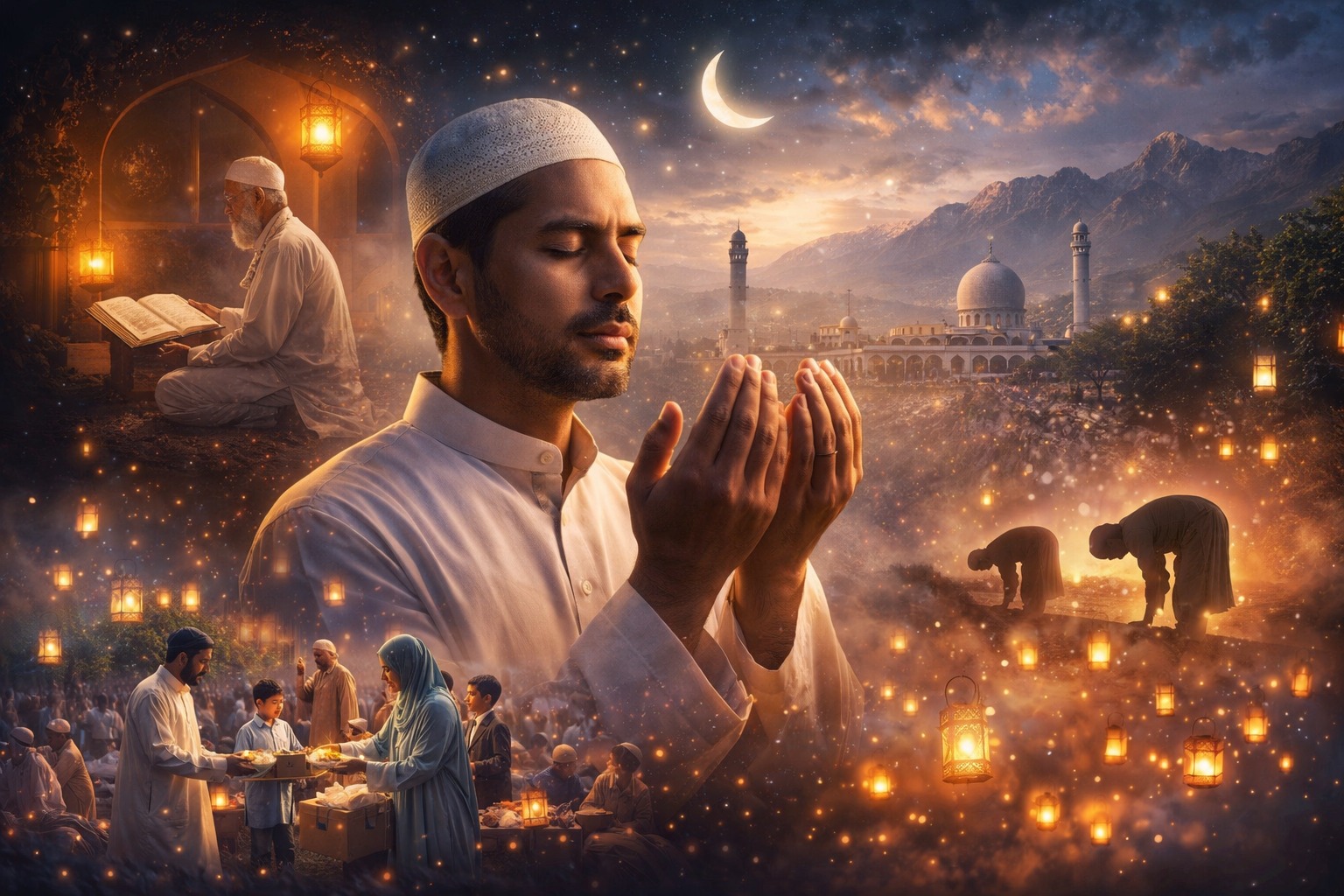
As the blessed month of Ramadhan (1447 AH) draws to a close, it by the Grace of Allah, leaves behind hearts transformed and souls enriched with the very promises it heralded at its onset. The crescent that once signaled hope and renewal now bears witness to prayers answered, sins forgiven and spirits refined through patience, restraint and devotion. The whispers of mercy have culminated in a profound sense of inner peace. The discipline of fasting has subdued the inner self, while acts of charity and compassion have strengthened the bonds of humanity. In the stillness of night prayers and the quiet endurance of long days, believers have tasted the sweetness of divine closeness and the fulfillment of faith. As the curtain falls on this sacred journey, it gifts the faithful not an end, but a renewed beginning – hearts illuminated, souls cleansed and lives guided by the enduring light of Ramadan’s blessings.
For those who honored the fast with discipline, who stood in long hours of prayer and whose tongues remained moist with remembrance, Ramadhan was not merely a passage of time, it was a divine encounter. For Allah, in His eternal promise, declares in the Qur’an: “Indeed, the righteous will be in gardens and rivers, in a seat of truth, near a Sovereign, Perfect in Ability.” (Surah Al-Qamar 54:54–55). What greater honor can there be than nearness to the Lord of all worlds? The air that once carried the fragrance of mercy has now translated into inner peace; the nights once illuminated with Ibadaat (worship) have left behind a glow that continues to shine within the believers (Momineen).
The echoes of Taraweeh prayers, the silent tears shed in Tahajjud, and the soul-stirring recitations of the Qur’an have not gone unheard. And Allah reassures such hearts: “This is the Book about which there is no doubt, a guidance for those conscious of Allah.’ (Surah Al-Baqarah 2:2). Every ruku (bowing), every sajood (prostration) and every whispered supplication has been recorded by the Almighty with a generosity beyond human comprehension. Those who immersed themselves in the recitation and revision of the Qur’an, especially during the sacred nights, have indeed drawn closer to divine proximity.
Particularly on the night of Laylatul Qadr, when hearts trembled in awe and devotion reached its peak, the Ibadaat (acts of worship) carried a weight greater than a thousand months. “The Night of Decree is better than a thousand months.” (Surah Al-Qadr 97:3). Imagine the magnitude of reward for a single night lived in devotion. How then can one measure the worth of an entire month spent in obedience? What immense fortune for those who stood in humility, seeking forgiveness and rehmat (mercy), for their deeds have been multiplied in ways known only to Allah.
The noble acts of charity, whether through Sadqat-ul-Fitr or voluntary giving, have woven a fabric of compassion and unity. ‘The example of those who spend their wealth in the way of Allah is like a seed of grain which grows seven spikes; in each spike is a hundred grains. And Allah multiplies for whom He wills.’ (Surah Al-Baqarah 2:261). What was given with one hand has been returned manifold in unseen Khazain (treasures). Those who fed the hungry, supported the needy, and shared their rizq (sustenance) have not merely fulfilled an obligation; they have secured treasures in the Hereafter. Likewise, those who secluded themselves I’tikaf during the last ten days demonstrated a rare commitment, detaching from the world to attach themselves wholly to their Creator. For Allah lovingly calls out: “So remember Me; I will remember you.” (Surah Al-Baqarah 2:152).
Indeed, Ramadhan tested patience, and those who endured hunger, thirst and restraint with sincerity have emerged spiritually refined. Their inner selves subdued, their kirdaar (character) strengthened, and their imaan (faith) deepened. The discipline of fasting was not in abstinence alone but in transformation and many, by the grace of Allah, have achieved it. Ramadhan was a test of patience, and those who bore hunger, thirst, and restraint with grace have been promised: “Indeed, the patient will be given their reward without measure.” (Surah Az-Zumar 39:10). No scale can weigh it, no number can define it. Such is the generosity of the Most Merciful.
Now, as we stand beyond Ramadhan, the question is not what was lost, but what has been gained. The rewards for those who remained steadfast are beyond measure. Allah, in His infinite mercy, has promised forgiveness for sins, elevation of ranks, acceptance of prayers and Dakhool Jannah (entry into Paradise) for those who truly devoted themselves. How immense, then, is the Fazzal (bounty) of Allah upon those who remained punctual in their prayers, consistent in their fasting, generous in charity and sincere in their repentance. Their names, one hopes, have been inscribed among the forgiven, their past errors erased and their future illuminated with divine guidance.
May the light of Ramadhan never fade from our hearts. May the discipline it instilled remain with us and may the supplications performed be accepted in the highest ranks. And may those who truly lived Ramadhan find, in return, that Allah has transformed not just their month, but their entire destiny.

Comments are closed.