Age is just a number: ULLAS; Rekindling Light of Literacy in the Evening of Life 

Majid Marouphay


“They walked in with hesitant steps,
carrying the weight of missed chances.
They walked out steadier,
carrying something far greater —
the quiet pride of beginning again.”

Sometimes, the most powerful stories of transformation are not written in the early chapters of life, but in its later pages – when hope seems faint and opportunities long gone. Yesterday was one such moment, where silence met courage and hesitation slowly gave way to determination. In the gentle hum of an assessment centre, under the quiet promise of ULLAS Scheme, I witnessed something deeply moving: lives that had carried the weight of missed chances finally pausing to reclaim what was once left behind. It was not just about learning to read or write, it was about rediscovering self-worth, about proving to oneself that it is never too late to begin again.

At its heart, ULLAS – Understanding of Lifelong Learning for All in Society – is far more than a policy document or a time-bound programme. It is a humane effort to restore lost opportunities and rekindle fading dreams. Aligned with National Education Policy 2020, it strives to provide foundational literacy, numeracy and essential life skills to those who were once left behind by circumstances beyond their control. Rooted in the spirit of Kartavyabodh – a sense of collective duty, it draws strength from volunteers: students, teachers and ordinary citizens who step forward to become torchbearers of light. In doing so, ULLAS is not merely teaching alphabets and numbers, it is restoring self-worth, rebuilding confidence and breathing hope into hearts that had quietly accepted illiteracy as their fate. It gently tells them: ‘Your story is not over yet.’

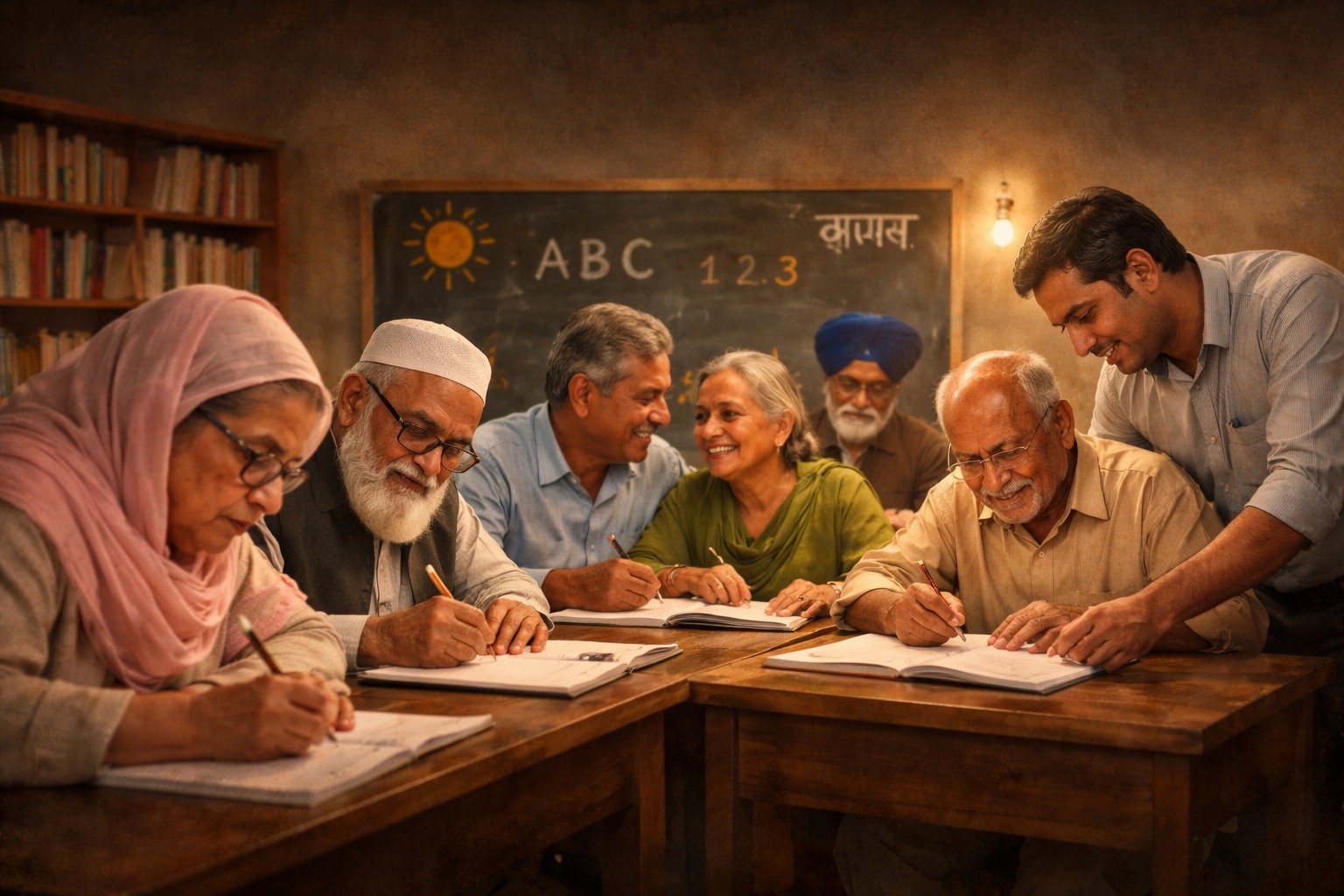
They came, hesitant footsteps echoing years of silence, wrinkled hands holding pens as if reconnecting with a long-lost companion. Men and women in their 40s, 50s, even 60s. Some arrived as couples, walking side by side in shared resolve; others came as grandparents, carrying both the weight of years and the innocence of first-time learners. They were united by a common truth, that life had demanded responsibilities too early, leaving no room for classrooms, books or dreams of education. Childhood slipped into adulthood and education remained a distant, unfulfilled chapter.

There was a visible hesitation in their eyes when they first entered. A quiet discomfort, a sense of unfamiliarity, even a trace of embarrassment as if they were stepping into a world they believed no longer belonged to them. A silent question lingered in the air, ‘Is it too late for us?’ But as they sat down, as answer sheets were placed before them, something beautiful began to unfold. Courage slowly replaced doubt. The same hands that had spent decades working tirelessly for their families now attempted to write letters, words and thoughts. It was not just an assessment, it was an act of reclaiming something deeply personal.

I had the privilege of being among them – not merely as a facilitator, but as a witness to their quiet resilience. I guided them gently, explained what was expected and encouraged them to trust their own ability. And in those moments, I did not see ‘illiterate adults’. I saw individuals filled with strength, humility and an unspoken determination to rewrite their own narrative. Some smiled softly after managing to write a few words, as if they had achieved something monumental. Some paused often, reflecting not just on the paper in front of them, but on the years gone by. A few voices, trembling yet honest, spoke of regret. “Why they had never been to school, why life had denied them this simple yet powerful gift.” There was pain in those words, a sense of incompleteness they had carried for decades.

Yet, amidst that pain, there was something even more powerful – hope. I told them what I deeply believe: learning does not belong to age; it belongs to the will. That no moment is too late to begin, and no effort is ever wasted. Slowly, those words found a place in their hearts. Their hesitation softened, their eyes began to shine with a quiet confidence and their grip on the pen became firmer. It did not matter whether the answers were perfect. What mattered was their courage to try. What mattered was that they had shown up. What mattered was that they had refused to give up on themselves.

As they walked out of the centres, there was a visible transformation. Their steps were steadier, their faces carried a sense of achievement and their smiles – though gentle, spoke volumes. They had not just taken a test; they had broken a lifelong barrier. They carried with them a silent promise – to return, to learn, to grow… to not let this second chance slip away. Perhaps, for the world, it was just another phase of an assessment. But for them, it was a beginning, a deeply emotional, long-awaited beginning.

Yesterday reminded me that education is not confined to classrooms or age brackets. It is a light that can be kindled at any stage of life. And sometimes, the most powerful stories are not of those who started early, but of those who dared to begin… even when the world thought it was too late. In those humble rooms, amidst simple desks and answer sheets, I witnessed something extraordinary – not just learning, but healing… not just writing, but reclaiming… not just education, but dignity restored.

This is the true promise of ULLAS Scheme – not merely the ability to read and write, but the power to live with independence and self-respect. It opens doors to understanding everyday realities – reading a prescription, signing one’s name, helping grandchildren with studies or simply navigating life without dependence. In its essence, ULLAS is not just creating literate individuals; it is nurturing empowered citizens, restoring voices that were once silent and turning years of regret into moments of pride. And perhaps its greatest achievement lies in this, that it replaces the quiet pain of “I wish I had learned” with the hopeful resolve of “I am still learning.”

 (The writer is a teacher and can be reached at khanmarouphay@gmail.com)

Comments are closed.