

Shabnam Bashir
The story of tribal development in India has often been one of aspiration shadowed by neglect. Tribal communities, despite their rich cultural heritage and immense contributions to the environment and national diversity, have historically remained at the margins of governance and modern development. As a member of a tribal community, I have lived this reality closely.
I have seen how tribal families struggle to access the most basic public services, how youth often slip through the cracks of mainstream opportunities, and how women’s voices are rarely heard in planning processes that deeply affect their lives. Against this backdrop, the launch of the Aadi Karmayogi Abhiyan on 17 September 2025 by Hon’ble Prime Minister Shri Narendra Modi in Dhar, Madhya Pradesh, stands out as a transformative moment. It represents a reimagined model of tribal development—one that puts the community at the centre, not at the periphery.
This nationwide initiative, guided by the Ministry of Tribal Affairs, brings together an unprecedented network of seventeen ministries and twenty-five major interventions. It is a long-term programme designed to continue until 2030, reflecting the ambition to create lasting change. The Abhiyan is not merely about delivering schemes; it is about reshaping the relationship between the people and the administration. It emphasises leadership development within tribal communities, fosters responsive governance, and ensures that the last mile—the most crucial mile—is finally reached.
One of the most remarkable aspects of the Abhiyan is its participatory nature. For perhaps the first time, all line departments visited villages together, not as distant authorities but as partners seeking to understand local realities. They sat with people in their courtyards, listened to their concerns, observed their conditions, and asked what changes they wished to see. Senior citizens shared memories of hardships and hopes for their grandchildren.
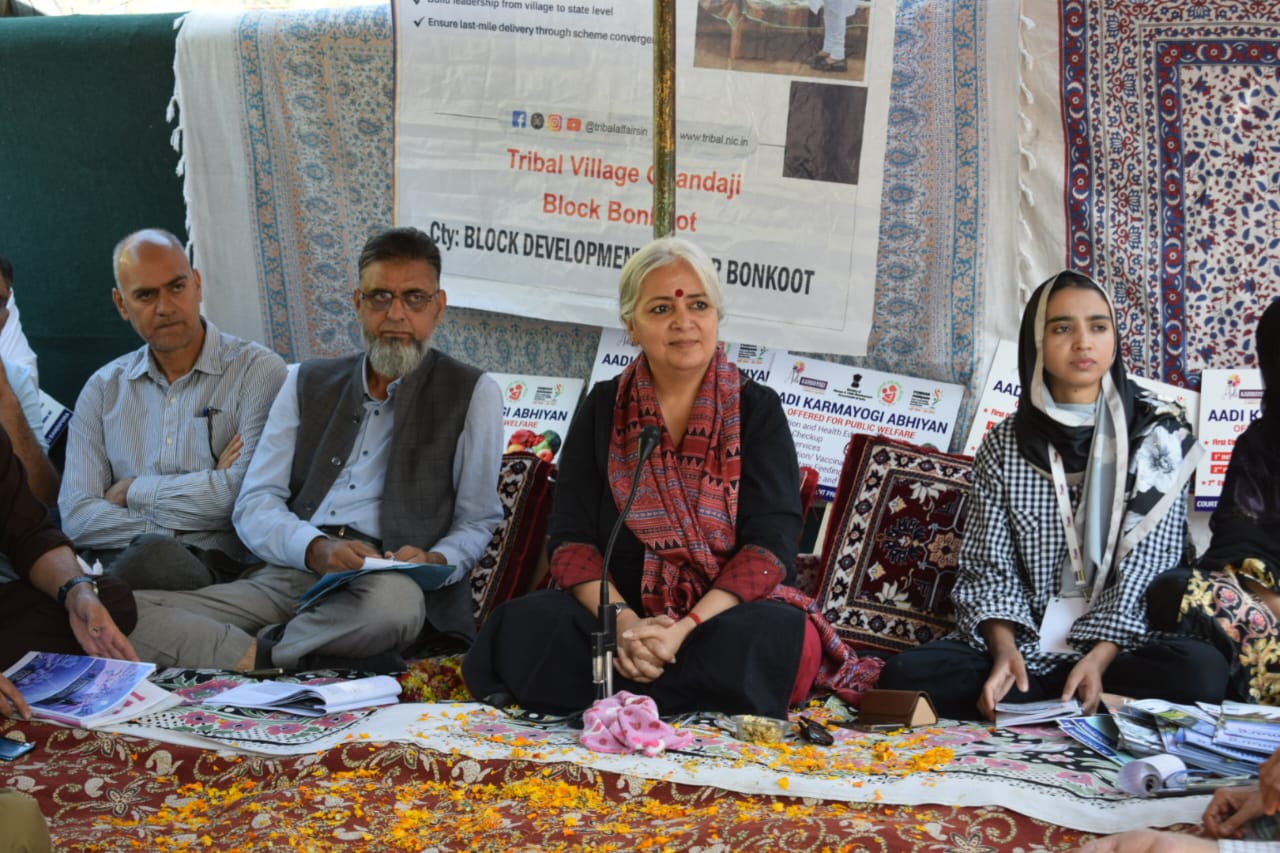
Youth expressed aspirations for education, employment, and digital access. Women spoke with clarity about water, health, safety, and livelihood needs—areas where their voices had rarely been sought before. This direct engagement ensured that development plans reflected ground truths, not assumptions made in distant offices.
The Abhiyan brought special focus to the tribal districts of Jammu and Kashmir, where four districts—Poonch, Rajouri, Reasi, and Bandipora—were selected for implementation. These districts had long suffered from limited accessibility to government schemes due to geography, scattered habitations, and gaps in awareness. The introduction of the Abhiyan opened new pathways for people to experience governance as something accessible, transparent, and responsive.
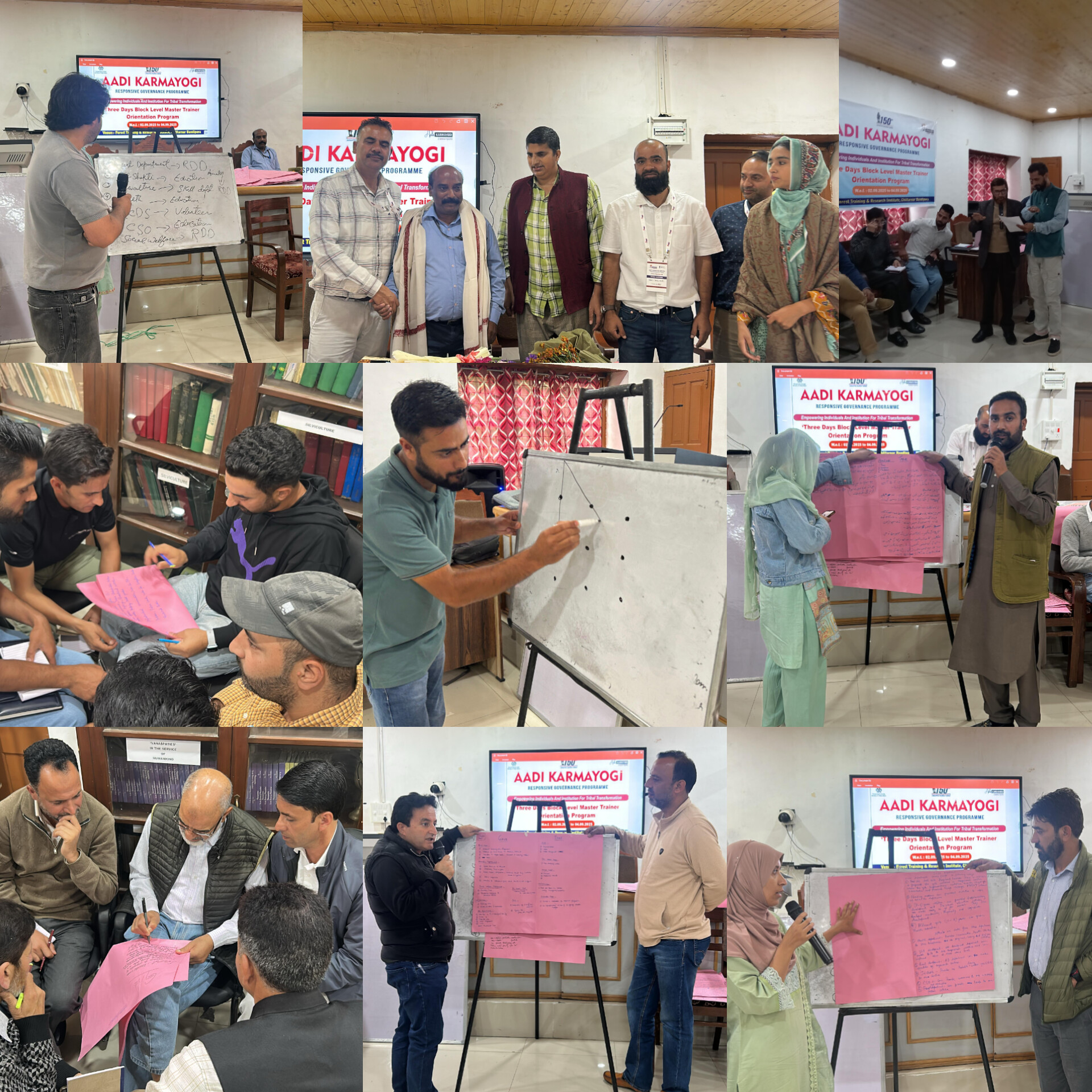
A crucial pillar of the programme was the extensive training framework designed to strengthen capacity at every administrative level. Senior Management Teams were trained in national and regional process labs on community engagement, governance frameworks, and monitoring tools. District Management Teams underwent rigorous training at the State Process Lab in Srinagar, learning the nuances of district-level implementation.
Block Management Teams were prepared to translate district plans into actionable block strategies, while Village Management Teams became the face of the Abhiyan at the grassroots. In every village across the four districts, local youth and leaders were nominated as Aadi Saathis, and volunteers served as Aadi Sahyogis. Together, they conducted surveys, walked through hamlets, visited households, and engaged in long conversations with residents to identify precise needs and build practical, people-driven development plans.
One of the most transformative outcomes of the Abhiyan has been the establishment of Sewa Kendras in every village. These centres operate as single-window service hubs, enabling villagers to access information and apply for multiple government schemes without confusion or delay. For communities that had spent years travelling long distances, submitting repeated applications, or struggling with bureaucratic processes, Sewa Kendras became symbols of fairness, transparency, and empowerment. They reduced dependency, increased efficiency, and restored trust in governance.
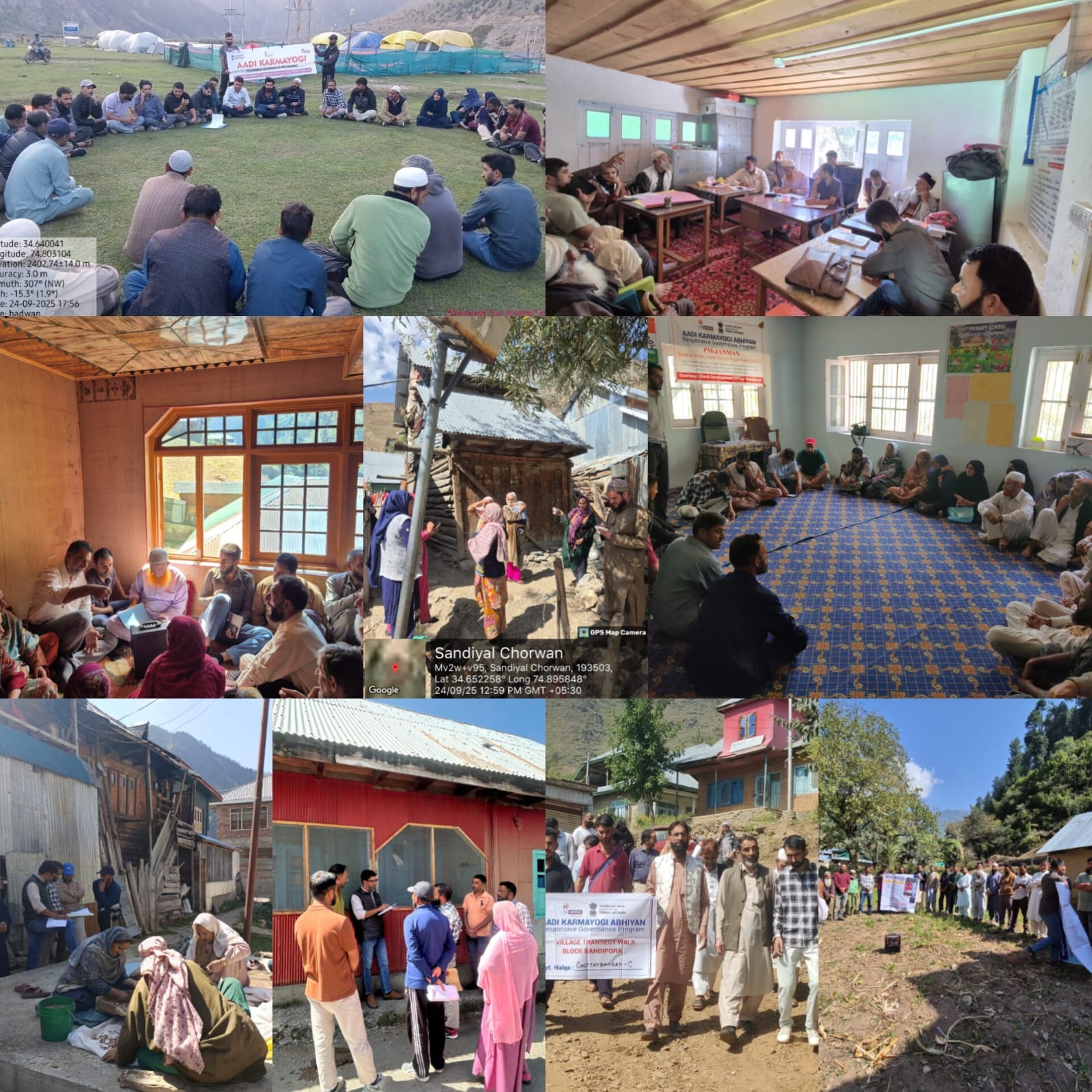
The implementation phase of the Abhiyan was marked by a series of significant events in Bandipora, particularly in Chandaji village, which became a model of community engagement. On 27 September, World Tourism Day was celebrated with the active participation of youth, community elders, school children, and local officials. Deputy Commissioner Bandipora, Ms. Indu Kanwal Chib, interacted closely with young people and spoke extensively about the untapped potential of tribal tourism and eco-tourism in the region.
The day was enriched with cultural performances, awareness sessions, and a thoughtful skit by school children depicting local issues and the solutions envisioned under the Abhiyan. Informative pamphlets on eco-tourism and tribal tourism were distributed, further encouraging residents to explore new livelihood opportunities.
The momentum continued with high-level field visits on 1 October, when the Union Secretary and UT Secretaries of Tribal Affairs reviewed the functioning of the Sewa Kendra at Chandaji. Their visit brought valuable insights and strengthened the confidence of local communities. On 2 October, a vibrant Gram Sabha was organised, where villagers openly shared their expectations and challenges.
The Gram Sabha provided a platform for meaningful participation, with special attention to youth concerns, women’s needs, livelihood possibilities, and infrastructural gaps. This participatory approach demonstrated the transparency and inclusiveness of the Aadi Karmayogi framework and reaffirmed the belief that development must emerge from collective dialogue.
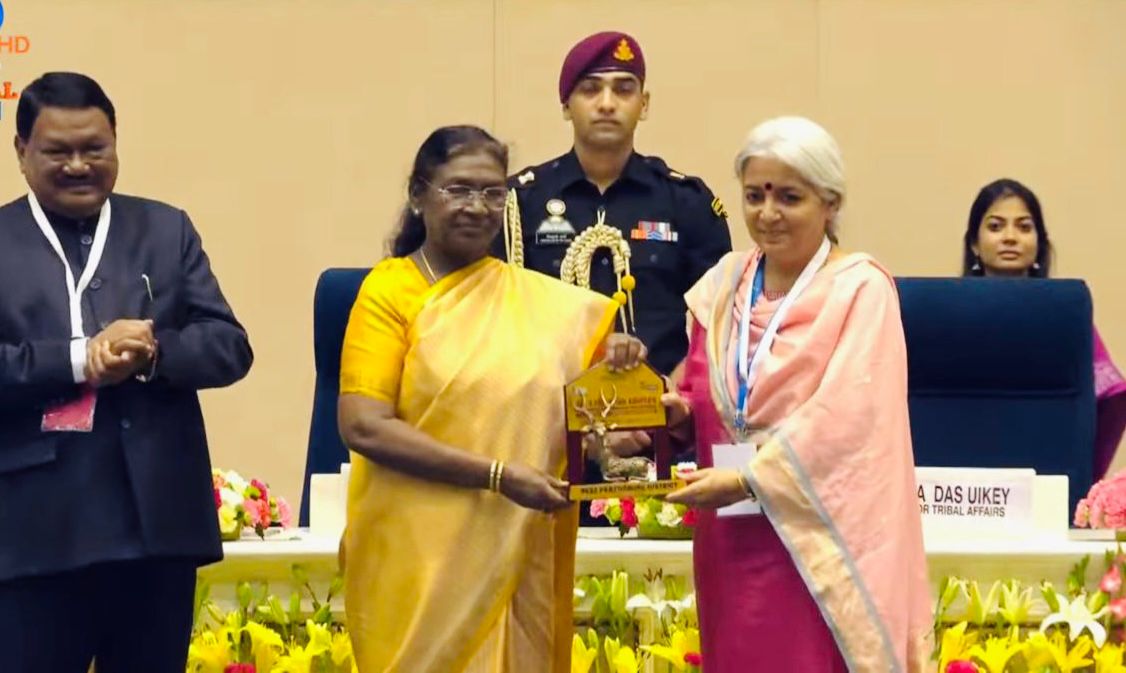
The dedication and hard work of the teams in Bandipora were soon recognised nationally. The district achieved a historic milestone by receiving the Best Performance Award under the Aadi Karmayogi Abhiyan. The award was presented in New Delhi to Deputy Commissioner Bandipora, Indu Kanwal Chib, by the President of India. This moment of honour reflected the district’s outstanding efforts in community mobilisation, youth engagement, village-level planning, and effective execution of development interventions. For the tribal communities of Bandipora, it was a moment of immense pride and validation.
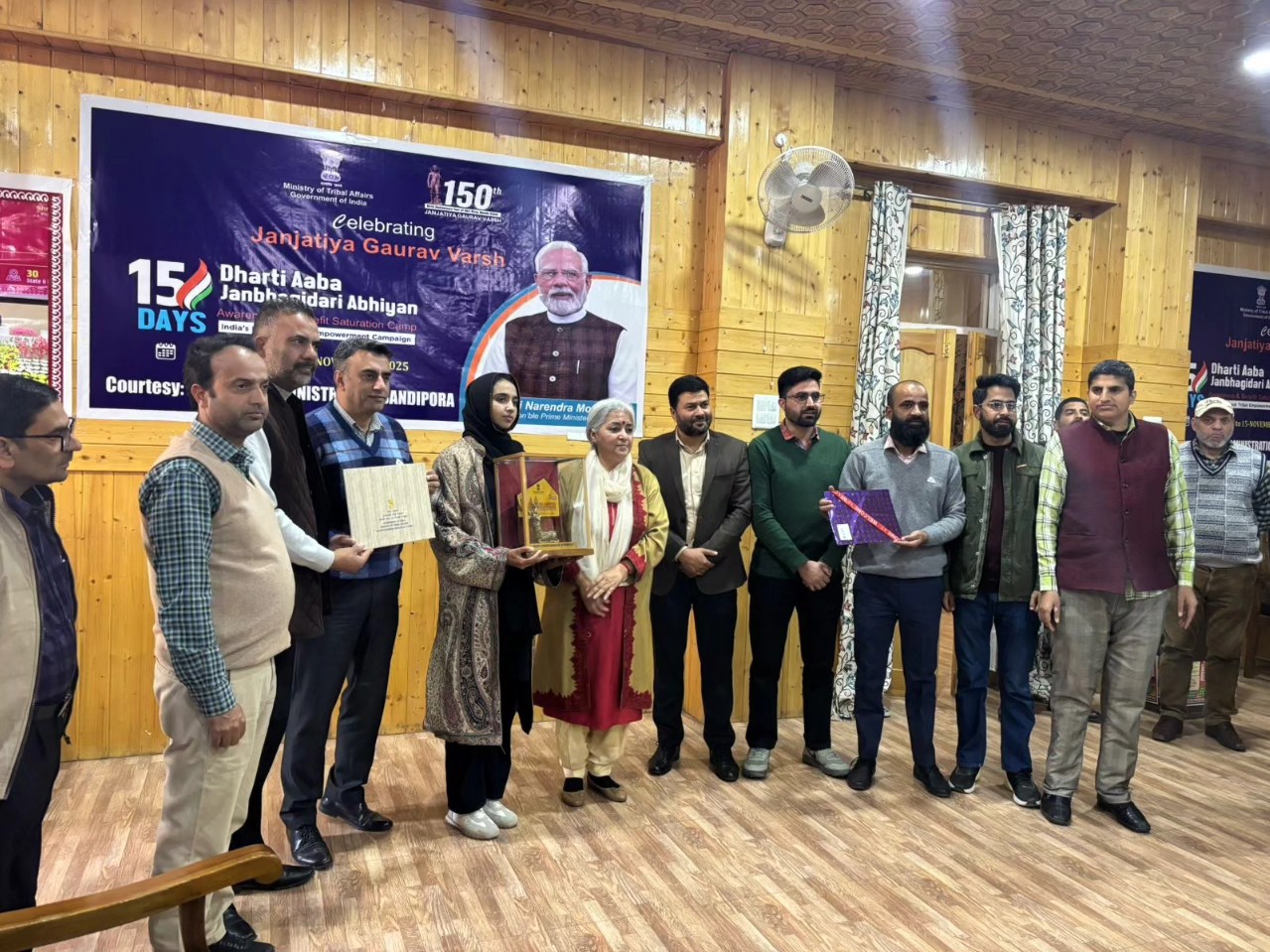
Following this national recognition, Bandipora observed a series of celebrations and awareness programmes from 1 November to 15 November during Janjatiya Gaurav Divas. These included cultural activities, youth workshops, heritage walks, school competitions, eco-tourism promotion events, and extensive outreach campaigns on tribal rights and welfare schemes. The celebrations strengthened cultural identity, inspired youth participation, and brought communities together in a shared spirit of pride and progress.

Comments are closed.