

India’s Floral Economy: How Floriculture Can Turn Every Bloom into an Opportunity

S Ahmad


India’s floriculture sector has emerged as a dynamic component of horticulture. It is supported by favourable agro-climatic conditions, cultural demand, and expanding commercial applications. According to the Third Advance Estimates for 2025-26, floriculture covered 410 thousand hectares and produced 4,882 thousand metric tonnes of flowers, with Andhra Pradesh leading national production.

Flowers have always occupied a special place in Indian life. They are part of religious ceremonies, festivals, weddings and social gatherings. They decorate homes, public spaces and places of worship, while also expressing emotions that words sometimes fail to convey. From marigold garlands at traditional celebrations to roses arranged in elegant bouquets, flowers are woven into the country’s cultural and social fabric.

Yet, beyond their beauty and emotional significance, flowers represent an important economic opportunity. What is often seen as a decorative or seasonal activity has gradually developed into a commercially significant branch of agriculture. Floriculture, the cultivation and marketing of flowers and ornamental plants, is emerging as a sector capable of supporting farmers, generating employment, encouraging entrepreneurship and contributing to agricultural exports.

India’s geographical diversity provides a strong foundation for this growth. The country has snow-covered mountains, temperate valleys, fertile plains, tropical regions and varied climatic conditions. These natural advantages allow farmers to cultivate different varieties of flowers across regions and seasons. With suitable technology, scientific guidance and market access, this diversity can be converted into a valuable economic resource.

Recognising its potential, the government has identified floriculture as a sunrise industry. The sector is no longer confined to small-scale cultivation for local markets. It now includes commercial flower production, protected cultivation, planting material, ornamental plants, landscaping, perfumery, cosmetics and other value-added applications. Its expanding role reflects a wider change in Indian agriculture, where diversification and higher-value crops are becoming increasingly important.

The real opportunity, however, lies in ensuring that this growth reaches farmers and rural communities. India has the natural resources to produce a wide range of flowers, but long-term success will depend on the ability to improve quality, strengthen supply chains, reduce post-harvest losses and connect growers with reliable markets.

More Than the Cultivation of Flowers

Floriculture is both an art and a science. It involves growing flowers and ornamental crops to achieve quality, uniformity and aesthetic appeal. The activity begins with the production of planting material through seeds, cuttings, budding and grafting, and continues through cultivation, harvesting, grading, packaging, transportation and marketing.

The sector covers several product categories. Loose flowers, such as marigold and jasmine, are generally sold by weight and are widely used for garlands, gajras and religious ceremonies. Cut flowers, including roses, gerberas, carnations, orchids and lilies, are harvested with stems and marketed for bouquets and vase arrangements.

The industry also includes cut foliage, potted plants, bedding plants and ornamental planting material used in gardens, landscaping and public spaces. This diversity gives floriculture a wider economic base than is often recognised.

The distinction between loose and cut flowers is particularly important because the two segments serve different markets. Loose flowers have a strong domestic demand rooted in cultural and religious practices. Cut flowers, on the other hand, have considerable potential in organised retail, event decoration, hospitality and international trade. Both offer opportunities, but they require different production, handling and marketing arrangements.

The growing demand for exotic flowers has further widened the sector’s possibilities. Orchids and anthuriums, for example, are becoming commercially viable in parts of the North Eastern region. Such developments demonstrate that farmers can move beyond traditional crops when suitable planting material, technical support and market connections are available.

India’s Natural Advantage

Few countries possess the range of climatic conditions that India offers for flower cultivation. Different flowers require different temperatures, soil conditions, humidity levels and growing environments. India’s geographical spread makes it possible to cultivate traditional and exotic varieties in different parts of the country.

Roses are widely cultivated in Karnataka and Maharashtra and remain among the commercially important flowers in the export market. Marigolds, closely associated with religious ceremonies and social functions, are extensively grown in Tamil Nadu and Madhya Pradesh. Carnations, chrysanthemums and gerberas are cultivated under controlled conditions, particularly for quality-conscious markets. Lilies and orchids are grown in select regions, including parts of Sikkim and Mizoram.

This geographical spread can help India develop specialised flower-growing regions. Instead of every area attempting to produce every variety, regions can build expertise around crops suited to their local conditions. Such specialisation can improve production practices, encourage shared infrastructure and make it easier to develop links with buyers.

The scale of the sector is reflected in the Third Advance Estimates for 2025-26. The area under floriculture cultivation stood at 410 thousand hectares. Production included 3,653 thousand metric tonnes of loose flowers and 1,229 thousand metric tonnes of cut flowers, taking total output to 4,882 thousand metric tonnes.

These figures underline the importance of floriculture within India’s horticultural economy. They also point to the need for a stronger system that can ensure that increased production translates into better returns for growers. Higher output alone does not guarantee higher income. Quality, timing, storage, transportation and access to buyers are equally important.

The States Leading the Floral Economy

Floriculture production is spread across the country, but some states account for a substantial share of national output. According to the Third Advance Estimates for 2025-26, Andhra Pradesh contributed around 31 per cent of India’s total flower production. Tamil Nadu followed with 14 per cent, Madhya Pradesh with 11 per cent, Karnataka with 10 per cent and West Bengal with 8 per cent.

Other important producing states include Chhattisgarh, Gujarat, Uttar Pradesh, Maharashtra, Odisha and Telangana. The North Eastern states together accounted for about 4 per cent of national production, with Assam making a substantial contribution through both loose and cut flowers, followed by Nagaland, particularly in cut flowers.

This distribution shows that floriculture is not limited to a particular geographical belt. It has developed in states with different agricultural conditions and market requirements. It also offers an opportunity for regions that have not yet fully explored commercial flower cultivation.

For states with suitable climatic conditions but limited agricultural diversification, floriculture can provide an additional source of income. It may be especially useful where farmers are looking to make better use of small landholdings or explore high-value crops. However, such a transition must be based on local suitability and market demand rather than an assumption that flower cultivation will automatically be profitable.

The experience of leading states can offer useful lessons in crop selection, cultivation methods, collective marketing and infrastructure development. At the same time, emerging regions should be encouraged to identify their own strengths rather than simply replicate production models developed elsewhere.

From Open Fields to Modern Greenhouses

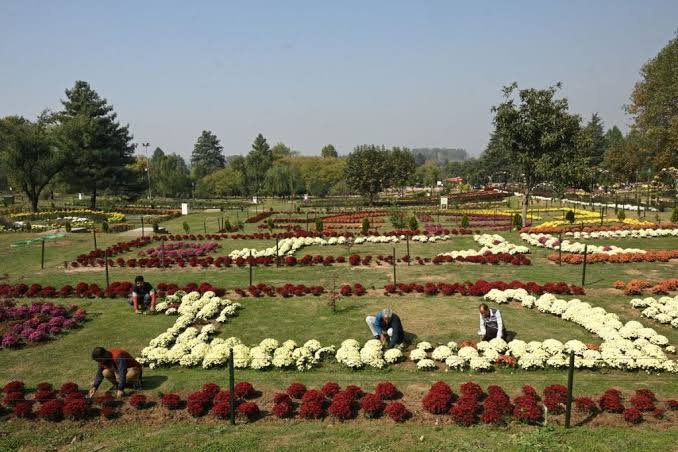
Flower cultivation in India takes place through both open-field and protected systems. Open-field production remains common for crops such as chrysanthemums, roses, gaillardia, lilies, marigolds, asters and tuberoses. It allows farmers to use natural growing conditions, although production can be affected by changes in weather, pests and seasonal limitations.

The growing demand for flowers of consistent quality and year-round availability has encouraged the adoption of protected cultivation. Greenhouses provide a more controlled environment in which temperature, humidity and other growing conditions can be managed according to crop requirements.

This approach is particularly important for export-oriented flowers such as gerberas and carnations, where uniformity and quality standards are essential. Protected cultivation can improve productivity and help growers produce flowers that meet the requirements of organised buyers and international markets.

However, modern infrastructure also brings costs and responsibilities. Greenhouses require investment, technical knowledge, maintenance and reliable access to inputs. Farmers must understand the production cycle and have a realistic assessment of market demand before making such investments.

Financial assistance and institutional guidance are therefore important. Protected cultivation should not be promoted merely as a symbol of modern agriculture. It must be introduced in a manner that is economically viable for farmers and suited to the local environment.

A Market Beyond Traditional Uses

The demand for flowers in India has traditionally been supported by religious and social practices. Jasmine, marigold and crossandra are commonly used in worship, ceremonies and personal decoration. Festivals, weddings and community events create regular demand for loose flowers and decorative arrangements.

But the market has expanded considerably beyond these traditional uses. Urbanisation, changing lifestyles and rising disposable incomes have encouraged the use of flowers in homes, hotels, offices, shopping spaces and public areas. Bouquet gifting and professional venue decoration have also become more prominent.

The relationship between floriculture and other industries is equally significant. Jasmine, lavender and rose petals are used as raw materials in perfumery and cosmetics. Calendula, hibiscus and chamomile are utilised in pharmaceutical preparations, while marigold and hibiscus are used in natural dyeing and colour extraction.

These applications create opportunities to move beyond the sale of fresh flowers. Processing and value addition can help develop new products and connect growers with industries that require regular supplies of specific floral materials.

For rural entrepreneurs, this opens possibilities in flower processing, garland-making, nursery development, bouquet preparation, landscaping and the production of flower-based products. Such enterprises can generate income at different stages of the value chain and provide opportunities beyond cultivation alone.

The challenge is to build the skills, infrastructure and market relationships required to make these activities commercially sustainable.

India’s Growing Presence in International Markets

The international flower trade offers another important opportunity for Indian growers. Floriculture products are part of the country’s value-added agricultural exports and provide an additional source of income beyond conventional crop cultivation.

Exports of floriculture, including fruits and vegetable seeds, increased from USD 216.74 million in financial year 2021-22 to USD 258.26 million in 2025-26. This upward trend indicates expanding international demand and the potential to strengthen India’s position in global markets.

In FY 2025-26, the United States emerged as the leading destination for India’s floriculture and seed exports, with shipments valued at USD 45.94 million. The Netherlands followed with USD 42.18 million. Bangladesh accounted for USD 16.51 million, while the United Arab Emirates and Italy recorded imports worth USD 16.35 million and USD 9.69 million, respectively.

India’s export portfolio includes roses, carnations, chrysanthemums, gerberas, gladiolus, gypsophila, liatris, nerine, orchids, achillea, anthurium, tulips and lilies. These varieties allow Indian producers to cater to different preferences and requirements in international markets.

Different products also serve different export destinations. Fresh cut flowers are supplied mainly to Europe, Japan, Australia, the Middle East and the United States. Loose flowers are largely supplied to markets serving expatriate Indian communities in the Gulf region. Cut foliage is exported primarily to European countries, while dry flowers reach markets across the United States, Europe, Japan, Australia, the Far East and Russia. Potted plants, meanwhile, are exported to a more limited number of countries.

Dry flowers account for a major share of India’s floriculture exports, supported by their longer shelf life and wider market reach. This illustrates how processing and product diversification can help overcome some of the difficulties associated with transporting fresh flowers.

The expansion of exports is encouraging, but international markets also demand consistency. Buyers expect products to meet specific quality requirements and arrive in suitable condition. This makes grading, packaging, cold-chain facilities, transportation and timely delivery central to export competitiveness.

A New Opportunity from the North East

One important example of India’s expanding floral trade came in February 2025, when the first-ever export consignment of anthurium flowers from Mizoram to Singapore was flagged off.

The consignment comprised 1,024 anthurium cut flowers, weighing 70 kilograms and packed in 50 corrugated boxes. The initiative was led by the Agricultural and Processed Food Products Export Development Authority (APEDA), in collaboration with the Department of Horticulture, Government of Mizoram.

The shipment was more than an export milestone. It demonstrated how a region’s natural advantages can be connected with overseas markets through institutional support and organised trade arrangements.

The North Eastern region has considerable potential for selected exotic flowers. Its climatic diversity and growing interest in commercial floriculture can support the development of specialised production clusters. However, the success of such initiatives will depend on their ability to create reliable market linkages and ensure that local growers receive a fair share of the value generated.

The Mizoram experience offers an encouraging example of how regional products can find international buyers when production and export agencies work together.

Government Support and the Role of Institutions

The growth of floriculture requires more than individual effort by farmers. It depends on a supportive system involving government departments, financial institutions, research organisations, training agencies and export bodies.

The Mission for Integrated Development of Horticulture (MIDH), including the National Horticulture Mission and the Horticulture Mission for North East and Himalayan States, forms an important part of the institutional framework supporting the sector. The National Horticulture Board also contributes to its development.

Financial assistance and credit support are important for farmers seeking to adopt protected cultivation and precision farming. The National Bank for Agriculture and Rural Development (NABARD) provides financial assistance for such practices, which can help improve productivity and quality.

The availability of quality seeds and planting material is another essential requirement. Several seed companies have established production units in major flower-growing states to meet demand. Concessions on seeds, planting material, equipment and air freight are also intended to support growers and improve export competitiveness.

APEDA, under the Ministry of Commerce, plays a role in export promotion and the development of overseas market connections. Training programmes and capacity-building initiatives are helping farmers and entrepreneurs improve their technical skills and adopt modern cultivation practices.

Research is being carried out by institutions under the Indian Council of Agricultural Research and the Council of Scientific and Industrial Research, as well as by horticulture departments of State Agricultural Universities and the All India Coordinated Floriculture Improvement Project.

These institutions are important because the requirements of floriculture are often crop-specific. Farmers need guidance on planting material, soil preparation, disease management, harvesting and post-harvest handling. Scientific support can help reduce production risks and improve the quality of flowers entering the market.

The next step should be to ensure that institutional support reaches growers in a coordinated and practical manner. Financial assistance, technical advice and market access must complement one another. A farmer who receives support to establish a greenhouse but lacks reliable buyers or post-harvest facilities may still struggle to make the enterprise profitable.

Science Bringing New Flowers to the Field

Research and innovation are playing an increasingly important role in India’s floriculture sector. The CSIR Floriculture Mission, launched in 2021, seeks to improve farmers’ incomes, support entrepreneurship and promote technology-led development.

As of December 2025, more than 2,208 hectares had been brought under floricultural cultivation under the mission. It had benefited 16,220 individuals across 399 clusters in 26 states and Union Territories. The programme has also supported the development and transfer of technologies and conducted training and capacity-building initiatives.

The CSIR Aroma Mission, launched in 2017, focuses on rural livelihoods through the cultivation and processing of aromatic crops. These crops provide raw material for the aroma and essential oil industry.

By December 2025, aromatic crop cultivation under the mission had expanded to more than 51,000 hectares. The programme had established over 4,500 aroma clusters across 28 states, including 20 clusters in tribal areas. It had organised 2,096 training and awareness programmes, reaching 1.22 lakh people, including 10,000 women, and supported more than 110 entrepreneurs in developing value-added products.

The source material reports that these interventions generated around one crore rural employment opportunities and enabled the production of more than 6,000 tonnes of essential oils, valued at approximately Rs 600 crore.

Together, these initiatives demonstrate the role that research institutions can play in connecting scientific knowledge with rural economic activity. They also show that the benefits of floriculture and aromatic crop development can extend beyond the farmer who grows the crop to entrepreneurs involved in processing, marketing and related services.

Tulips in the Himalayas: Turning Climate into an Opportunity

One of the notable examples of research-led floriculture comes from the Himalayan region. At Palampur in Himachal Pradesh, the CSIR-Institute of Himalayan Bioresource Technology has supported tulip cultivation through scientific interventions under the Floriculture Mission.

The initiative has drawn upon the region’s cool climate and suitable agro-ecological conditions. Research has focused on the selection of planting material, flowering cycles and crop management practices. These efforts have helped establish tulip cultivation capable of meeting international quality parameters.

The development also demonstrates how floriculture can support tourism. As of May 2026, the Tulip Garden at Palampur had attracted more than 1.5 lakh visitors. Such attractions can create opportunities for local businesses, hospitality services and other activities linked to visitor spending.

The wider lesson is that flowers can contribute to regional development in more than one way. They can generate income through cultivation and sales while also creating destinations that attract visitors. This combination of agriculture and tourism can be particularly valuable in regions where climate and landscape offer distinctive advantages.

Eustoma in Odisha: Innovation Beyond Natural Climatic Limits

Another example of scientific intervention comes from Sambalpur in Odisha, where the successful cultivation of eustoma has demonstrated the possibility of growing exotic flowers in non-traditional environments.

The crop was once considered unsuitable for warmer regions. However, scientific guidance on temperature management, disease control and cultivation practices helped make its cultivation possible in parts of Odisha.

The achievement is significant because it shows that regional floriculture need not remain limited to crops traditionally associated with a particular climate. Research can help farmers explore new varieties and identify suitable production methods.

Such innovations may create additional income opportunities, particularly when growers are able to connect with high-value markets. They also underline the importance of adapting technology to local conditions rather than relying on one cultivation model for every region.

The tulip initiative in Palampur and the eustoma experience in Sambalpur represent two different climatic settings, but both demonstrate the value of research in expanding the possibilities of Indian floriculture.

The Challenges That Must Be Addressed

Despite its growing potential, floriculture faces challenges that cannot be overlooked. Flowers are often highly perishable, and delays in harvesting, grading, packaging or transportation can reduce their market value. Unlike many agricultural commodities, fresh flowers may lose quality quickly if they are not handled properly.

This makes post-harvest management particularly important. Storage facilities, suitable packaging, cold-chain infrastructure and efficient transportation can determine whether farmers receive a good price or suffer losses.

Market access is another concern. Production must be connected with demand. Farmers need information about prices, preferred varieties, quality requirements and seasonal market trends. Without such information, they may invest in crops that are difficult to sell or face a situation where several growers bring the same variety to market at the same time.

The cost of protected cultivation can also be a barrier. Greenhouses and other modern systems require investment, maintenance and technical knowledge. Small farmers may find it difficult to adopt these systems individually. Cooperative arrangements, farmer-producer organisations and cluster-based approaches can help share infrastructure and improve bargaining power.

Quality standards are equally important for export growth. International buyers expect uniform products and reliable deliveries. Meeting these requirements requires training, careful production planning, grading and traceability. Export promotion must therefore go hand in hand with improvements at the farm level.

There is also a need to strengthen processing and value addition. The longer shelf life of dry flowers and the growing use of floral materials in cosmetics, perfumery and other industries demonstrate the potential of processing. More attention to such activities can reduce dependence on the fresh-flower market and create additional rural enterprises.

Above all, farmers should receive proper guidance before shifting to floriculture. High-value crops can offer better returns, but they can also involve higher risks. Crop selection must be based on local conditions, investment capacity and assured market opportunities.

The Road Ahead: Making Floriculture Work for Farmers

India’s floriculture sector stands at an important stage of development. It has a strong natural foundation, a large domestic market, a growing export presence and increasing support from research and government institutions. The task ahead is to bring these strengths together in a way that produces lasting benefits for farmers.

A stronger extension system is needed to make scientific knowledge accessible at the village level. Farmers should receive practical guidance on suitable varieties, planting material, cultivation methods, pest and disease management and post-harvest practices. Demonstration farms and local training programmes can help turn research findings into workable solutions.

Collective marketing can also make a difference. Small growers often have limited bargaining power when dealing with traders and larger buyers. Farmer groups and producer organisations can help aggregate produce, improve grading and negotiate better terms. They can also make it easier to access storage, transport and processing facilities.

Market information must become an integral part of cultivation decisions. Farmers should know which varieties are in demand, when prices are likely to be favourable and what quality standards buyers expect. Better coordination between growers, wholesalers, retailers, exporters and processing industries can reduce uncertainty.

There is also considerable scope for developing flower-based tourism and local enterprises. Tulip gardens and other seasonal flower attractions can bring visitors to rural and semi-urban areas. Local communities can benefit through hospitality, transport, food services and the sale of related products. Such initiatives should be planned carefully to ensure that tourism supports local livelihoods and does not become disconnected from the communities that sustain it.

For regions with suitable conditions but limited experience in commercial floriculture, pilot projects can provide a sensible starting point. These should combine scientific assessment, farmer training, market research and institutional support. Expansion should follow demonstrated results rather than ambitious production targets alone.

India’s diverse regions can develop their own floral identities. The North East can explore opportunities in orchids and anthuriums. Himalayan areas can build on suitable conditions for selected temperate flowers. Other states can strengthen established production systems and expand their presence in domestic and international markets. Such regional specialisation can make the sector more competitive while distributing economic opportunities across the country.

A Future That Can Bloom Across Rural India

Floriculture represents a wider opportunity to rethink the role of agriculture in India’s economic development. It shows that farming is not limited to the production of food grains, fruits and vegetables. With suitable knowledge, investment and market connections, farmers can participate in industries linked to lifestyle, tourism, wellness, decoration and international trade.

The sector’s importance should not be measured only by the number of flowers produced or the value of exports. Its real contribution will also be reflected in the incomes of growers, the enterprises created in rural areas, the skills developed among young people and the opportunities opened for women and local entrepreneurs.

Government schemes and research programmes have helped establish a foundation for growth. The next phase must focus on making these benefits more accessible, strengthening the link between farms and markets and ensuring that production is supported by infrastructure and reliable buyers.

India’s natural diversity has already given it the ability to grow flowers across different climates and seasons. Scientific research is widening that possibility further, while changing consumer preferences and international demand are creating new markets.

The challenge is to turn this potential into a dependable source of livelihood. If farmers receive the right planting material, training, technology, financial support and market access, floriculture can become an important part of a diversified agricultural economy.

A flower may have a short life after it is harvested, but the economic opportunities created by its cultivation can last much longer. With the right approach, India’s floral economy can strengthen rural livelihoods, encourage entrepreneurship and add a new dimension to agricultural growth — one bloom at a time.


The article is based on the inputs and background information provided by the Press Information Bureau (PIB). Author is Writer, Policy Commentator. He can be mailed at kcprmijk@gmail.com

Comments are closed.