New Delhi, Oct 09: India on Friday firmly reiterated that the United Nations Military Observer Group in India and Pakistan (UNMOGIP) has outlived its relevance to the Kashmir issue, asserting that the 1972 Simla Agreement has rendered the mission’s mandate obsolete.
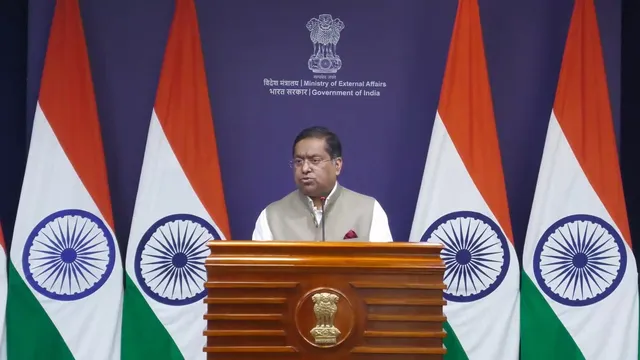
Responding to UN Secretary-General Antonio Guterres’ recent visit to the mission’s office in Islamabad, Ministry of External Affairs (MEA) spokesperson Randhir Jaiswal as per Kashmir Convener said, it has been our consistent position that UNMOGIP has outlived its relevance after the Simla Agreement that was signed between India and Pakistan.
New Delhi’s stance is rooted in the argument that the Simla Agreement, signed in the aftermath of the 1971 war, effectively superseded the UN’s role in Kashmir, with both nations agreeing to resolve their differences bilaterally. India has since maintained that there is no room for third-party mediation on Jammu and Kashmir.
The Simla Agreement committed both nations to ending conflict and confrontation and working towards durable peace in the subcontinent, stipulating that the principles and purposes of the UN Charter shall govern bilateral relations.
Guterres’ visit to the UNMOGIP office during his official trip to Pakistan — and his address at a Town Hall in Islamabad — has underscored the enduring presence of a mission India considers anachronistic to the Kashmir question.
According to a UN statement, he told mission staff UNMOGIP is a unique and long-standing mission. You operate in an extremely sensitive political environment. You are entrusted with a difficult mandate. And you have consistently shown your commitment to fulfilling that mandate with dedication and professionalism.
India’s reiteration comes amid its consistent pushback against any internationalisation of the Kashmir issue, with New Delhi viewing UNMOGIP’s continued existence as a legacy that no longer reflects the reality of bilateral ties governed by the Simla framework.


Comments are closed.