From Silence to Voice: How Social Media is changing the way Kashmiri Women Speak and Participate

Sumaira Showkat


“Social media has given women a space to be themselves, to share their stories, to showcase their talents, and to become financially independent all on their own terms.”

What happens to a society where a woman’s story is told by an outsider, where a woman’s body becomes a site of observation rather than a site of expression? For a long time, we have watched how such societies operate. Women used to be objects, secondary participants in their own stories; they read about themselves in papers, and they watched their carefully curated and manipulated images on television, and those images were never true to the real essence of womanhood. Men dominated media, men wrote stories, and told women who they are and how they should act in a specific setting.

As a result, we lost women who could never express their hearts out loud, who could never be vocal, who never wrote stories that would have taught the younger women where and how they came to be, women who could never write poems because they had to choose between a career and a family, and they were always taught to choose family even when it came at the cost of losing themselves in the process.

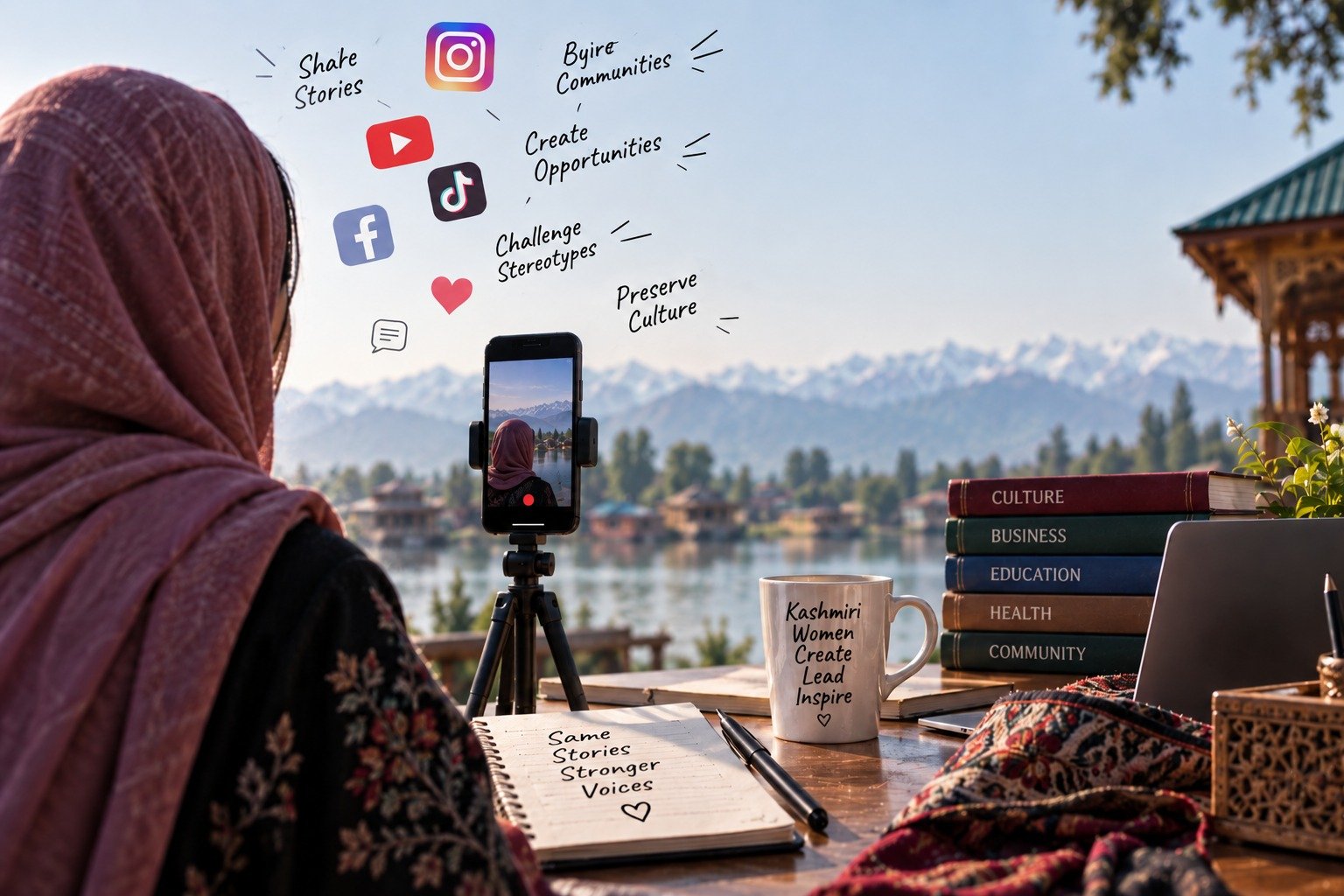
I guess that is why we are currently in the fourth wave of feminism, and soon we will require the fifth wave because women’s issues just never get addressed properly. We are living in a society where social media dominates everything. We consume an abundance of information on a daily basis, and our ideas are sort of constructed for us. However, while social media has its drawbacks, we cannot ignore the fact that it has given women the recognition that they always desired. The fourth wave of feminism, which is characterized by intersectionality, digital outreach, and online campaigns, has increased the visibility of women’s issues all over the world, with various issues gaining recognition at an unprecedented rate. But most of all, social media has given women a space to be themselves, to share their stories, to showcase their talents, and to become financially independent all on their own terms.

Rather than taking the whole world as my subject area, I want to focus on just one section of the world, one section of women, the Kashmiri women, and the Kashmiri experience.

Now, when we talk about Kashmir, we understand that, unlike the rest of the world, there are certain limitations that women face. Because in Kashmir, a large section of the population is quite conservative, a woman coming to the forefront, posting on social media, and being vocal and visible doesn’t receive a lot of encouragement. In fact, they get bullied, harassed, and often judged for what they are doing. But none of that has stopped Kashmiri women from reaching a wider audience through social media. Instead of letting men dictate how they should work, they are now dictating their own rules and paving a way for the rest of the women of Kashmir.

Kashmiri women are using social media to promote Kashmiri culture, language, and traditions while also making a living from the same. Take, for example, Syed Areej Zaffar, who is a prominent female Ladishah singer from Kashmir. Traditionally, Ladishah has always been a male-dominated art form, but Areej, through her skills and beautiful storytelling, is bringing a fresh perspective to this art form by reflecting on the socio-political issues of Kashmir while also satirizing the hypocrisies of society.

Another Kashmiri female influencer who has gained a widespread audience is Syeda Hubza Ali, who is a vlogger and shares her daily experiences through her social media. Coming from a conservative background, she has managed to gain 60400 followers on YouTube and 48.7k followers on Instagram. Now, her story tells us something interesting. For a long time, we have grown up listening to how men are worth talking about, how a man’s experience is worth our time. But by documenting every part of her life and sharing her struggles and her experiences, Hubza has shown the world how the female experience also deserves every bit of our attention.

Not just vlogging and modeling, women are using these platforms to promote the Kashmiri language as well. For example, Seerat Hafiz started Yikvot, a Kashmiri language preservation platform, and has now gained a widespread audience across social media. Her platform helped recover the vast, overlooked corpus of translations both into and out of Kashmiri. Now, it has become a platform where people can come together and talk about the language, publish their work, and enforce their Kashmiri identity. Her example shows us how when women are given the right opportunities, they can serve their communities better than men ever did.

For most Kashmiri women, social media has become a medium to communicate with the world while also promoting their brands. It has become a shop without walls, where hundreds of women have found employment by doing what they love. From handicrafts to hand-embroidered products, to calligraphy, to baked goods, and to clothes, they are trying their hand at everything and gaining an audience too.

One report from 2021 estimated that more than 700 young Kashmiri women had started online businesses since 2015, although this figure should be treated as a reported estimate rather than a current official count. Kehzabr, a women-focused clothing and bridal business founded by Asra Qureshi, used social media to reach customers and reported receiving a large number of orders through Instagram. During the COVID lockdown, social media became particularly important to the business.

But social media is doing something beyond creating economic opportunities. It is also changing what Kashmiri women can talk about. Women are using online communities to ask questions about health, relationships, education, work, and everyday life. A 2024 study of a Facebook group for Kashmiri women examined 302 health-related posts and found that women used the group to seek informational support, with pregnancy among the frequently discussed subjects. Women are now starting their own book clubs online and discussing novels, poems, and their own stories. They are building a community where something valuable is happening.

In Kashmir, women were often dismissed because they gossip and talk about insignificant issues. Maybe it was because they never found the right platforms. And now that they have a like-minded community, they are proving that a woman also possesses intellectual capability.

A woman who cannot discuss something openly at home may find an answer online. A young girl who feels different from the people around her may discover others with similar interests. A woman starting a business may learn from someone who started before her. Someone interested in Kashmiri literature may find a community that shares the same interest.

The Kashmiri woman is no longer only the subject of the photograph. She can be the photographer. She is no longer only the face in an advertisement. She can be the model, the entrepreneur, or the person running the brand. These women are breaking the barriers, but at the same time, they face backlash; they get bullied, and they are blamed for every natural adversity that happens in society. But something has nevertheless shifted. And this shift was necessary in Kashmir; this shift was necessary for the upcoming generations.


Author can be reached at sumairawani187@gmail.com

Comments are closed.