


World Ozone Day: Healing the Ozone Shield, Protecting Our Future

Mohammad Hanief


“The atmosphere does not recognise political boundaries. A chemical released in one country can eventually affect atmospheric conditions thousands of kilometres away. The ozone problem could therefore never have been solved by one nation acting alone.”

Every year on September 16, the world observes World Ozone Day, officially known as the “International Day for the Preservation of the Ozone Layer”. The day marks the signing of the Montreal Protocol in 1987 and serves as a reminder of one of the most remarkable environmental achievements of modern times. In 2026, the occasion carries particular significance as the world marks ten years of the **Kigali Amendment** to the Montreal Protocol, with this year’s global campaign focusing on “Global action for a cooler planet.”

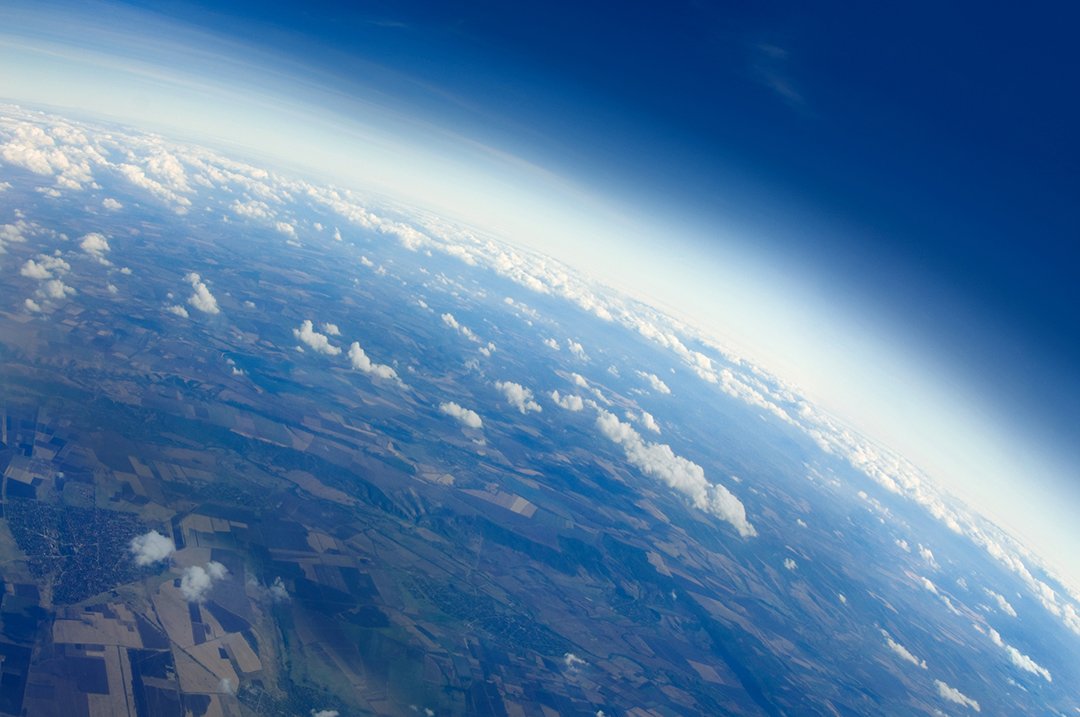
The ozone layer is an invisible shield high above the Earth, concentrated mainly in the stratosphere. Although ozone exists in relatively small quantities, its importance to life is immense. It absorbs a large part of the Sun’s harmful ultraviolet radiation, helping protect human beings from skin cancer and cataracts while also protecting crops, forests, marine organisms and entire ecosystems. Without this natural shield, life on Earth would be exposed to much higher levels of damaging ultraviolet radiation.

For much of human history, the ozone layer remained largely outside public attention. That changed dramatically in the second half of the twentieth century, when scientists discovered that certain chemicals used extensively in refrigeration, air-conditioning, aerosol products, foams and industrial processes were damaging atmospheric ozone. Chlorofluorocarbons, or CFCs, and several related chemicals could survive long enough to reach the stratosphere, where ultraviolet radiation broke them down and released chlorine and bromine capable of destroying ozone.

The discovery of severe seasonal ozone depletion over Antarctica transformed what had initially been a scientific concern into a global environmental emergency. The international community responded with unusual speed. The Vienna Convention was adopted in 1985, followed by the Montreal Protocol in 1987. The Protocol established a framework for controlling and eventually eliminating the production and consumption of ozone-depleting substances.

Nearly four decades later, the results offer a powerful lesson for today’s environmental challenges. The Montreal Protocol has led to the phase-out of more than 99 per cent of controlled ozone-depleting substances, and scientific assessments indicate that the ozone layer remains on a long-term path toward recovery. The World Meteorological Organization has reported that the ozone layer is expected, under current policies, to return to approximately 1980 levels by around 2040 for most of the world, 2045 over the Arctic and 2066 over Antarctica.

This recovery is an extraordinary achievement, but it is not a reason to become complacent. The ozone layer responds to complex interactions involving atmospheric chemistry, temperature, circulation and meteorological conditions. The size and persistence of the Antarctic ozone hole can vary considerably from year to year, even while the longer-term trend remains positive. In 2025, for example, the World Meteorological Organization reported a relatively small and short-lived Antarctic ozone hole, consistent with the broader recovery trend.

The latest scientific work also reminds us that the ozone story is still evolving. The 2026 Scientific Assessment of Ozone Depletion, prepared through the WMO-UNEP assessment process, is examining not only the recovery of the ozone layer but also changing trends in ozone-depleting substances, hydrofluorocarbons, global and polar ozone, and the relationship between stratospheric ozone and climate change.

The connection between ozone protection and climate change has become increasingly important. As older ozone-depleting substances were phased out, many were replaced by chemicals that do not directly destroy ozone but can have significant warming effects. This is where the “Kigali Amendment”, adopted in 2016, has become important. It calls for a global phase-down of hydrofluorocarbons, or HFCs, powerful greenhouse gases commonly used in refrigeration and air-conditioning.

This year’s World Ozone Day theme therefore carries a message that extends well beyond the ozone layer. The transition towards sustainable cooling is becoming increasingly important as global temperatures rise and demand for air-conditioning and refrigeration grows. Cooling is essential for hospitals, food preservation, pharmaceuticals, industries, offices, transport and homes. In many parts of the world, it is also becoming a matter of public health as extreme heat becomes a growing concern.

The challenge is to expand access to cooling without increasing environmental damage. More efficient appliances, climate-friendly refrigerants, better building design, responsible maintenance and improved recovery and recycling of refrigerants can all help reduce environmental impacts. The goal should not simply be to make cooling more widely available, but to make it more efficient, affordable and environmentally sustainable.

For India, this challenge is particularly relevant. A large population, rapid urbanisation, economic development and increasing temperatures are driving demand for cooling. Refrigeration and air-conditioning have become essential to everyday life and economic activity. The choices made today regarding cooling technologies will influence both energy consumption and greenhouse-gas emissions for decades to come.

This makes the ozone story especially relevant to the broader climate conversation. It demonstrates that environmental policy does not have to choose between economic development and environmental protection. With scientific research, technological innovation, financial support and effective regulation, it is possible to pursue development while reducing environmental harm.

Yet the success of the Montreal Protocol also depended on something equally important: international cooperation. The atmosphere does not recognise political boundaries. A chemical released in one country can eventually affect atmospheric conditions thousands of kilometres away. The ozone problem could therefore never have been solved by one nation acting alone.

That lesson is highly relevant today as the world struggles with climate change, biodiversity loss, air pollution, water stress and environmental degradation. These challenges may appear overwhelming, but the recovery of the ozone layer demonstrates that global environmental problems can be addressed when countries accept scientific evidence and act collectively.

There is also a lesson for ordinary citizens. Environmental protection is not limited to international agreements and government policies. Consumers, industries, technicians, educational institutions and local communities all have a role. Proper maintenance of cooling equipment, responsible handling of refrigerants, adoption of energy-efficient technologies and greater environmental awareness can collectively make a difference.

Scientific monitoring must also continue. Atmospheric observations are essential for detecting changes in ozone concentrations, tracking the recovery process and identifying unexpected emissions or emerging chemicals that could threaten progress. The 2026 scientific assessment itself reflects the continuing need for detailed research and international cooperation.

The story of the ozone layer is ultimately a story of hope. A serious environmental threat was identified through science, communicated to the world, addressed through international cooperation and followed by technological change. The problem has not disappeared completely, but the direction has changed.

That achievement should give the world confidence at a time when environmental challenges often seem too large to overcome. The ozone layer teaches us that prevention is better than crisis management, that science must guide environmental policy and that international agreements can produce measurable results when countries remain committed to them.

As World Ozone Day is observed on September 16, the message should therefore go beyond celebrating the recovery of the ozone layer. It should remind the world that environmental progress requires continuous vigilance. The success achieved through the Montreal Protocol must be protected, strengthened and extended into the emerging challenge of sustainable cooling.

The ozone layer may be invisible to the human eye, but its protection is essential to every living organism on Earth. Its recovery stands as one of humanity’s greatest environmental success stories. The responsibility now is to ensure that this success continues—and that the same spirit of cooperation is applied to the climate and environmental challenges that remain.


Author is a senior analyst and environmentalist. Feedback can be sent to m.hanief@gmail.com

Comments are closed.